




Growing demand for its formwork in the emirates has prompted Paschal to open an office in Dubai last November.
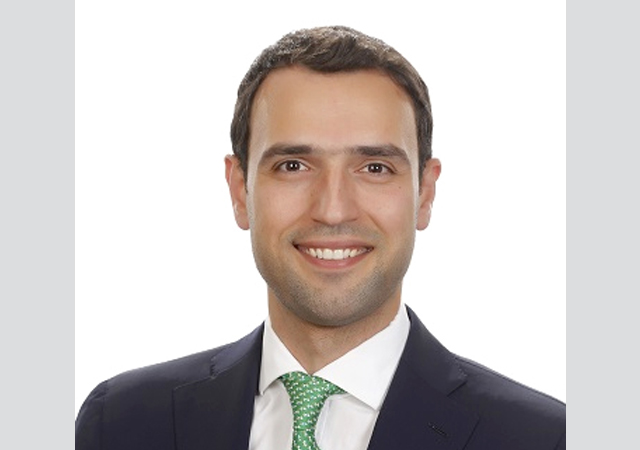
The decision was certainly timely as the UAE currently accounts for half the total revenue earned by the German formwork manufacturer in the Gulf, according to Amir Delghandi, Middle East general manager of Paschal in Bahrain, the regional office for Paschal Werk G Maier.
“We initially entered the UAE market by offering a rental option, which enabled contractors to evaluate our systems,” he says. “I am happy to report that many of the contractors who opted to try us out have now gone ahead and bought our environmentally-friendly formwork, recognising the cost-effectiveness, ease of erection and long-term benefits of our systems.”
The UAE office offers a complete service including supply of quotations, design and back-up, he adds. Paschal formwork is offered on a rental basis or outright purchase – or even on a lease-and-buy option.
Paschal Emirates, set up in partnership with the Dubai-based Lootah Group, offers the entire spectrum of services offered by the Bahrain operation. It has an office and showroom in the Rashidiya area while its warehouse is located in the Al Quoz Industrial Area 3. The UAE operation holds a stock of 3,000 sq m of panels for immediate delivery. Larger orders can be met within three to four days from Paschal’s main stock in Bahrain, says Delghandi, who travels on a weekly basis between the two offices to ensure a smooth operation.
“We have trailers leaving Bahrain every two or three days to support our UAE operation,” he points out.
Paschal formwork is currently being used in shaping some of the landmarks in Dubai.
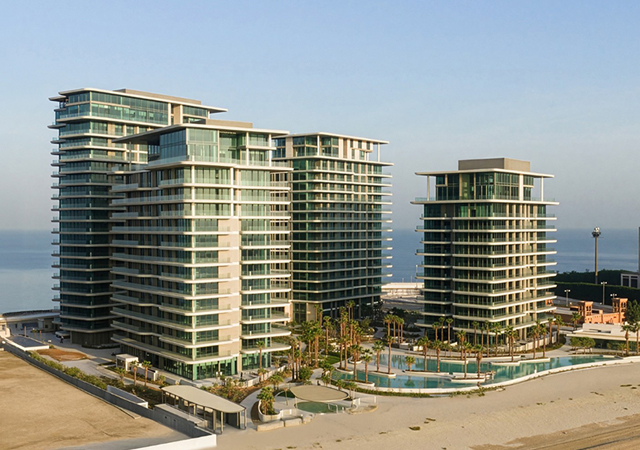
Some of the ongoing projects include: Emaar’s Old Town residential development at the prestigious Burj Dubai complex; the Shoreline Apartments at The Palm, Jumeirah; the Lake Terrace, Jumeirah Lakes Towers; Al Thuraya Tower at Dubai Marina, the Union Co-operative office in Hamriyah; Emirates Group Security headquarters building at Terminal 2 Dubai airport free zone; residential buildings at Al Qusais; and commercial and residential buildings at Bur Dubai.
Elaborating on some of these projects, Delghandi says: “The Old Town at the Burj includes the construction of 10 buildings – ranging from two to 10 storeys high – which sit on a common basement. Paschal formwork is being used for the columns and shear walls of the common basement. Here, our circular systems came into their own as they provided a solution for the contractor Al Basti & Mukta (ABM), who had to build circular and elliptical columns for the basement.
“We started supplying our formwork at the end of December. In fact, ABM was so pleased with the results they achieved that they have ordered further quantities for other levels of the buildings.
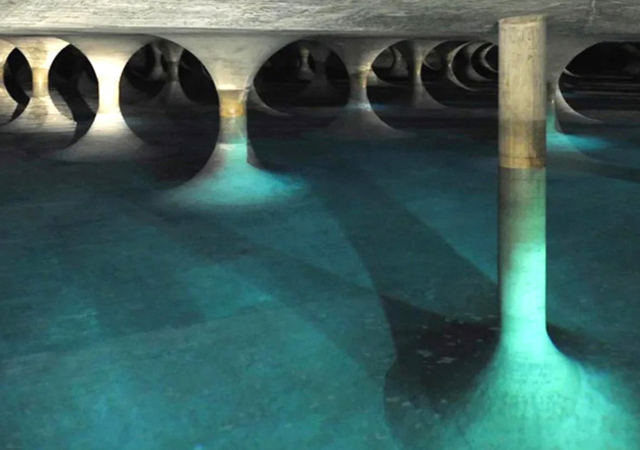
“Another satisfied customer is Al Hamed Development & Construction, which is currently completing work on the basement wall and shear walls of the Lake Terrace using our formwork. This contractor had previously used the same formwork for the construction of a water reservoir at the Austrian Arabian Readymix plant in Jebel Ali – which incidentally helped Al Hamed to complete the 30-day contract within 16 days. Al Hamed is now poised to transfer the same formwork panels for use on the Shoreline Apartments.
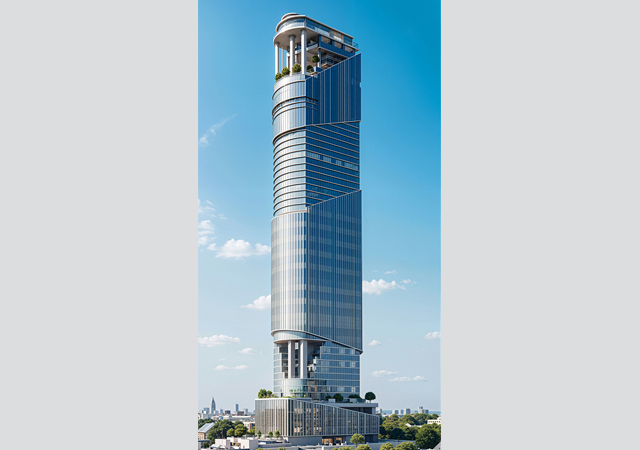
“Among other developments, our single-sided formwork and other systems are being used by General Construction Establishment for the construction of the walls of a three-level basement, columns, ramps and shear walls of the 35-storey Al Thuraya Tower, which is due to be completed in the first quarter of 2006.”
Despite Dubai being a highly competitive market with a number of reputed players in operation, Paschal has been able to secure a niche market, thanks to the advantages its system offers particularly in vertical construction, Delghandi points out.
“We are the only formwork supplier in the region to offer the plywood prefixed to the panels. This enables contractors to start work on the same day that the formwork arrives on site,” he claims.
“Because of the ease in erection and dismantling of the formwork – with or without cranes – contractors can save up to 30 per cent of their superstructure cost by saving on labour, materials and time. In addition, the modular panels are unique and offer contractors versatility, flexibility and durability,” he says. “The panels – manufactured from 6-mm-thick frames of sturdy steel – are strong and durable, and offer high protection against corrosion. In addition, the panel surfaces feature high-quality Finnish birch plywood coated with a special phenolic resin of 220 gm/sq m – giving lasting protection. The panel’s plywood can be reused up to 250 times and the steel frame will remain good for more than 20 years.”
In addition to the ongoing developments in Dubai, Paschal already has a string of completed projects to its credit including Dubai Police headquarters and Dubai Islamic Bank – both constructed by Al Shaffar Contracting, which has been using Paschal formwork for the past six years – several buildings at Dubai Media City and Dubai Internet City and residential complexes at Al Qusais, Al Garhoud and Hor Al Anz.
Paschal Bahrain, set up in 1998 as the Middle East office of Paschal Werk G Maier, has continued to penetrate markets throughout the region and has added about 250 successful construction companies from the GCC countries to its customer list.
Formwork supplied by Paschal has helped in ensuring timely completion of a number of civil projects in the Middle East and several developments in Bahrain, UAE, Kuwait, Saudi Arabia, Oman, Qatar and Iran are currently using these modular systems.
Paschal Werk – which has more than 40 years of experience in the formwork industry – is looking at further expanding its presence in the region. Since it set up its Middle East office in Bahrain, the company has seen its turnover increase tenfold and is now looking at setting up operations in other Gulf states to enhance its services and support to customers.