









































































A new white paper has outlined how integrated urban mobility and transit-oriented development (TOD) can reshape cities, highlighting the need to align transport systems with housing and land use to drive sustainable growth.
Cities that align transport investment with land-use planning are better positioned to reduce congestion, improve housing affordability, and unlock long-term economic stability, according to the report released by Egis, a global leader in architecture, consulting, construction engineering, operations, and mobility services.
The study argues that mobility is no longer a standalone service but a “foundational urban system” that determines access to jobs, education and essential services. Without reform, it warns, rising congestion, emissions and urban sprawl could undermine liveability as cities expand.
Citing projections from UN-Habitat, the report notes that nearly 68 per cent of the global population will live in urban areas by 2050, with passenger travel demand expected to increase up to four times compared to 2000 levels. It adds that congestion could triple, with urban residents spending an average of 106 hours a year in traffic if current trends persist.

Well-designed TOD can deliver a 30 to 50 per cent reduction in car trips, a 40 to 60 per cent increase in public transport ridership, and a 15 to 20 per cent reduction in household transport costs.
Without structural changes to how cities plan resilient mobility and housing together, congestion, infrastructure costs, and environmental pressures will continue to rise, the paper notes.
The report calls for a shift away from car-centric planning toward integrated, multimodal systems combining public transport, walking, cycling and shared mobility. Digital tools such as Mobility-as-a-Service platforms and intelligent transport systems are identified as key enablers of more efficient and flexible urban mobility.
At the centre of this approach is transit-oriented development, which promotes compact, mixed-use communities clustered around high-capacity public transport. By bringing housing, employment and services closer together, TOD can reduce travel distances, lower transport costs and improve accessibility.
The study draws on international case studies to support its argument, including the Rosslyn- Ballston Corridor in the US, Copenhagen’s long-standing Finger Plan, the Shibuya Station redevelopment in Tokyo, the Vancouver SkyTrain corridor, and Singapore’s large-scale integration of public housing with mass transit. Together, these cases demonstrate how coordinated planning can transform transit investments into engines of inclusive urban development.

Future urban competitiveness will depend less on how quickly people move and more on how effectively cities connect people to opportunities.
While the report is framed around global trends, its title “Urban Mobility and Transit-Oriented Development: Rethinking Housing to Drive Sustainable Urban Development in the Kingdom” implies a focus on Saudi Arabia. However, the study does not include specific references to the kingdom, nor does it cite local data, policies or projects. The report instead positions its findings as broadly applicable, rather than tailored to a particular national context.
According to Egis, the findings are particularly relevant as cities across the Middle East continue to deliver ambitious transport and urban development programmes during unprecedented periods of pressure, creating an opportunity to embed TOD principles at scale and ensure that mobility investments translate into long-term social and economic value.
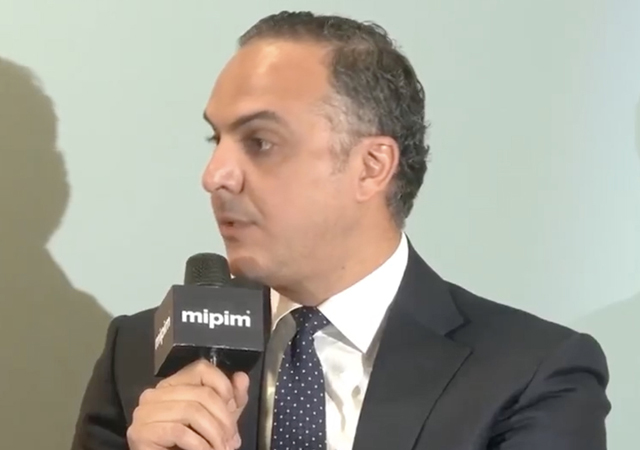
Dr Muhammad Mustafa, Regional Director for Urban Transport and Development at Egis and author of the paper, said: “Urban mobility is a defining factor in how cities grow, how people access opportunity, and how economies remain competitive. Transit-oriented development provides a proven framework to align mobility, housing, and land use in a way that delivers measurable social, economic, and environmental benefits.”
The paper highlights evidence showing that well-designed TOD can deliver a 30 to 50 per cent reduction in car trips, a 40 to 60 per cent increase in public transport ridership, and a 15 to 20 per cent reduction in household transport costs, while also driving uplifts in property value and improving overall urban efficiency.
The paper also addresses the role of emerging mobility technologies, including automated metros, autonomous electric buses, demand-responsive transit, and digital twins, in supporting integrated, multimodal urban systems, while emphasising that technology must be matched by strong spatial planning and people-first urban design.
“High-capacity transit reduces household transport costs, compact development lowers emissions, and integrated mobility increases access to jobs and services,” Dr Mustafa added. “The evidence is clear: when mobility and urban form are planned together, cities become more inclusive, resilient, and productive.”
It concludes that future urban competitiveness will depend less on how quickly people move and more on how effectively cities connect people to opportunities, arguing that integrating mobility and land use is essential to building resilient and inclusive urban environments,
The full white paper, “Urban Mobility and Transit-Oriented Development: Rethinking Housing to Drive Sustainable Urban Development in the Kingdom,” is available to download here.