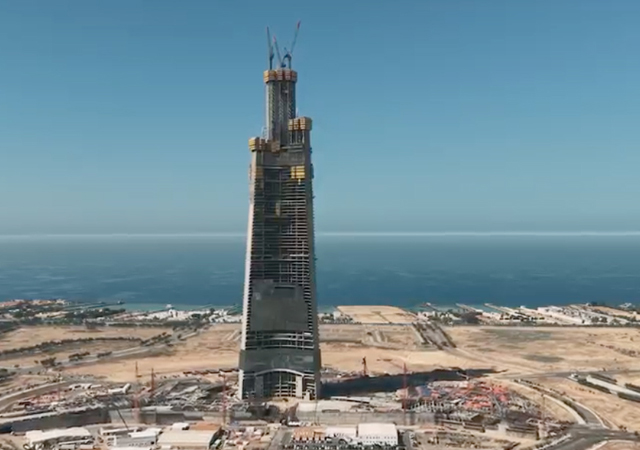



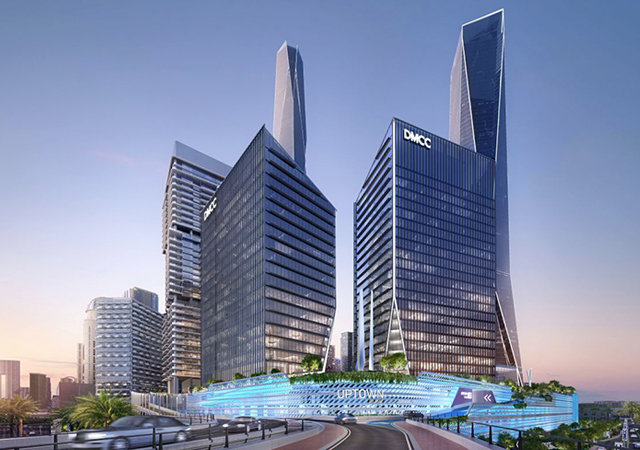



AteaM of three contractors – South Korea’s Samsung Corporation, the Belgian Besix and the local Arabtec Construction – launched work early this year on what is designed to be the world’s tallest tower – the Burj Dubai.
The stunning skyscraper – being built at a cost of $900 million – is part of Emaar Properties’ most ambitious development yet – the 500-acre Burj Dubai District.
Being developed at an estimated cost of $8 billion, the district aims to offer the cream of downtown lifestyles around the world when it reaches completion by the end of 2008.
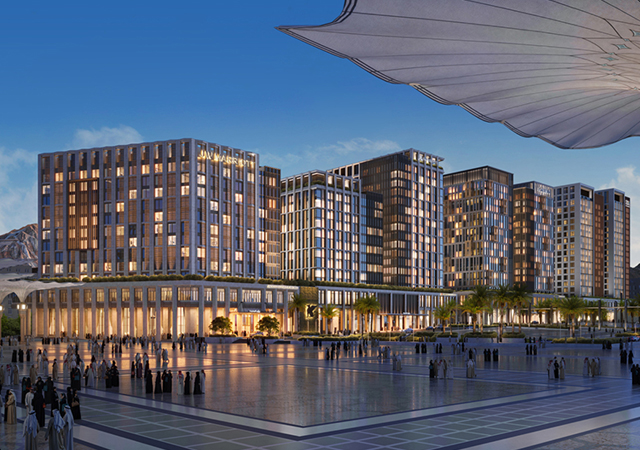
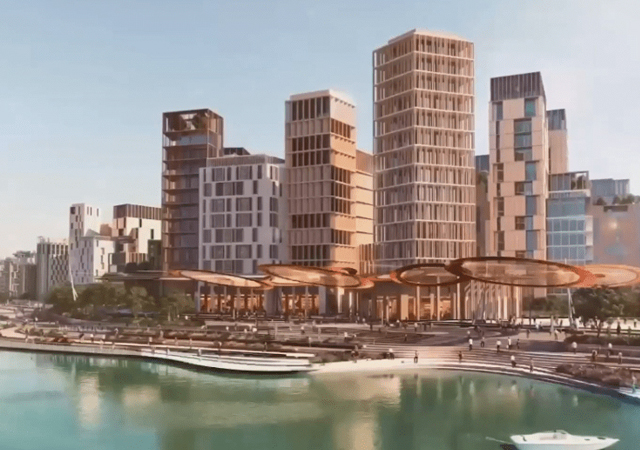
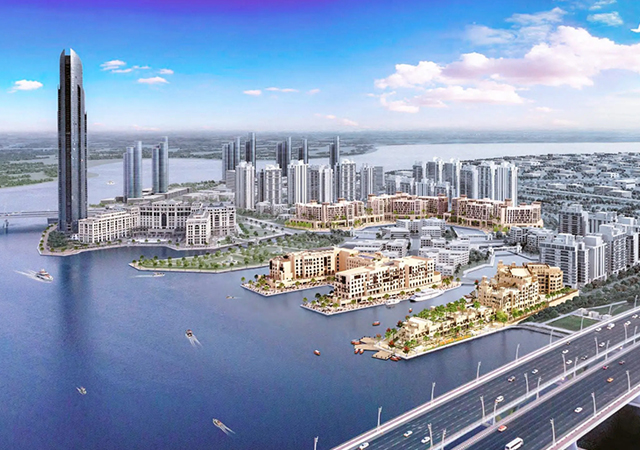
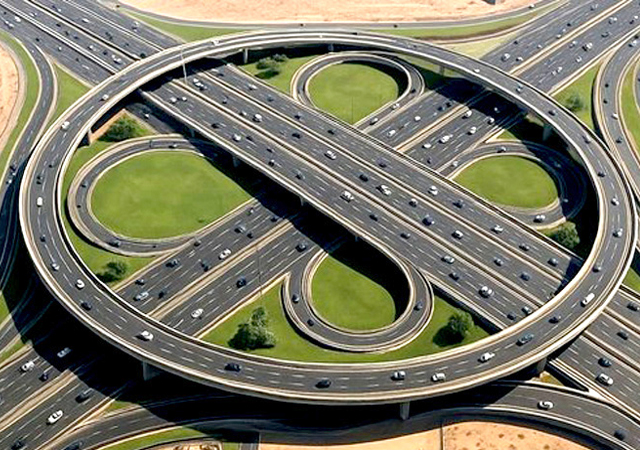
The Burj Dubai District will be a mixed-use community located near the first interchange on Sheikh Zayed Road, combining commercial and residential areas, with hotel, entertainment, shopping and leisure outlets, open green spaces, lakes and water features.
“We’ve taken the best of what great downtowns have to offer, woven it into the Arab context and developed our own unique concept. We’ve put housing, shopping, offices and public gathering places close to one another, allowing residents to walk to work, to shop, to dine, to parks and other public facilities,” says Naaman Atallah, director of sales, Emaar Properties.
Surrounding the tower in near concentric circles on the banks of a spectacular man-made lake are a host of amenities to make it a complete development, including:
• The stylish antiquity of The Old Town;
• One of the largest malls in the world – The Dubai Mall;
• A 3.5-km-long promenade lined with buildings known as The Boulevard;
• The Residences, exclusive upmarket apartments;
• The Burj Views;
• Office Park, a campus-like vicinity which will allow businesses to operate in an area where employees could easily walk to work; and
• A number of restaurants, hotels, residential facilities and office space.
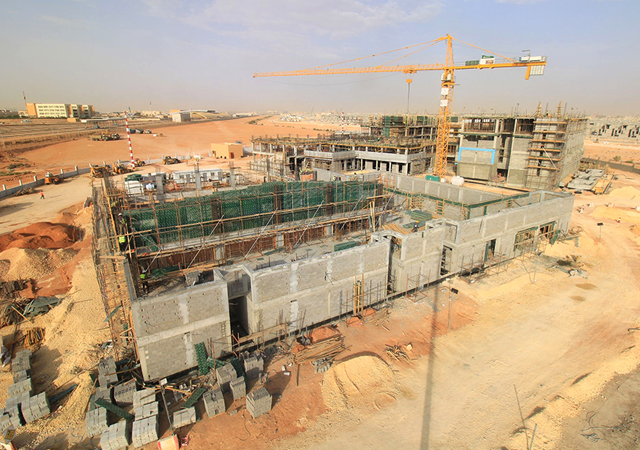
Construction work is currently under way on all the components of the project, apart from the Office Park and The Boulevard.
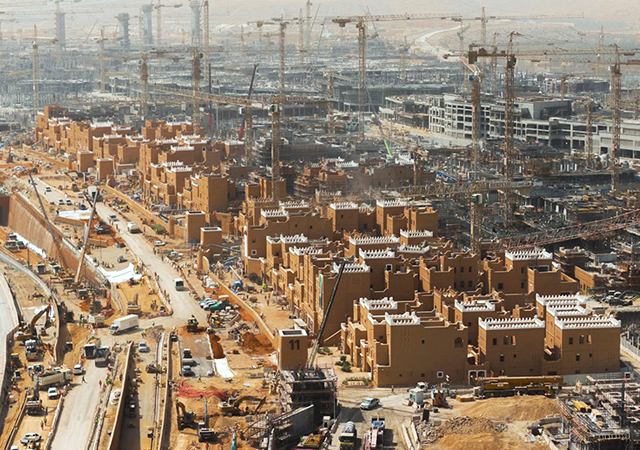
At its construction peak, a workforce of more than 20,000 construction workers will be on site to create 45 million sq ft of liveable space to accommodate 30,000 homes, making the Burj Dubai site the biggest single construction site in the world.
The Burj Dubai District will also include five to six hotels, design work on which has been completed, according to a spokesman for Emaar.
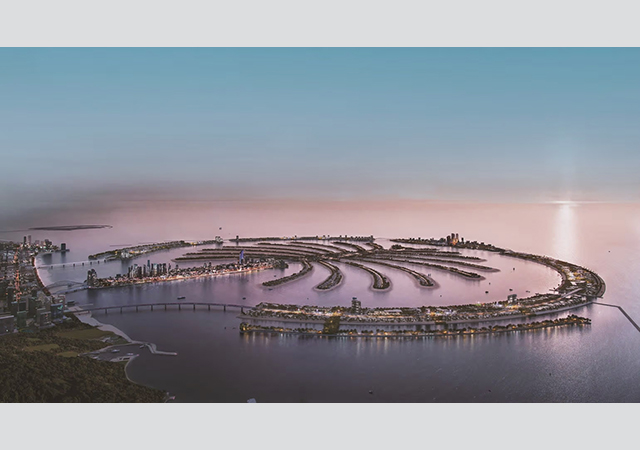
The entire development will be set in extensive landscaping, which will receive special attention. Magnificent man-made lakes will surround Burj Dubai tower and create the impression that the tower rises from an island. Open spaces will be developed to allow for a variety of “green” experiences. This will vary from different park configurations to open lake vistas and will be linked to allow pedestrians total access within the open space.
The landscape concept includes secondary streetscapes; public and private parks; a lake, Island Park and lake promenade.
Burj Dubai
Scheduled for completion by 2008, the Burj Dubai – widely reported to be more than 700 m high with 160 storeys – will tower hundreds of metres over Taiwan’s Taipei Financial Center (TFC101), which at 508 m is currently the world’s tallest tower.
The signature concrete and steel tower, when completed, will be the centerpiece of Emaar’s prestigious development.
The tower is a combination of residential and commercial space, and will include a boutique hotel, recreational facilities, serviced residences, apartments and an observatory.
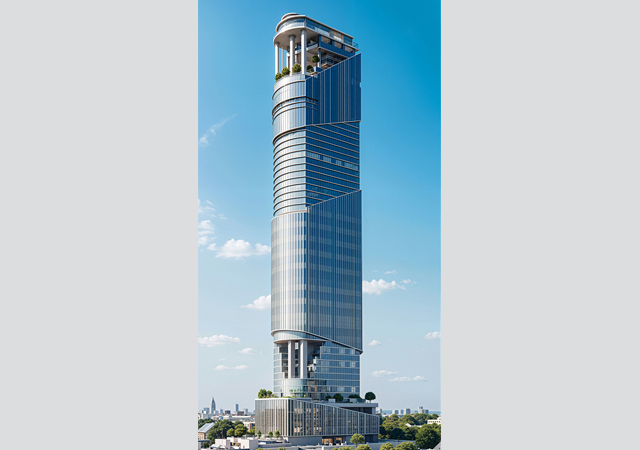
The Burj rises upward gracefully in steps with its intricate design pattern comprising three elements arranged around a central core. As it rises from the flat desert base, each element is set back in an upward-spiralling helical pattern, decreasing the mass of the tower as it reaches toward the sky and thereby decreasing the wind effects.
Chicago-based Skidmore, Owings & Merrill (SOM), which designed the tower, drew its likeness to a desert flower, combining traditional Islamic principles with recent structural design breakthroughs.
The first 39 floors will house a hotel, while luxury apartments will occupy floors 40 to 108 and offices and an observatory will sit on top. A spire will be nestled over the highest floor.
A high-performance exterior cladding system will be used for the project so as to withstand the extreme temperatures during summers. The primary materials include reflective glazing, aluminium and textured stainless steel panels and vertical stainless tubular fins accentuating the height and slenderness of the tower.
The consortium led by Samsung Corporation, was selected as the main contractor following an 11-month bidding process involving tender bids from major global contractors. Turner Construction International is the project and construction manager.
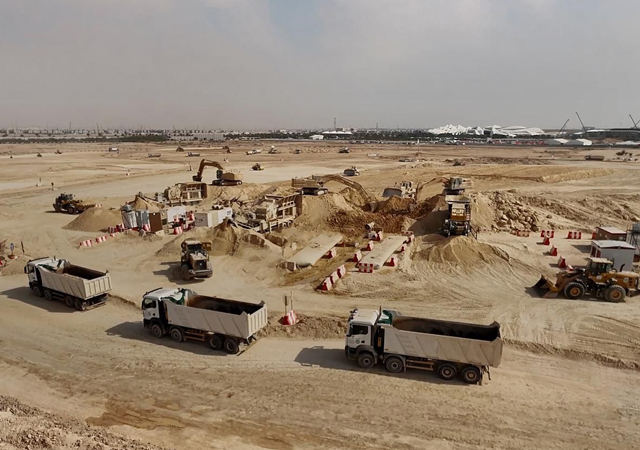
The excavating, piling work and raft foundation for this global architectural landmark was completed last September. The foundation work, completed in a record 12 months at a cost of $15 million involved some critical measures taken to ensure that the tallest man-made structure sits on a strong steel and concrete podium, according to Emaar Properties executive director Robert Booth.
The tower’s 192 piles have been constructed to depths of more than 50 m and are bound together by a 3.7 m-thick concrete raft across 8,000 sq m, encompassing the tower’s entire footprint.
Nearly 18,000 cu m of concrete was poured for the tower piles while 15,000 cu m of concrete was used for the podium piles. The raft, in addition, comprise of 12,300 cu m of concrete, bringing the total concrete poured into the foundation to over 45,000 cu m weighing more than 110,000 tonnes.
Construction of the tower from ground up is now being taken up by the consortium.
“Samsung has been awarded this contract as it meets Emaar’s global quality standards and processes which have become benchmarks for real estate developers around the world. The company has an impeccable reputation and unrivalled expertise in constructing tall towers,” says Mohamed Ali Alabbar, chairman of Emaar. “The Burj Dubai represents the next stage of growth for Emaar and will be the basis for the future developments and be a stimulus for further ambitions projects in the region.”
Dubai Mall
Besides the Burj Dubai tower, the Dubai Mall is another imposing cornerstone of the development.
Construction work on the mall is now under way following the award of a Dh2.7 billion ($735.1 million) contract to a consortium of Dutco Balfour Beatty-Al Ghandi & Consolidated Contractors International Company.
Designed by Singapore’s DP Architects, the 1.2 sq m shopping colossus will include residential, hotel and office complexes. The complex, expected to be completed by 2007, will include the world’s largest indoor gold retail market and will be flanked by an artificial lake – the largest in Dubai – as well as a residential facility. At the centre of the 25,330 sq m gold suq will be a breathtaking 50-m high dome detailed in the grandeur of historical craft tradition.
By combining a rich diversity of uses – retail, entertainment, education and medical services – within a mega-development, the Dubai Mall is designed to meet the needs of different communities as they live, work and play in the Burj Dubai District. Key architectural elements such as the atrium skylights, façade design and internal details seek to connect with, and extend the rich Arabic culture and heritage through sensitive re-interpretation of Arabic motifs and symbolism.
With a 500-m long elevation fronting Doha Road, the Dubai Mall acts as an appropriate entrance portal within the Burj Dubai masterplan, given its scale, architectural treatment and internal planning.
The Dubai Mall has a proposed gross floor area of 5.5 million sq m, spread over four levels, of which 3.6 million sq m is dedicated retail space.
The planning of The Dubai Mall is similar to that for a “micro-city” with elements of streets and nodes as well as “place-making” features. The simplicity in this planning is apparent in its identification of four major “streets” namely the Concourse, the Galleria, the Carnival Street and the Aquarium Walk, which are connected and continuous. This strategy allows a continuous-shopper loop circulation with no dead-ends, says a spokesman for Emaar.
Nodes are typically identified at junctures of the “streets”, where atria spaces such as the Media Drum atrium, Grand Atrium, gold suq atrium, Fountain Oasis, Waterfront atrium and Fashion Plaza serve as orientation devices and punctuations along the “streets”. Unique architectural features along each “street”, such as skylights, offer distinct spatial experiences while serving as identity markers, he adds.
“Finally, “place-making” features – such as the indoor aquarium, the indoor gold suq, the all-weather Carnival Grove, the Olympic-size ice-skating rink, the haute couture Fashion Island and the Waterfront Promenade – provide memorable experiences, adding new dimensions to a retail environment,” the spokesman says.
The Grand Drive is the main entry and elevation of the mall fronting Doha Road. Four key drop-off points – namely the Media Drum entrance, the Grand entrance, the Gold suq pavilion and the Carnival Street entrance – are highlighted and varied in treatment as a prelude to the internally distinct “streets” and their different characters.
These entrances fragment the scale of the mall, while providing variety and visual interest along the full 500-m length.
“The layering of the façade and architectural relief imparts a familiar grain and texture to the built form,” explains the spokesman. “This treatment echoes the Arabic architecture tradition while physically integrating with the Arabic context and the neighbouring Old Town.”
Integrated into the northwest corner of the mall is the Dubai Mall hotel and serviced apartments, with connecting water features to the adjacent Media Drum entrance along Doha Road.
There are a total of 247 rooms in the four-star hotel while the serviced apartments includes 405 units, including nine penthouse units. Naturally-lit walkways with inclined water walls and reflecting pools connect the hotel and serviced apartments to the Dubai Mall.
The roof of the mall is designed as the “fifth elevation”, in consideration of its expanse as well as views from its neighbouring developments. At night, the undulating surfaces are enlivened through the skylights over well-lit interiors, animating the rooftop even further.
Fronting the Burj Dubai lake, the Mall’s waterfront promenade is terraced with recesses serving as both shaded walkways as well as food and beverage areas. Unobstructed vistas of the Burj Dubai masterplan and Dubai’s largest man-made lake are enabled through the appropriate selection of glazing materials.
The Dubai Mall recently received global recognition as the most innovative and visionary retail project when it won two prestigious international awards at the first annual Retail Future Project Awards organised by MAPIC International Market for Retail Real Estate, held at the Palais des Festival in Cannes, France, last November for the categories of Best Retail Development Scheme (Large) and the Best Use of Lighting in a Retail Environment.
Old Town
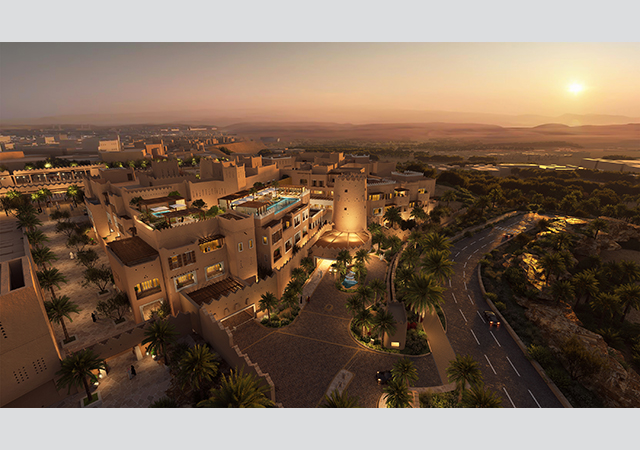
The Old Town is designed with a traditional architecture theme, including the Al-Bastakia neighbourhood of Bur Dubai and the residences of Sheikh Saeed Al-Maktoum and Mohammed Shareef Boukash, with textures that reflect the gypsum, clay or plastering used in the early twentieth century. Earthy natural tones reflect the surrounding landscape. Terraces, balconies, parapets, pergolas, recesses and niches make for comfortable outdoor living, whilst views are enhanced with elegant window and door openings.
With the building area spread over 3.7 million sq ft, The Old Town will feature courtyard apartments and suq-style retail facilities recreating at once the mystical world of ancient Arabia associated with lush palms, winding alleys and bustling marketplaces with exotic merchandise. Walkways, rooftop terraces, landscaped gardens and water features will provide a sense of exclusivity.
Boutique offices will provide a unique working environment for a number of small to medium-sized businesses. A hotel will anchor the Old Town site and provide visitors with the opportunity to stay in a modern but quaint Arabian setting.
Described as a pedestrianised lifestyle development with spectacular views of Burj Dubai and the Dubai Mall, the project aims to articulate inspirational Arabic culture within the most influential address on earth. Construction has already begun and the first apartments will be ready for handover by the end of 2006.
The development ranges from low-rise three-storey apartment buildings to a number of exclusive mid-rise towers with penthouses.
This choice comprises one-room to four-room apartments and penthouses ranging from 725 to 3,150 sq ft.
“We developed The Old Town as a beautiful reminder of our glorious past which is the bedrock of our future. It is this unique message of timelessness which defines the development and finds an echo in the hearts of our buyers,” says Atallah.
Residences & Burj Views
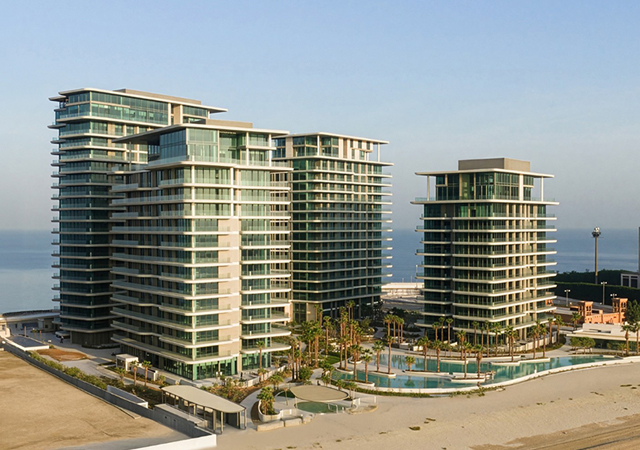
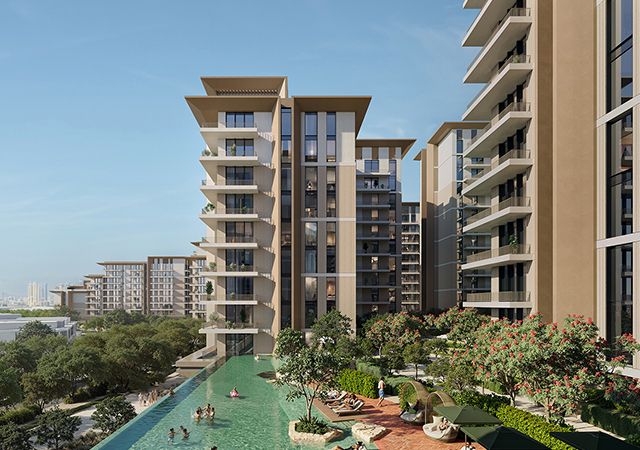
Work is under way on The Residences, which consists of six exclusive towers built on the edge of a spectacular man-made lake in the shadows of the Burj Dubai. Comprising one, two and three bedroom luxury apartments, the homes feature two design themes, Andalucia and Metropolitan expressed in elegant woodwork and rich finishes. The buildings are due for completion by the end of 2006.
Meanwhile, construction work is under way on the Burj Views, a three-tower project which will provide stunning views of the district and the world’s tallest tower.
The one and two-bedroom Burj Views residences range from 726 to 1,400 sq ft and offer a combination of amenities and value.
The project is created for the upwardly mobile executive and aims to provide affordable lifestyle.