













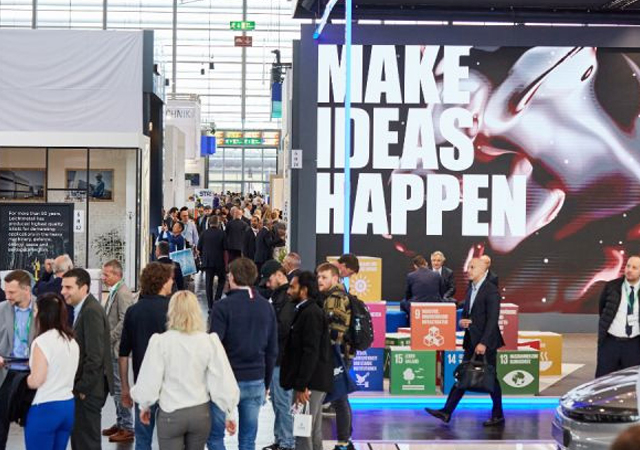



Qanbar Dywidag Precast Concrete Company Limited (QDC) – a leading manufacturer of precast concrete products in Saudi Arabia – will promote its vast range of precast products at the forthcoming SaudiBuild 2004.
“There are several factors that have encouraged us to participate at the expo,” says marketing manager Ahmed Sameh. “We believe that the future is bright for precast concrete construction in Saudi Arabia and a construction trade exhibition such as the SaudiBuild, which serves the region’s leading construction market, could provide an ideal platform to showcase our products.”
“The construction scene in Saudi Arabia, in particular, and the Middle East in general, is booming, and SaudiBuild serves as a gateway for companies to establish their presence and to reach out to the buyers and decision-makers in this rapidly growing market,” he adds.
“We intend to promote our high-quality precast and pre-stressed concrete products at this year’s expo, and also wish to create awareness among prospective clients of the quality of our products. In addition, we intend to focus on our capability to produce a diverse range of products that often exceeds the expectations of our clients.
“Clients can be assured of the quality of our precast components as they are produced under strict factory-controlled conditions. They are easy to maintain and are offered in a wide range of finishes. Also, they help speed up construction and therefore allow early occupation of projects, and early return of investments,” he says.
QDC is a specialised precast concrete manufacturing company and its scope of work includes design, manufacturing, delivery and installation of precast and pre-stressed concrete components in accordance to our specifications, which are based on international standards and American – PCI/ACI or BS.
QDC provides a comprehensive range of products, and serves as a one-stop shop for all precast and pre-stressed concrete that includes: standard precast concrete elements and products such as paving and interlocks tiles, manholes and seating; external claddings panels; hollow-core slabs; double-tee slabs and precast domes; pre-stressed long span girders, wall frame and beams; and column frames and boundary walls. These elements are offered with various external finishes in sandblasted, washed aggregates and different formliner finishes.
At this year’s expo, the company will promote:
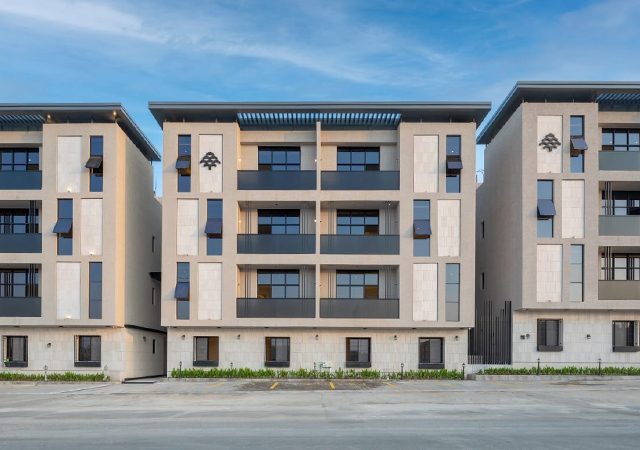
- QDC claddings panels, which are available in a wide variety of finishes. They offer a choice of external surfaces, enhancing the architectural beauty of the buildings;
- Wall frame system, which is a fast and economical option for housing complexes, schools and hospitals;
- Column and beam system, offered in a wide range to meet the design requirements;
- Hollow-core slabs that offer a fast and economical solution for suspended floors and roofs construction, both for concrete structures and steel structures on steel or concrete beams;
- Precast boundary wall systems, which are available a wide variety of designs and finishes, making precasting ideal for this application because of the repetition of units;
- Paving and interlocking tiles that are produced in a wide range of colours, sizes and textures to suit every application; and
- Standard products such as manholes, barriers, benches, which offer high-quality and durability.
The future
After having achieved a highly successful year in terms of growth, QDC has announced an ambitious plan for the near future that includes the expansion of its facilities and the production of glass reinforced concrete (GRC) products.
“This year, we have achieved a 30 per cent increase in production, and we have secured a considerable volume of sales, in addition to completing all spillover works from last year,” says Sameh.
“The market is growing and the demand of precast concrete has been on the rise with clients realising the benefits of using precast concrete in their projects, especially in the construction of showrooms, housing, apartments, hospitals, schools and shopping malls.
Established in 1981 as a partnership between Shaikh Abdul Razzak Mohammed Qanbar Al Ansari – a leading businessmen in the Eastern Province – and one of the largest West German general contractors and precast concrete manufacturer Dycherhoff and Widmann AG (Dywidag), QDC was bought over by Al Ansari in 2002. Since then Dywidag has continued to provide technical support.
Located in the industrial city of Jubail, QDC has an annual production facility of 180,000 cu m of various precast products and a 1,500-member workforce. The company, whose sales network includes offices in Jubail, Dammam and Riyadh, boasts an impressive 22 per cent share of the domestic market.
Sameh continues: “Although our main market remains the Eastern Province and the central region, we cater to the demands from all over the kingdom and have also supplied to projects in Abha and Yanbu.”
“We are close to completing works on Al Ansari Compound in Al Khobar where we have completed the full building frame system including columns, beams and hollowcore for 50 villas and four apartment blocks.
“Other major projects in hand, which involve the supply of full building frames include: King Faisal University campus in Hasa and Dammam; a 274-villas housing compound at Jubail for Saudi Basic Industries Company (Sabic); industrial facilities for Sabic affiliates; Al Dabbal Commercial tower at Dammam; Arabian Drilling Company Complex (comprising, offices and residential units) at Al Khobar; large private housing projects; and shopping malls such as the Dammam Mall.
“Aiming to achieve ISO certification, we started implementing ISO9001-2000 quality procedures in 2001 and our efforts were rewarded in early 2002 when we were awarded the ISO9001-2000 certification,” says Sameh. “We remain the only precast company in Saudi Arabia with the ISO certification.”
With regards to maintaining quality, QDC extensively uses the services of its fully calibrated and tested quality control laboratory at its factory to ensure “real time” control all the time.
“Our quality assurance system ensures maximum control over the production process due to permanently set “factory-like” procedures, and maximum safety due to need for minimum work on site,” Sameh concludes.




5.jpg)