















Saudi Arabia is rapidly transforming its aviation landscape with a massive, nationwide infrastructure overhaul. Leading the charge is Riyadh, where construction is progressing on a mega-airport destined to be the world’s largest. Beyond the capital, the kingdom has greenlit a new international gateway for Makkah, issued a public-private partnership tender for a hub in the Hejaz highlands, and announced a major upgrade for the Eastern Province’s key airport. Meanwhile, modernisation of a terminal in the northwest has just been completed.
These projects sit within Saudi Arabia’s National Aviation Strategy, which aims to triple annual passenger traffic to 330 million travellers by 2030, increase air cargo volumes to 4.5 million tonnes, and expand the kingdom’s total air connections to more than 250 destinations. Overall investment in the aviation sector is reported at $100 billion.
To spearhead this ambition, late last year, the kingdom appointed Mott MacDonald as Airports Masterplan Framework consultant to advise on airport development across Saudi Arabia. In this wide-ranging role, Mott MacDonald will conduct comprehensive reviews and updates to existing masterplans for 25 Saudi airports and develop robust strategies for future growth and investment.
The development of these airports, which are owned and operated by Matarat Holding and its subsidiaries, is a vital part of Saudi National Aviation Strategy and Saudi Vision 2030, helping to drive economic development, tourism and regional connectivity.
Under the two-year contract, Mott MacDonald’s sector specialists will outline development strategies for Matarat’s airports by addressing future demand, facility capacity, land use, development alternatives, preferred plan selection and implementation strategies, including infrastructure upgrades. They will develop comprehensive development plans for short-, medium- and long-term airport growth, environmental impact assessments and estimates of capital expenditure investments for the next 25 years.
The 25 airports covered by the framework include two major hubs, Riyadh Airport and Jeddah Airport, five airports focused on international travel and tourism, six regional airports, six domestic airports and six remote airports, which serve a social or developmental purpose.
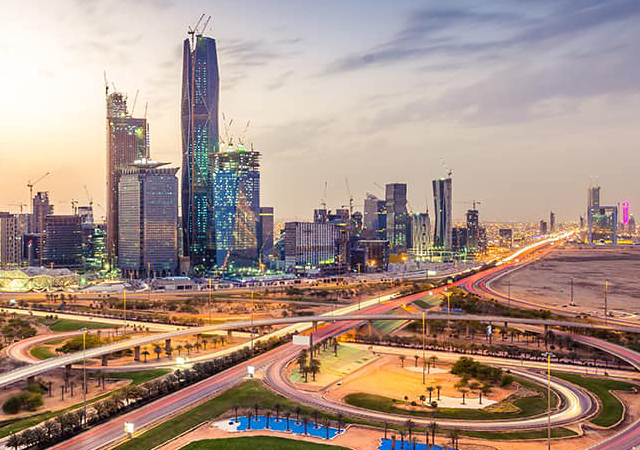
In line with this ambition, major projects are under way – the most ambitious of which is King Salman International Airport (KSIA), which is aimed to become the world’s largest airport integrated in an existing airport site.
KING SALMAN INTERNATIONAL AIRPORT
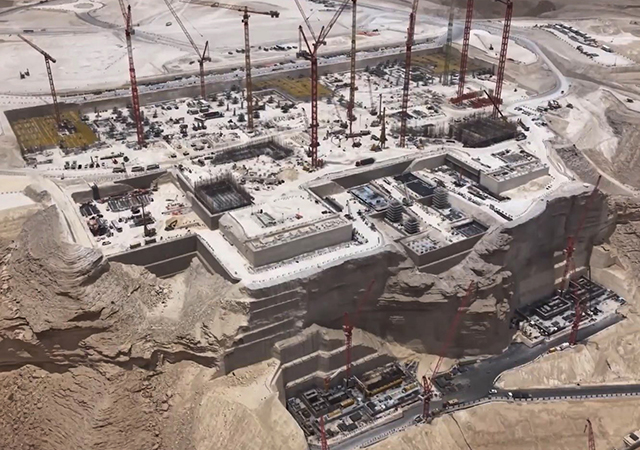
King Salman International Airport Development Company (KSIADC), a Public Investment Fund (PIF) entity, has commenced works on the project’s third runway, a strategic step the developer says reflects continued progress in airfield development and enhances operational readiness to support long-term growth in air traffic demand.
A joint venture of Spain’s FCC Construcción and Saudi contractor Al-Mabani General Contractors is carrying out the works. The runway, 4,200 m in length with multiple access taxiways, has been designed to align with Riyadh’s prevailing wind conditions to improve safety and operational efficiency, and is expected to raise the airport’s hourly movement capacity from 65 to 85 aircraft once operational.
In parallel, construction on a new passenger terminal, which is designed to handle 40 million passengers annually, is set to begin in 2026, marking the first major phase of Riyadh’s strategy to build this mega aviation hub. KSIA’s acting CEO Marco Mejia confirmed the next phase will also include new aircraft hangars and key airside infrastructure, with operations targeted to begin in 2029.
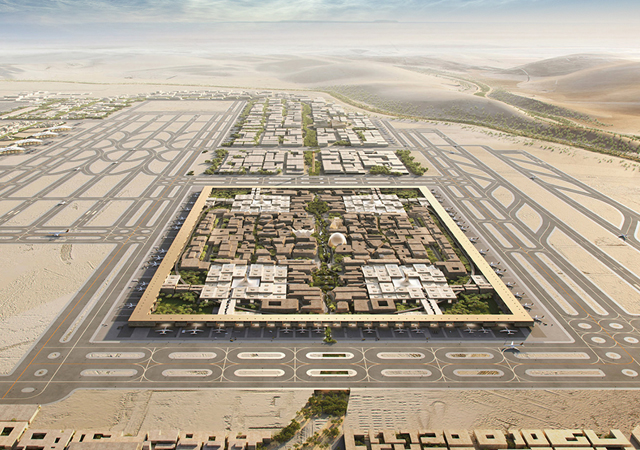
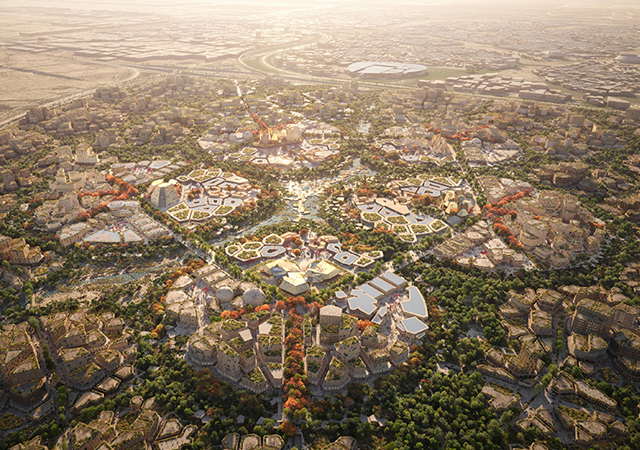
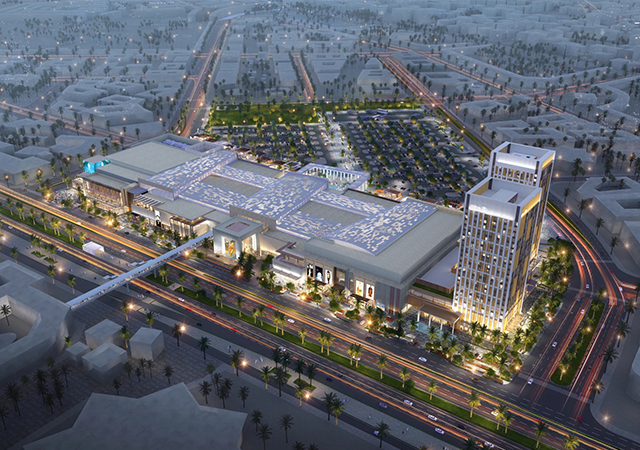
The airport project spans nearly 57 sq km and will integrate the existing King Khalid International Airport facilities, encompassing six parallel runways, aviation support zones, logistics facilities, retail districts and residential developments. Nine terminals are planned in total, including a royal terminal, a commercial airline terminal, a dedicated private aviation terminal and a cargo terminal for low-cost carriers.
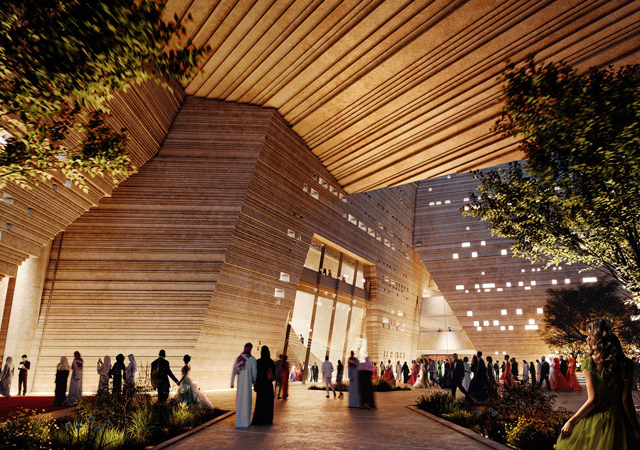
The project’s architectural plan is being led by UK firm Foster + Partners. The firm’s concept reimagines the traditional terminal as a single concourse loop served by multiple entrances, connecting passengers to the sensory experiences of the city through natural elements, tempered light and state-of-the-art facilities. The airport will target LEED Platinum certification and be powered by renewable energy.
KSIA is expected to become the future home of Riyadh Air, the kingdom’s new national carrier, and serve as a major catalyst for economic diversification through enhanced connectivity, expanded cargo capacity and increased tourism flows. The masterplan targets 120 million passengers annually by 2030, rising to 185 million by 2050.
MAKKAH INTERNATIONAL AIRPORT
Saudi Arabia has officially approved plans for Makkah International Airport, the holy city’s first dedicated international airport, marking a historic breakthrough in the kingdom’s infrastructure expansion under Vision 2030. The strategic approval, confirmed by the Royal Commission for Makkah City and Holy Sites (RCMC), will allow millions of pilgrims to arrive directly in Makkah rather than routing through Jeddah’s King Abdulaziz International Airport before travelling roughly 100 km by road to the city.
For decades, direct air access to Makkah remained impossible due to the city’s mountainous geography, which aviation specialists deemed too challenging for airport operations. Turbulence risks, visibility limitations, and difficult landing conditions prevented airport construction. Saudi planners are now pursuing advanced engineering solutions and new transport technologies to overcome these obstacles and support the kingdom’s rapidly growing religious tourism ambitions.
Saleh Al-Rasheed, CEO of RCMC, confirmed in an interview with Harvard Business Review Arabia that the airport’s strategic and investment direction has received official approval. He added that the RCMC will work with the private sector to develop suitable investment models without affecting the feasibility of airports in neighbouring cities.
NEW TAIF INTERNATIONAL AIRPORT
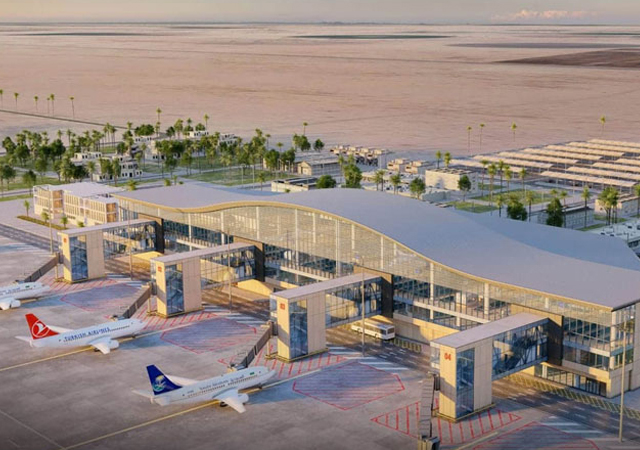
In the Hejaz region, Matarat Holding and the National Center for Privatization & PPP (NCP) have launched the request for proposals (RfP) phase for a new Taif International Airport, inviting qualified private sector bidders to participate in a build-transfer-operate (BTO) concession running 30 years inclusive of the construction period.
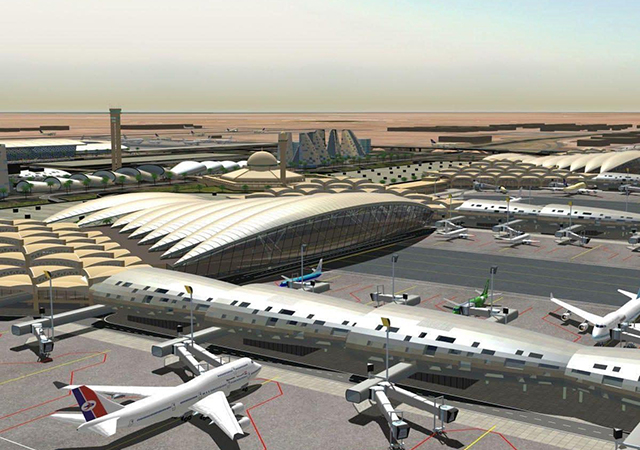
The new Taif Airport is designed to handle 2.5 million passengers annually by 2030.
The new facility will be located 21 km southeast of the existing Taif Airport and is designed to handle 2.5 million passengers annually by 2030, with capacity scaled to meet projected demand through 2055. The scope includes a runway with a full-length parallel taxiway connecting to a single commercial apron, a passenger terminal, facility buildings, utility networks, car parks and access roads.
The project is positioned as a relief valve within the region’s multi-airport Umrah pilgrimage network, complementing King Abdulaziz International Airport in Jeddah, Prince Mohammed bin Abdulaziz Airport in Madinah, and Prince Abdulmohsen bin Abdulaziz Airport in Yanbu.
KING FAHD INTERNATIONAL AIRPORT, DAMMAM
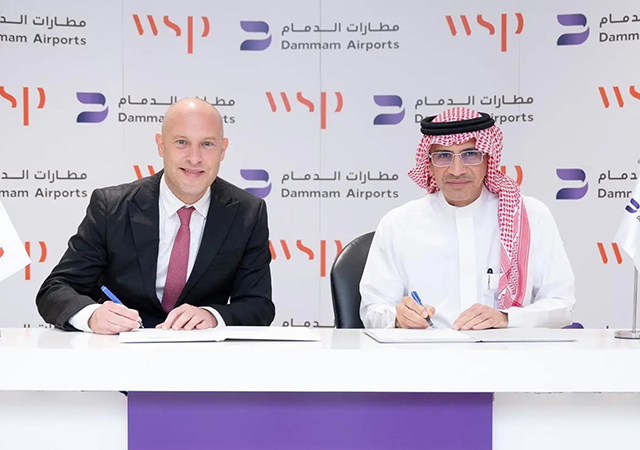
Dammam Airports Company (DACO) has signed a package of infrastructure contracts valued at more than SAR1.2 billion to upgrade King Fahd International Airport (KFIA), with the agreements forming part of a broader transportation sector package exceeding SAR3 billion, signed in the presence of Prince Saud bin Nayef bin Abdulaziz, Governor of the Eastern Province.
A significant portion of the contracts covers construction of a new power station and a medium-voltage electrical distribution network at the airport, alongside upgrades to KFIA’s existing electrical grid to improve reliability, operational resilience and capacity to support future expansion and rising passenger demand.
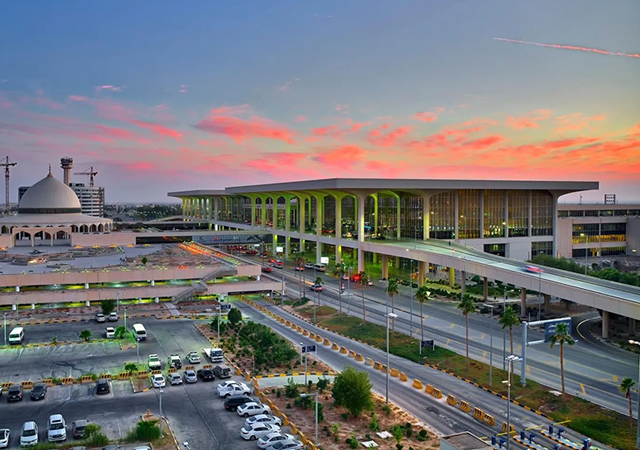
King Fahd International Airport, Dammam ... being expanded.
DACO also awarded a contract for the rehabilitation and upgrade of the northern access road to the airport, including the section connecting to Safwa Bridge, designed to improve road safety standards, enhance traffic flow and provide a more efficient transportation link for airport users. A further lease agreement was signed for dedicated aircraft catering facilities at KFIA, to facilitate the expansion of aviation catering operations and support the airport’s growing airline and passenger requirements.
The works sit within a broader masterplan focused on transforming KFIA into a major regional hub, with passenger capacity targeted to grow to over 19.3 million annually by 2030 and air cargo capacity expected to surpass 600,000 tonnes per year — more than 10 times current volumes.
Last year, Dammam Airports inaugurated electronic gates to streamline passenger procedures, and launched a package of integrated development projects worth over SAR1.6 billion, including 77 projects aimed at upgrading infrastructure and enhancing the passenger experience.
Key features of the future development include the airport’s largest-ever expansion, designed to increase operational capacity to 77 aircraft movements per hour and raise annual passenger capacity to 32 million. The plan also includes a full upgrade of general aviation facilities and the expansion of infrastructure to meet global operational standards, it stated.
Currently Saudi Arabia’s third-busiest passenger gateway, KFIA is operated by DACO under a long-term development framework aligned with Vision 2030, with a multi-billion-riyal programme aimed at boosting annual capacity toward the 20-million-passenger mark by the end of the decade.
ABHA INTERNATIONAL AIRPORT
A winning consortium is expected to be announced shortly for the privatisation of Abha Airport, marking yet another milestone in the kingdom’s airport privatisation programme under Vision 2030.
The authority aims to boost Abha Airport’s capacity from 1.5 million to 13 million passengers in three phases, which is expected to position Abha as a major regional aviation hub, supporting Saudi Arabia’s broader tourism ambitions, including the development of nearby Al-Baha province and the Red Sea Project.
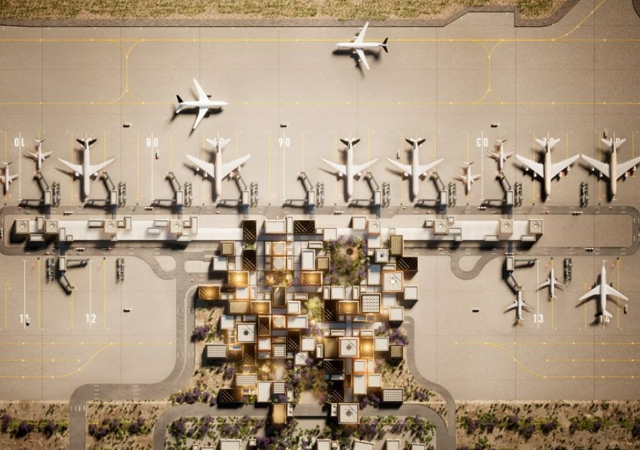
Abha Airport ... a winning consortium is expected to be announced shortly.
The winning bidder will complete the expansion work by 2028, according to Matarat, the Saudi Civil Aviation Holding Company responsible for the airport’s development.
In December 2024, Matarat issued a Request for Proposal (RFP) to pre-qualified bidders for the privatisation, expansion, and improvement of the New Abha International Airport Project. A decision is now expected in the third quarter of 2026.
ALWAJH INTERNATIONAL AIRPORT
Red Sea Global (RSG) has completed the modernisation of AlWajh International Airport (EJH) in the Tabuk region, with the facility now receiving domestic services and gearing up international flights. The upgraded terminal can accommodate aircraft up to the Airbus A320 and Boeing B737 families as well as seaplanes, and has raised annual passenger capacity to 500,000 – five times the previous threshold – with a peak throughput of 330 arriving and departing passengers per hour across four gates.
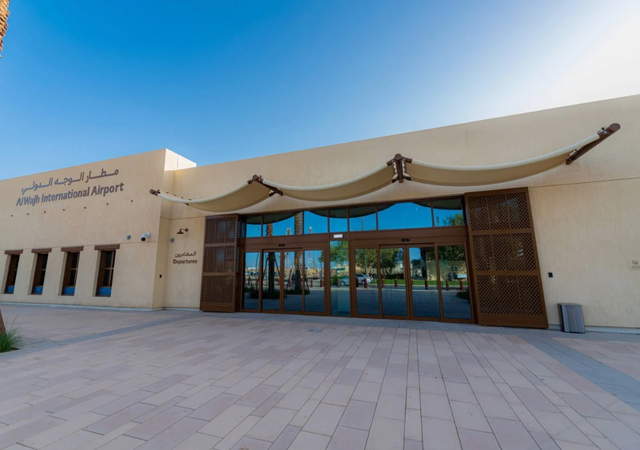
AlWajh International Airport in the Tabuk region ... newly upgraded.
This enhanced connectivity will support local demand, tourism growth, business activity, and employment opportunities across the wider Tabuk region.
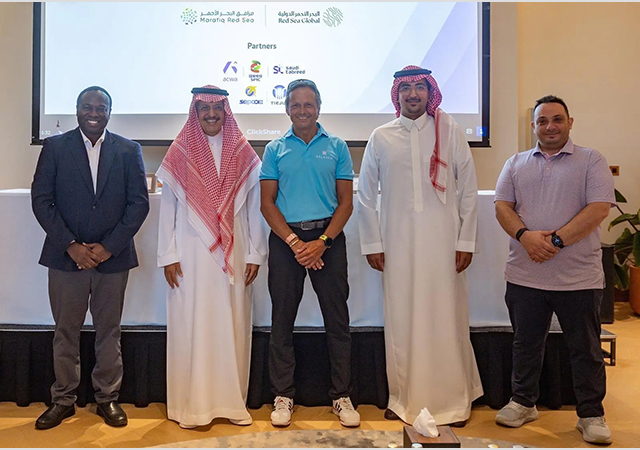
“This project is about far more than an airport terminal. It’s about creating a gateway that connects people, supports economic growth, and opens new opportunities for communities across the region,” said John Pagano, Group CEO of Red Sea Global.
The airport will serve as a primary access point for AMAALA, RSG’s luxury wellness destination which welcomed its first guests in June, located 45 minutes by electric vehicle and 20 minutes by seaplane from the terminal. The project marks RSG’s first infrastructure delivery under a mandate expanded beyond destination development.