























The GCC states are pouring hundreds of billions into a major overhaul of their aviation infrastructure at a pace unmatched anywhere in the world, as governments race to cash in on the region’s strategic position at the crossroads of three continents.
Airports projects worth a total of $182.6 billion are under way including renovation, expansion and new construction projects, according to London-based analytics firm GlobalData, as the region prepares for a significant surge in air passenger numbers.
Saudi Arabia commands the largest share of that pipeline at 42.5 per cent, followed by the UAE at 26.8 per cent, with 78.7 per cent of total regional pipeline value already in pre-execution or execution phases. Airports Council International’s Asia-Pacific and Middle East division projects that the two regions will invest approximately $240 billion in airport infrastructure between 2025 and 2035, creating an additional 680 million passengers of capacity through brownfield modernisation alone.
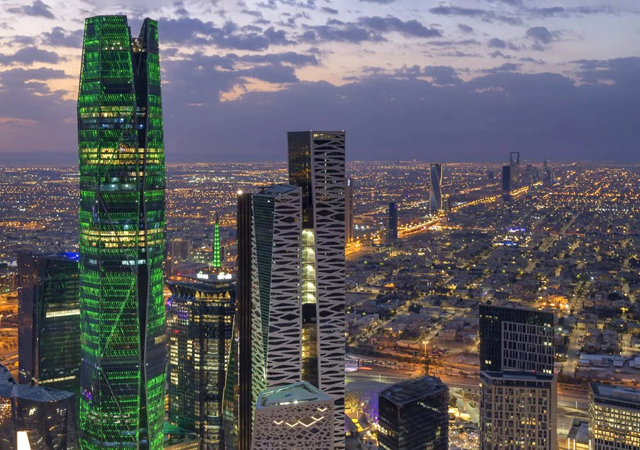
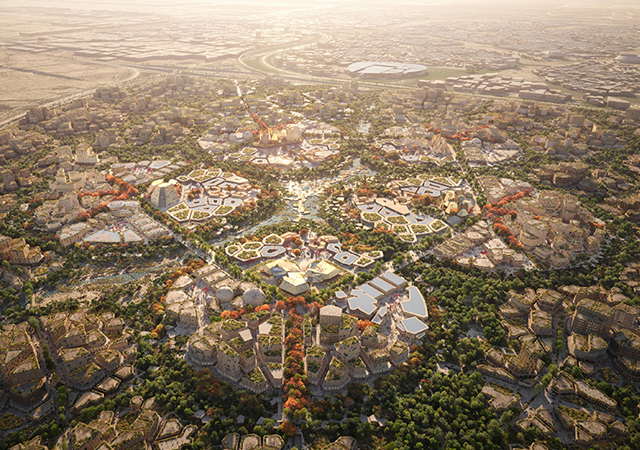
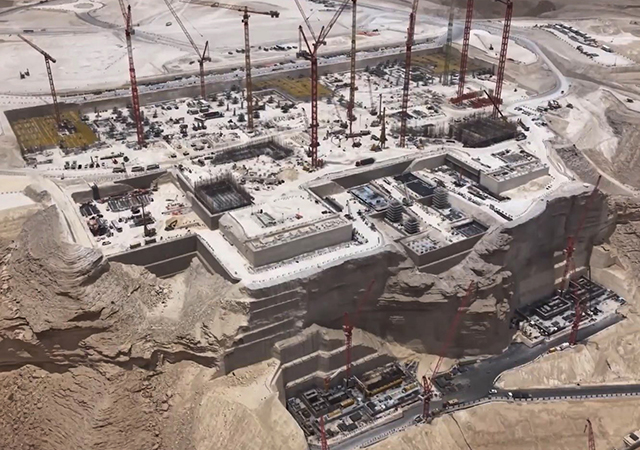
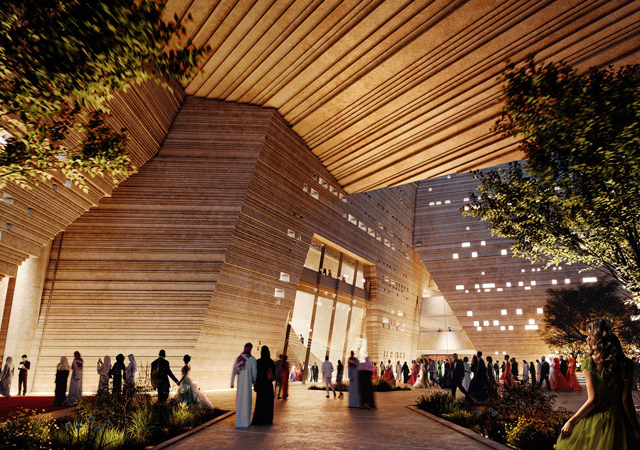
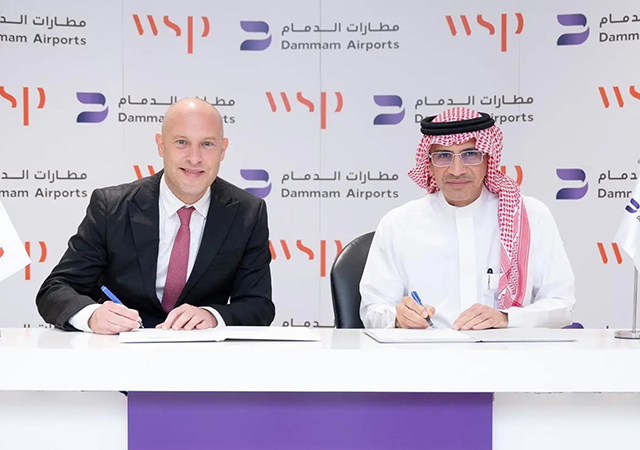
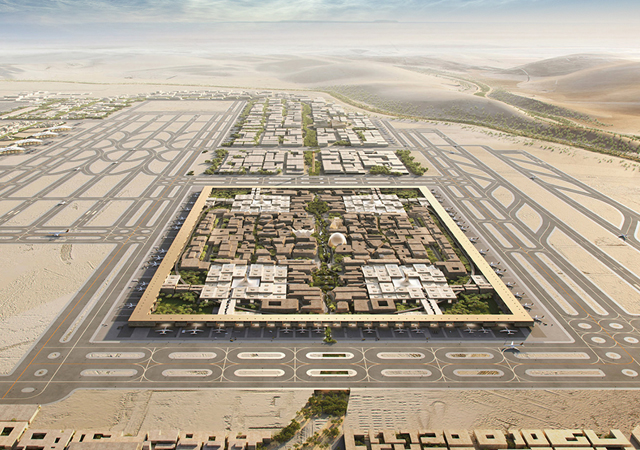
At the heart of Saudi Arabia’s programme is King Salman International Airport in Riyadh, a six-runway mega-hub targeting 185 million annual passengers by 2050 and projected to become the world’s largest such facility integrated with an existing airport site. Alongside it, plans for the first-ever airport in Makkah have been formally approved, a new public-private partnership tender launched for Taif, fresh infrastructure contracts awarded at Dammam, and a modernised terminal completed at AlWajh – all within the same calendar quarter (see Page 50).
A large number of airport expansion programmes are under way across the Gulf.
KUWAIT
The landmark Terminal 2 at Kuwait International Airport is slated for completion by the end of this year as part of a massive modernisation drive aimed at transforming the Gulf nation into a regional aviation hub. The $5.8-billion project, centred on a 700,000-sq-m terminal designed by Foster + Partners and built by Türkiye’s Limak İnşaat, was reported at 81 per cent complete in late 2025, with structural elements largely finished and the focus shifting to interior fit-outs, baggage systems, security infrastructure and systems integration.
On June 3, Kuwait International Airport suffered a major setback when Iranian drones struck the existing Terminal 1, causing severe structural damage and fires, one fatality, and over 60 injuries. There were no reports of any damage to Terminal 2 (under construction).
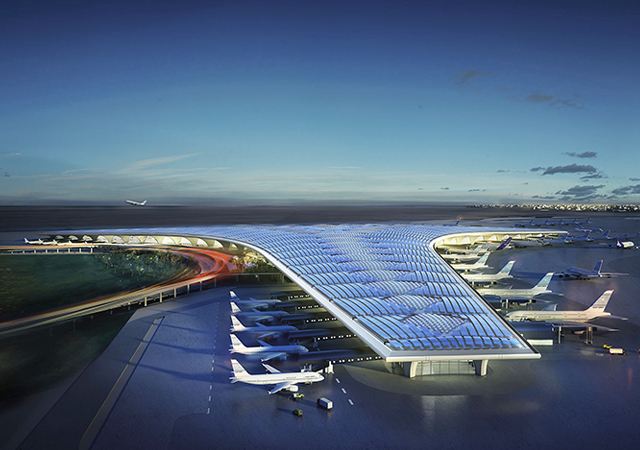
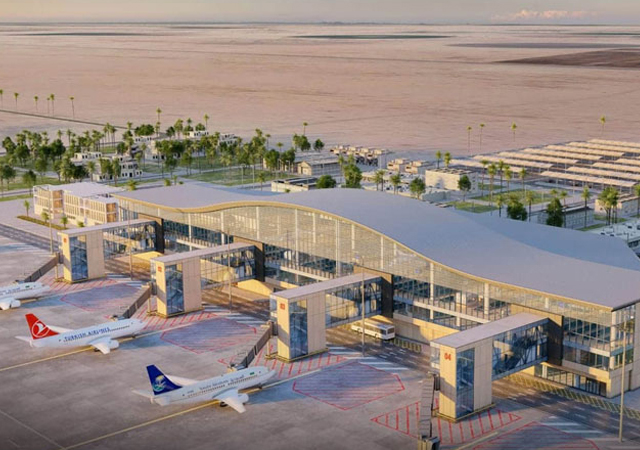
Kuwait International Airport Terminal 2 ... nearing completion.
With work nearing completion on the triangular Terminal 2, the Central Agency for Public Tenders (CAPT) has opened bids from companies interested in operating, managing, and maintaining the new passenger terminal and its associated facilities at Kuwait International Airport.
The tender encompasses operating and managing Terminal 2 along with the aircraft parking areas, enhancing training services, and overseeing the centralised operation and maintenance of the entire airport. Three companies submitted bids, which have now been referred to the Directorate General of Civil Aviation (DGCA) for technical evaluation and recommendations.
The tender is part of the wider T2 airport expansion project, led by the Ministry of Public Works. The project is being completed in three phases before the terminal is handed over to the DGCA. The new facility will have capacity for up to 25 million passengers a year and include stands for 51 aircraft, a transit hotel linked to the terminal, VIP and first- and business-class lounges, a central terminal building, and a water tank building.
Construction began in May 2017, with the project having experienced multiple delays linked to the Covid-19 pandemic, supply chain disruptions and regional instability. The terminal is one of the world’s largest environmentally sustainable airport projects, forming a central pillar of Kuwait’s New Kuwait Vision 2035.
A new 4.58-km third runway and 70-m-tall air traffic control tower opened in late 2025 to increase capacity ahead of T2’s launch.
OMAN
Oman’s airport development plans focus on capacity expansion, new infrastructure, airport city projects, and boosting regional connectivity to support Vision 2040 tourism and economic diversification goals.
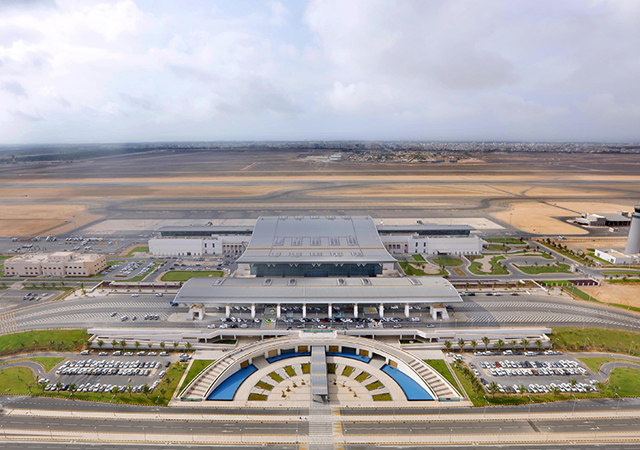
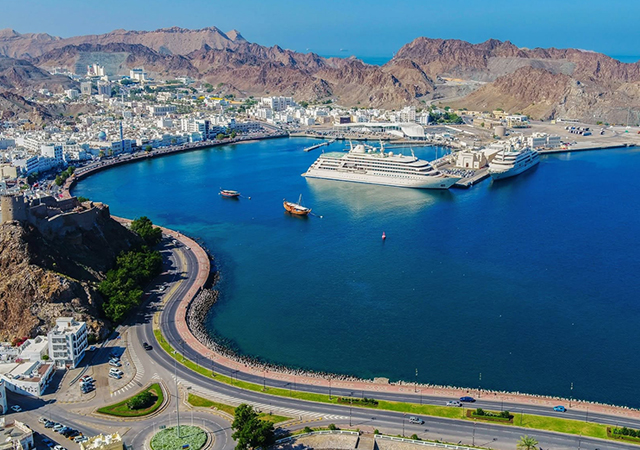
A new airport city is set to take shape around Muscat International Airport.
The sultanate is advancing the plans for the development of multiple airports under its National Aviation Strategy 2040. Studies for a new airport in Musandam have been completed and the executive plan is expected to receive approval this year. The project will be developed in two phases: the first includes a 2,520-m runway, a terminal with a capacity to handle 250,000 passengers annually, an air traffic control tower and a new 7-km access road; while the second phase expands the runway to 3.3 km with associated terminal growth.
Oman Airports has also floated tenders for the expansion of Suhar airport as well as for the design and build of prefabricated structure terminal buildings at Jabal Al Akhdar and Masirah airports, as the sultanate moves to connect two of its most popular tourism destinations by air.
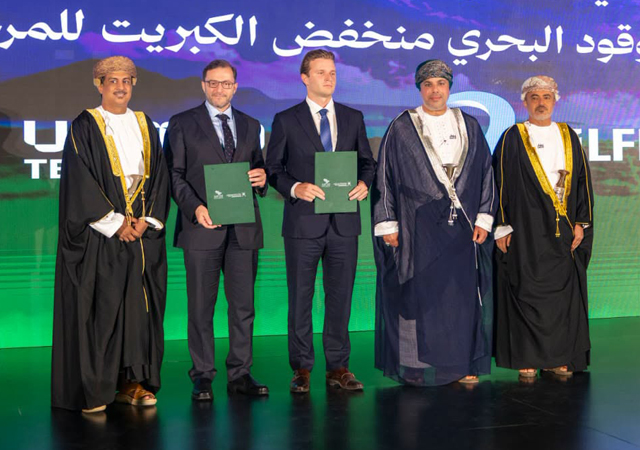
This apart, the sultanate has signed investment agreements worth $130 million to build a new airport city around Muscat International Airport, incorporating logistics, hospitality, commercial and residential districts within a free zone covering around 2 million sq m.
Another airport city has been planned at Salalah Airport, aimed at attracting investment and accelerating economic growth in the Dhofar governorate.
QATAR
Hamad International Airport completed its comprehensive expansion programme in March 2025 with the opening of Concourses D and E, raising annual capacity to over 65 million passengers. The terminal area expanded by 14 per cent to cover 845,000 sq m, and 17 new boarding gates were added, bringing the total to 62 – nearly 40 per cent more than before.
Following the recent expansion, ongoing and planned work is focused on optimisation, infrastructure upgrades, and further capacity increase. Planned works include eastern runway remediation to ensure compliance with ICAO safety standards, delivered through phased planning to maintain continued operations.
Qatar also has plans to increase the airport’s capacity by about 20 per cent through targeted improvements to check-in and arrivals halls, baggage handling systems, better utilisation of non-peak hours, and operational efficiencies – without major new construction in the immediate term.
UAE
The UAE is aggressively expanding its airport infrastructure across major hubs to support massive tourism, aviation, and economic growth ambitions under national visions like Dubai Plan 2030 and Abu Dhabi’s plans. Key focus areas include capacity increases, new mega-terminals, and integrated aerotropolis developments.
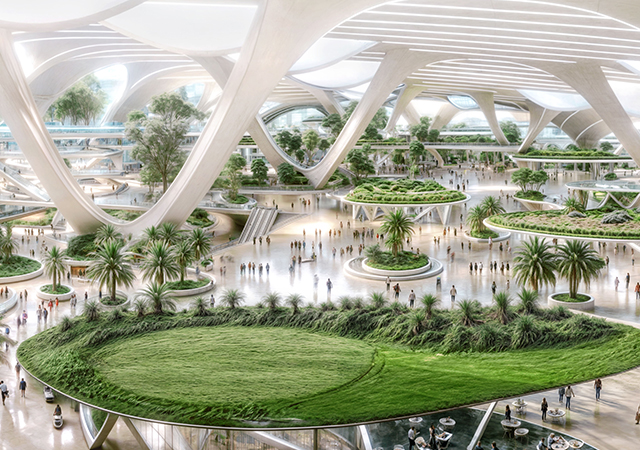
Al Maktoum International Airport in Dubai aims to become the world’s largest airport.
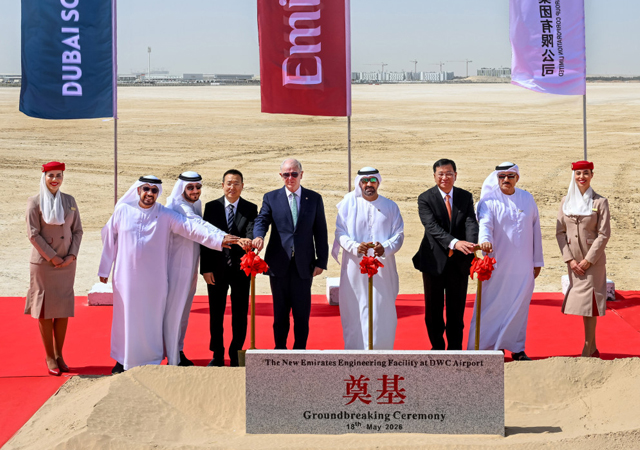
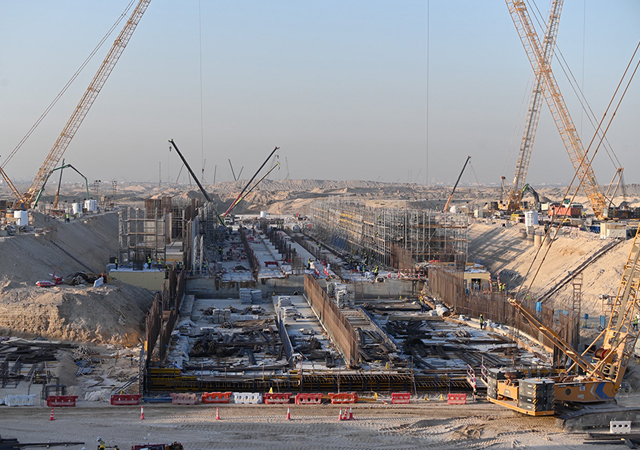
A $35-billion (AED128 billion) expansion of Al Maktoum International Airport aims to create the world’s largest airport, with five runways, 400 gates, and ultimate capacity of 260 million passengers annually (plus 12 million tonnes of cargo). Phase One (targeting about 150 million) is on track for operations around 2032, with full development extending beyond (see Page 46).
Abu Dhabi Airports, the state-owned operator of Zayed International Airport, is developing a detailed masterplan, prepared by Aertec, for a large-scale airport expansion scheduled to begin in 2027 and complete by 2032. The plan builds on the opening of Midfield Terminal Complex (Terminal A) in late 2023, which currently accommodates 45 million passengers per year. A new masterplan is under way to expand further to 75 million by 2045 (with interim targets like 65 million). Construction on additional phases is expected to begin around 2027–2028. Upgrades to existing terminals and infrastructure also continue.
Meanwhile, in the Northern Emirates, Ras Al Khaimah has embarked on an expansion of its airport as a joint project between the local government and Falcon Executive Aviation, a UAE aviation company.
Once completed, the Ras Al Khaimah International Airport will feature a 1,500-sq-m VVIP terminal and an 8,000-sq-m multi-purpose hangar. It will also have an additional 9,000 sq m of apron and parking space. The new terminal and hangars are designed to meet LEED Gold standards. The facilities will use solar power and electric ground support equipment to offset 35 per cent of their energy consumption.