



































































Cortec, a global leader in innovative, environmentally responsible corrosion control technologies, is renewing its focus on the role of migrating corrosion inhibitor (MCI) technology in addressing corrosion risks in concrete, including precast applications where cracking is generally expected to be less prevalent.
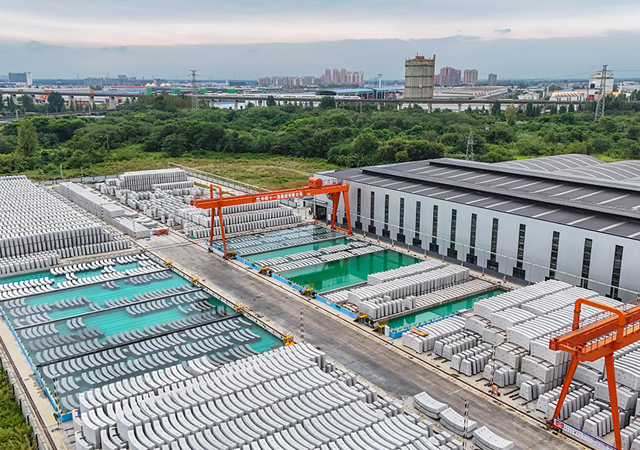
The company notes that precast elements such as bridge segments, tilt-up panels, pipes and floating docks remain vulnerable to physical damage during transport and installation, as well as to cracking caused by freeze-thaw cycles. These defects can create pathways for moisture and chlorides to penetrate the concrete and initiate corrosion at the reinforcement level.
Exposure to aggressive environments, particularly seawater, brine and de-icing salts, further heightens this risk. Against this backdrop, Cortec argues that incorporating corrosion protection measures at the design stage or during maintenance cycles is a practical approach to extending the service life of precast structures.
In new construction, the use of MCI admixtures at the batching or casting stage is positioned as an early intervention strategy. Products such as MCI-2005 and MCI-2005 NS are applied at low, consistent dosages regardless of anticipated chloride exposure, and are designed to avoid adverse effects on concrete performance. The company says the technology offers a cost-effective alternative, compared with conventional mitigation approaches, including increased concrete cover or epoxy-coated reinforcement.
Once integrated into the concrete matrix, the inhibitor molecules migrate toward embedded steel reinforcement, forming a protective layer that is intended to delay the onset of corrosion and reduce its propagation rate. This approach is particularly relevant for projects in aggressive exposure conditions, including desalination plant intake structures, marine docks and transport infrastructure exposed to deicing salts.
Cortec says that in one project completed in 2023, a contractor incorporated MCI-2005 into concrete used for floating docks reinforced with galvanised steel. The inclusion of a corrosion inhibitor was required to meet the XF3 exposure classification under European standard EN 206-1. According to Cortec, subsequent testing confirmed compliance with both concrete performance and compressive strength requirements under relevant European standards, supporting a projected service life of 50 years in a marine environment.
In existing assets, the company highlights preventative maintenance as another opportunity to enhance durability. The periodic application of water repellents –typically every decade – is a standard method to limit moisture ingress and chloride penetration. Cortec suggests that combining this practice with surface-applied corrosion inhibitors can further improve protection by introducing migrating inhibitors into the concrete.
Surface treatments can be applied prior to water repellents to achieve higher concentrations of inhibitor within the substrate, while combined systems like MCI-2018 offer water repellency and corrosion inhibition in a single application.
Cortec emphasises that precast concrete is not immune to corrosion-related deterioration. The integration of MCI technology, whether at the production stage or through maintenance programmes, is cited as a complementary measure to mitigate long-term risks and enhance structural durability.