

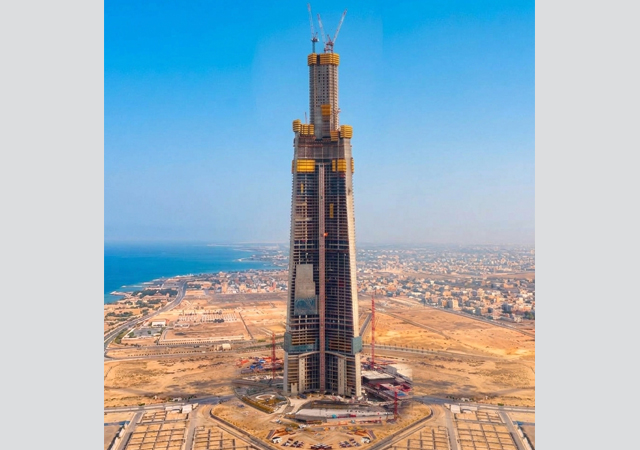



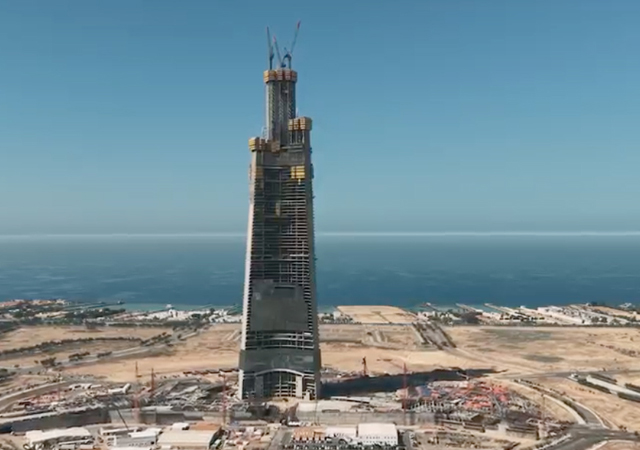
Construction of the Jeddah Tower, expected to become the world’s first man-made structure to exceed a height of 1,000 m, has reached a significant new milestone: The project officially crossed the triple-digit floor count late last month.
The main contractor Saudi Binladin Group, in a LinkedIn post, has confirmed that as the “Skypiercer” has reached the 100-storey milestone, pushing its physical height to 402 m.
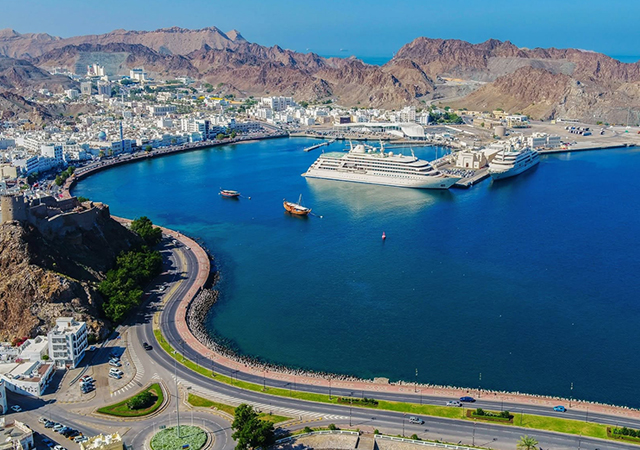
Located along the Red Sea on the north side of the Saudi port city. Jeddah Tower is being developed by Jeddah Economic Company (JEC), a subsidiary of Kingdom Holding Company (KHC) – a Saudi conglomerate with interests in key sectors such as hotel management, real estate and equity.
The latest milestone underscores a clear acceleration in construction activity. Only weeks earlier, the project team had been preparing for a 95th-level wall pour at 382 m. Since then, the tower’s central core has climbed steadily, adding roughly 18 m.
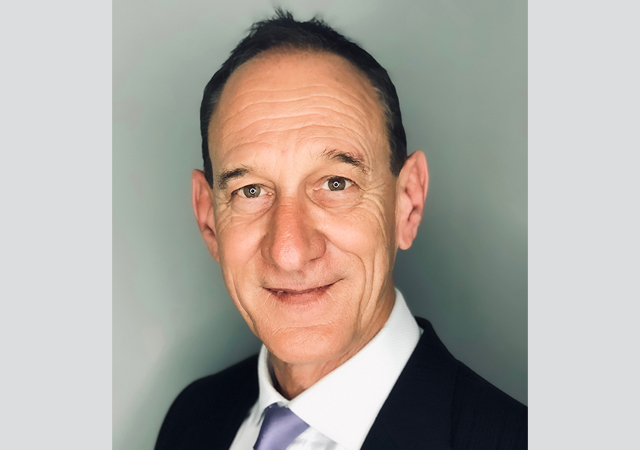
In a series of detailed posts on LinkedIn, Ian Norman Miller, the Senior Executive Project Director leading the record-breaking development, has been providing updates on the project. He highlighted the rapid vertical progress of the tower, revealing that the team is moving “at record speed: 5 days per floor.”
In late March, the project prepared for its 95th-level wall pour at 382 m. Since then, his posts indicated that the tower had climbed an additional 12 m to the 394-m stature reached in mid-April.
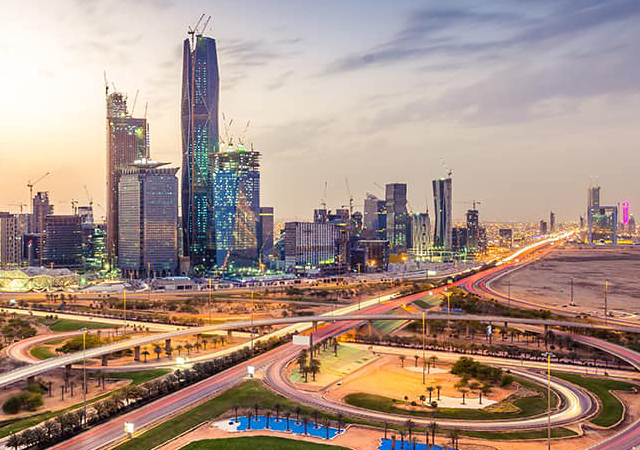
“Today, our Jeddah Tower stands at 394 metres,” Miller stated. “That makes it a few metres taller than the famous Public Investment Fund (PIF) Tower (385 metres) in Riyadh... another successfully delivered Saudi Binladin Group (SBG) project.”
The structure now surpasses PIF Tower, formerly known as the CMA Tower, as well as the roof height of the Empire State Building in New York.
Reflecting on the scale of the achievement at the 382-m mark, Miller noted: “Only 65 structures in the world are taller than us at present. These numbers represent more than height. They represent coordination, discipline, and execution at a scale few projects on Earth ever reach.”
The project, which saw a multi-year hiatus before resuming full-scale operations, is being framed by leadership at Saudi Binladin Group as a masterclass in industrial “continuity” and institutional knowledge within the group.
The Strategy of Continuity
A central theme in the project’s current phase is the reliance on veteran engineering teams who have spent decades working together on the kingdom’s most complex skyscrapers. Miller credits the project’s momentum to the “Project Godfathers” – senior engineers who led the construction of the PIF Tower in Riyadh and have now transitioned those skills to Jeddah.
Operational Hurdles and Safety
Building at such extreme altitudes presents unique logistical challenges, including the management of vertical transport for thousands of workers and the precision required for high-altitude concrete pours. Miller noted that the project is currently maintaining a rigorous standard of safety despite these pressures.
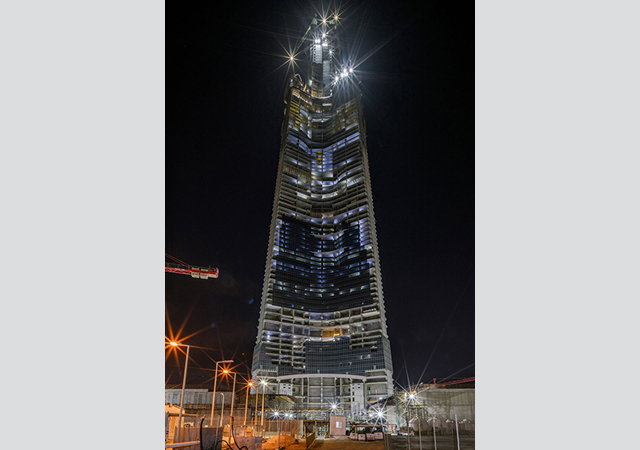
Jeddah Tower’s three-legged shape was designed to handle high-velocity winds without sacrificing aesthetic elegance.
“382 metres is not easy: Night pours in demanding conditions; precision across engineering, logistics, and vertical transport; thousands of people moving as one system,” Miller observed. He emphasised that the project has maintained a record of “zero serious incidents” to date.
The Road to 1,000 M
The Jeddah Tower is the centerpiece of the $20-billion Jeddah Economic City development. It will unseat Dubai’s Burj Khalifa (828 m) as the world’s tallest building on completion, which is expected to be in 2028.
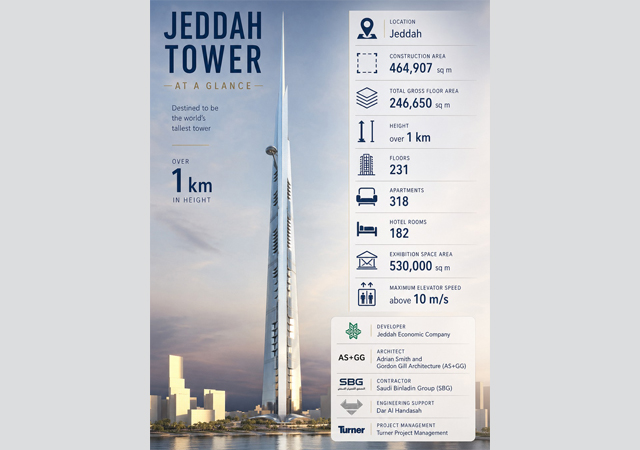
The building was designed by US-based Adrian Smith + Gordon Gill Architecture (AS+GG). Structural engineering firm Thornton Tomasetti is providing structural design services to AS+GG, combining bespoke high-performance designs with advanced structural systems and materials, in close coordination with the project team, including Jeddah Economic Company, Langan, RWDI, Dar Al Handasah, SBG and Turner International.
Dar Al-Handasah is providing engineering support while Turner Project Management is the project manager.
Construction work on the Jeddah Tower (previously known as Kingdom Tower) had initially begun in 2009 with SBG serving as the contractor for the superstructure and was paused in 2018 due to the crackdown in Saudi Arabia. The initial phase saw approximately one-third of the superstructure complete, reaching a height of 63 floors.
Work on Jeddah Tower resumed in January 2025 following the reappointment of SBG as the main contractor under a contract valued at SR7.2 billion ($1.96 billion). Of this, around SR1.1 billion has been already paid to SBG for works previously completed on the tower.
The design of Jeddah Tower is truly a pioneering engineering achievement. Thornton Tomasetti has provided a technical breakdown of the structural innovations driving the Jeddah Tower toward its 1,000-m goal, describing an approach that prioritises “simplicity for constructability” despite the project’s unprecedented scale.
The firm detailed a threefold engineering strategy: determining rational wind loads at extreme elevations, controlling lateral and vertical building movements over time, and ensuring the structural solutions remained efficient enough to realise the ambitious architectural design of Adrian Smith + Gordon Gill.
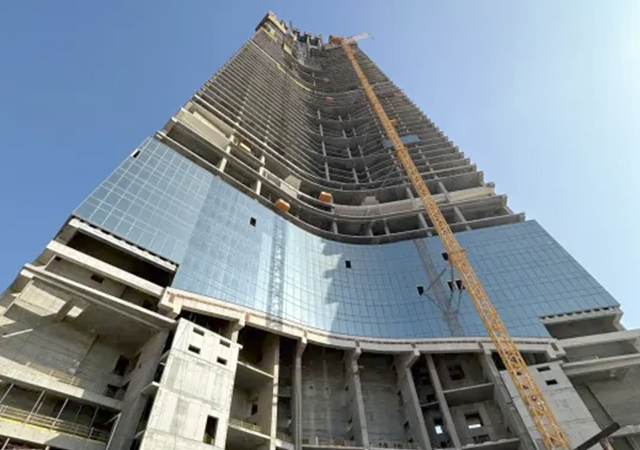
Jeddah Tower will feature a high-performance exterior wall system that will minimise energy consumption by reducing thermal loads.
Engineering the ‘sprouting plant’
Jeddah Tower’s design is both highly technological and distinctly organic. With its slender, subtly asymmetrical massing, the tower evokes a bundle of leaves shooting up from the ground: a burst of new life that heralds more growth all around it.
The tower’s unique three-legged shape, inspired by the folded fronds of a sprouting desert plant, was designed to handle high-velocity winds without sacrificing aesthetic elegance. Thornton Tomasetti engineers worked alongside AS+GG and wind experts at RWDI, utilising advanced computational modelling and extensive wind tunnel testing to refine the tower’s continuously tapering vertical profile.
According to the firm, the resulting structural organisation is “simplicity itself.” In a departure from typical supertall designs, the tower operates without the use of columns, outriggers, floor beams, or vertical transfers. Instead, the system relies on interconnected walls where every structural element resists both wind and gravity loads simultaneously.
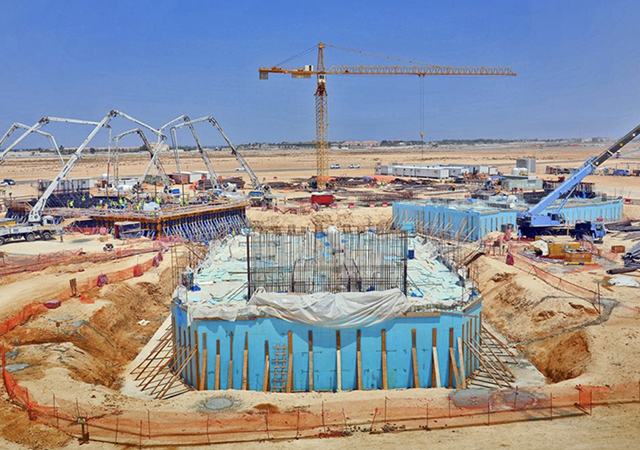
The tower sits upon a 5-m-thick raft foundation, which is anchored by 270 bored piles.
Localised Material Strategy
While the project is a global endeavour, the engineering team adopted a “design local” philosophy by utilising an efficient concrete-based system. Acknowledging that “concrete is king in the Middle East”, the firm integrated construction practices and concrete strengths common in Saudi Arabia to ensure the project could be built quickly and efficiently.
This efficiency is further supported by the record-breaking speed recently reported by the Saudi Binladin Group, which is currently placing one floor every five days.
Foundations of a Giant
To support the immense weight of the world’s tallest structure, engineers designed a massive concrete foundation system. The tower sits upon a 5-m-thick raft foundation, which is anchored by 270 bored piles. These piles, each 1.8 m in diameter, reach depths of up to 105 m to ensure stability as the tower continues its record-breaking ascent.
The collaboration has yielded what the firm describes as a “remarkably well-performing structure”, setting a new state-of-the-art benchmark for wind engineering and structural organisation in the “ultratall” category.
According to a video released by Unimaginable Builds, the project’s true cost may far exceed original estimates. While the tower was initially priced at $1.2 billion, construction insiders cited in the report suggest the final figure could approach $26 billion when factoring in delays, design modifications and inflation.
The project faces significant technical and operational challenges. Water delivery to upper floors will require multi-stage pumping stations embedded throughout the tower. Fire safety planning includes refuge floors every 25 storeys, as no firefighting equipment globally can reach above 100 m. Maintenance systems will include custom-built automated façade equipment capable of operating in high-wind conditions.
The report places the building’s most optimistic completion target at 2028, though 2030 is seen as more realistic given previous delays. Completion by then would align with the milestones of Vision 2030, offering the kingdom a new global landmark and a symbol of its economic ambitions.
Functionally, Jeddah Tower will serve as a mixed-use complex, incorporating residential, commercial, and office spaces. Once complete, the tower is expected to include a Four Seasons hotel, 325 luxury residences and what would become the world’s highest commercial office floors. Additionally, plans include an observation deck, set to become the world’s tallest, and a sprawling outdoor balcony originally designed as a helipad.
The project will feature a high-performance exterior wall system that will minimise energy consumption by reducing thermal loads. In addition, each of Jeddah Tower’s three sides features a series of notches that create pockets of shadow that shield areas of the building from the sun and provide outdoor terraces with stunning views of Jeddah and the Red Sea, according to the designer.
The great height of Jeddah Tower necessitates one of the world’s most sophisticated elevator systems, which will be supplied by Finland-based Kone, a global leader in elevators and escalators. The Jeddah Tower complex will be served by 59 elevators, including 54 single-deck and five double-deck elevators, along with 12 escalators. Elevators serving the observatory will travel at a rate of 10 m/sec in both directions.
According to KONE, Jeddah Tower will feature the world’s tallest elevator ride enabled by KONE’s innovative UltraRope, a pioneering, super-light hoisting technology designed specifically for the demands of high-rise and supertall buildings.