







Dubai Electricity and Water Authority (DEWA) last month marked the official opening of its new corporate headquarters, Al Shera’a, positioning the structure as a landmark achievement in sustainable construction and a template for the future of net-positive urban development.
Inaugurated by HH Sheikh Mohammed bin Rashid Al Maktoum, Vice President and Prime Minister of the UAE and Ruler of Dubai, the iconic building aims to set a new global benchmark as the world’s tallest, largest, and smartest net-positive government building.
The completion of the facility comes at a critical juncture for the regional construction sector, which is increasingly prioritising green engineering to meet national climate mandates. Al Shera’a introduces an innovative concept for sustainable buildings based on the integration of smart solutions within a comprehensive cognitive system that thinks, senses and responds, redefining the government work environment in the digital age.
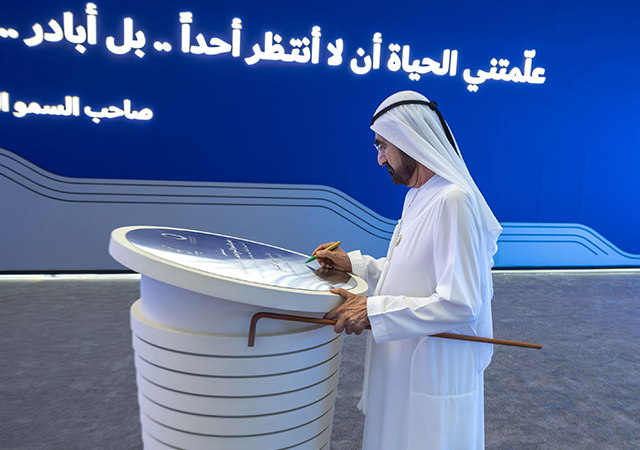
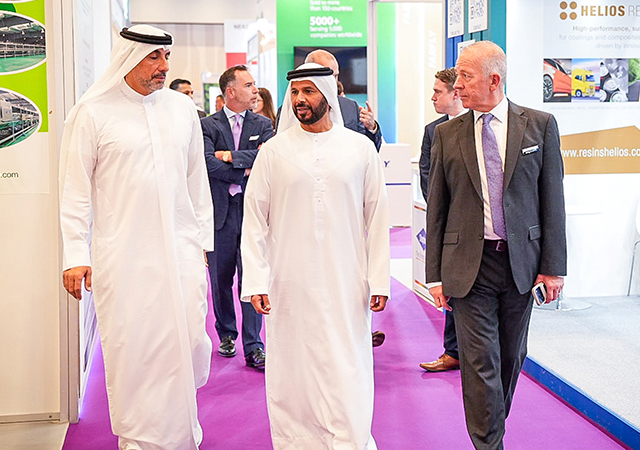
Sheikh Mohammed inaugurates DEWA’s new headquarters building.
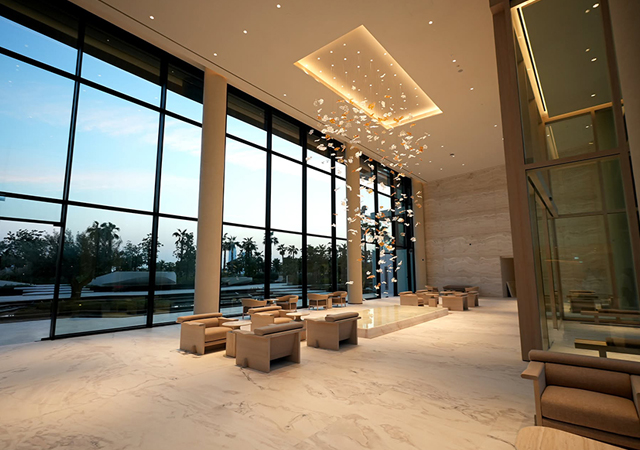
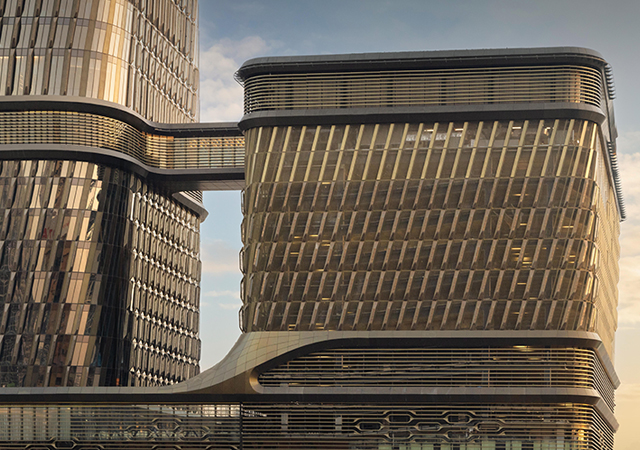
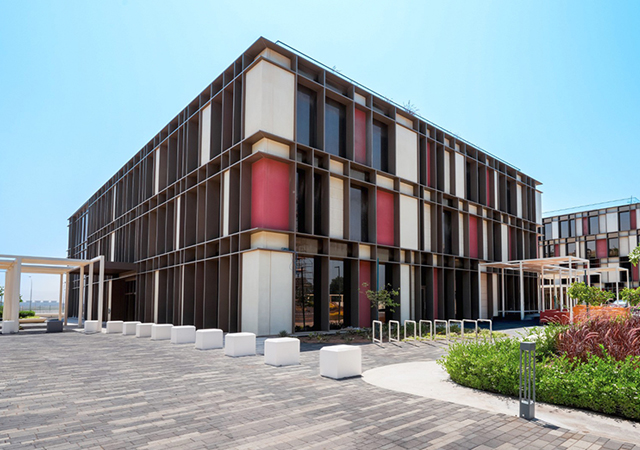
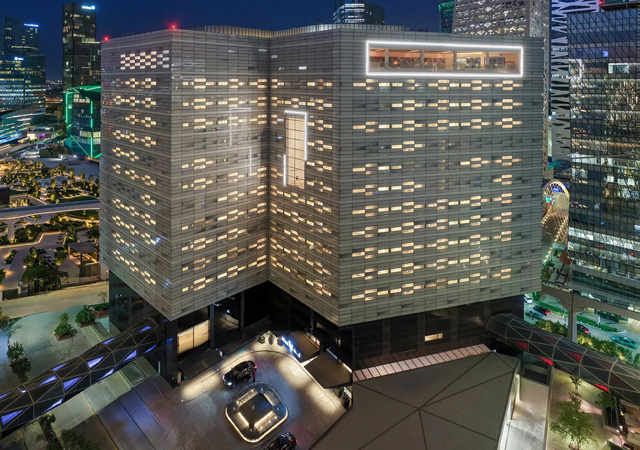
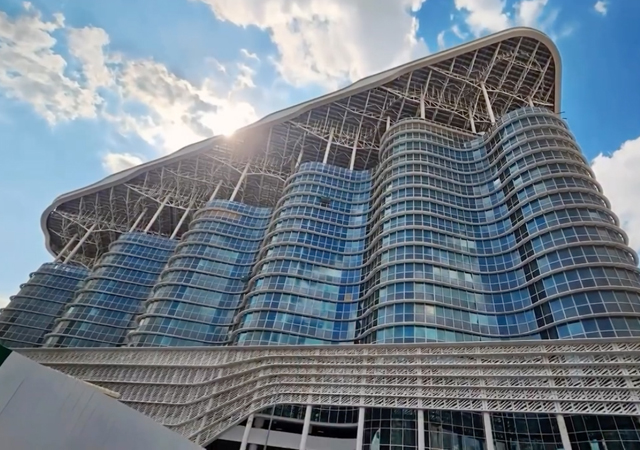
Located in the Al Jaddaf district within Dubai’s Cultural Village, the sail-shaped skyscraper (whose name translates to “sail” in Arabic) extends across a built-up area of more than 200,000 sq m. Designed to accommodate over 5,000 employees alongside customers and visitors, Al Shera’a consolidates DEWA’s corporate, engineering, administrative, and technological operations into a single eco-efficient system.
Sheikh Mohammed described Al Shera’a as “inspiring model in sustainability, energy efficiency, and the use of technology to serve humanity”.
The building’s design was inspired by traditional UAE houses, featuring enclosed spaces that overlook a central open courtyard as its most prominent architectural element. Rather than relying solely on passive environmental measures, the building functions through a cognitive operating system linking its internal networks and services into a unified digital infrastructure.
The 19-storey glass-and-steel modern structure cost approximately AED1.5 billion ($408 million) to complete.
Facilities include a 500-seat auditorium, training halls, an innovation centre, exhibition spaces, a nursery for female employees’ children, and sports halls, creating a comprehensive model that leverages advanced AI applications to enhance employee happiness and wellbeing.
Al Shera’a delivers an integrated workplace that combines comfort, flexibility and operational efficiency through intelligent design and automated management of spaces and resources. The integration of smart systems enables environmental conditions and facility operations to adapt to actual usage, supporting sustainability while creating a highly organised and future-ready workplace.
Design philosophy
It was designed to achieve LEED Platinum certification (Leadership in Energy and Environmental Design) and WELL Gold certification, the leading global standard for healthy and people-centric buildings. The building presents a global model for future buildings that combine AI, resource efficiency, sustainability and quality of life.
The facility has also achieve Dubai’s Al Sa’fat Platinum Rating for green buildings. Earlier project documentation indicated WELL Silver certification, with recent completion confirming the upgraded Platinum status. The Energy Utilisation Intensity (EUI) is 70 kW per sq m per year, demonstrating exceptional energy efficiency.
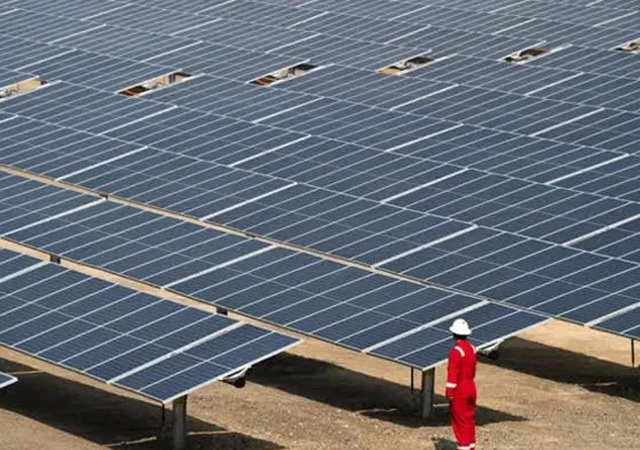
At the core of the project’s design philosophy is the net-positive energy paradigm, meaning the infrastructure produces more clean energy than it consumes over the course of a year. To achieve this, the building utilises two distinct photovoltaic systems with a combined generation capacity of 5 megawatts. The first system is a building-integrated photovoltaic (BIPV) set-up with 251 panels spanning roughly 9,000 sq ft across the facade, providing 187 kilowatts of peak power. The second system comprises an expansive array of approximately 8,400 solar panels distributed across the roof, podium fins, ground levels, and shading structures, blanketing more than 200,000 sq ft and providing a total capacity of approximately 4.821 MW. This extensive renewable infrastructure is maintained by specialised robotic systems tasked with cleaning the solar panels to maximise operational efficiency.
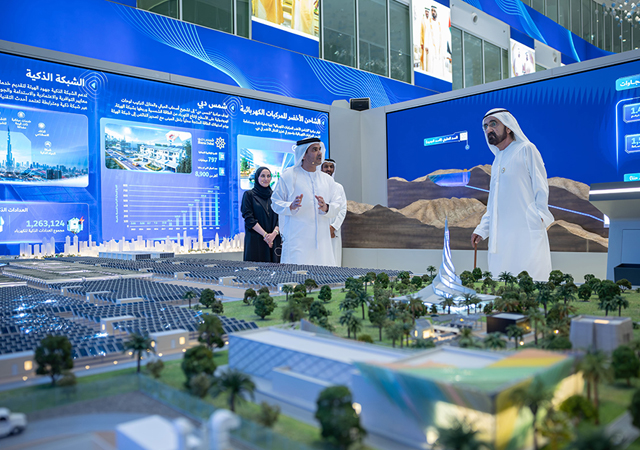
Sheikh Mohammed tours DEWA’s new corporate headquarters.
Transport integration also forms part of the sustainability strategy. A covered bridge directly connects Al Shera’a to the Al Jaddaf metro station, encouraging public transport use and further reducing DEWA’s carbon footprint.
Smart technology forms the building’s backbone, with 110,000 smart sensors, more than 1,500 wireless access points, and 3,200 network devices. Collectively, these systems generate more than 1.9 million automated control commands each day, enabling the headquarters to constantly respond to occupancy patterns, environmental conditions and energy demand. The technology stack uses Internet of Things (IoT) systems, big data analytics and AI-driven management tools to optimise everything from cooling and lighting to mobility and workspace allocation.
All systems within the building are integrated through the AI-powered ‘Al Shera’a’ smart app, which serves as a unified control interface for approximately 100 independent systems operating seamlessly together.
Independent systems controlled by the Al Shera’a app include smart parking management, dynamic spaces, access management, elevator experience, heating, ventilation and air-conditioning (HVAC), lighting and audio systems, air quality monitoring, resource booking, shared mobility and asset location services.
The app features 167 independent operating functions delivered through a user-friendly interface focused on user experience, employee wellbeing, quality of life, optimal resource management and proactive maintenance. The building’s digital intelligence enables automatic management of resources based on actual usage, enhancing operational efficiency and sustainability.
Saeed Mohammed Al Tayer, Managing Director and CEO of DEWA, emphasised that Al Shera’a is designed to advance the strategic mandates of both the Dubai Clean Energy Strategy 2050 and the Dubai Net Zero Carbon Emissions Strategy 2050. The utility chief noted that the building transforms raw operating data into autonomous decisions, thereby establishing an intelligent, adaptive ecosystem centered around human well-being.
“Through Al Shera’a, we aim to establish a new global benchmark for net positive buildings that produce more clean energy than they consume, while providing a smart and sustainable working environment that places people at its core,” he stated.
Construction began in 2018. DEWA appointed Ghantoot Group for construction, while Moro Hub, Johnson Controls, and Microsoft implemented IoT, cybersecurity, digital twin technologies, artificial intelligence, and smart building management solutions.
The building’s engineering parameters focus heavily on aggressive resource conservation, targeting a 50 per cent reduction in water utilisation compared to traditional structures of a similar scale. The mechanical, electrical, and plumbing engineering, along with comprehensive sustainability design reviews, were managed by KEO International Consultants, which worked in association with architect Obermeyer Middle East.