




















THE world is slowly emerging from the throes of an economic downturn and the Gulf’s construction and real estate sectors may be among the first to benefit from the positive signs in the wider economy this year.
One of the positives that has emerged out of the downturn, however, is a revival in interest in traditional Islamic architecture and with it the increasing use of glassfibre reinforced concrete (GRC) is anticipated, thanks to the design freedom afforded by the material and its environment-friendliness.
 |
|
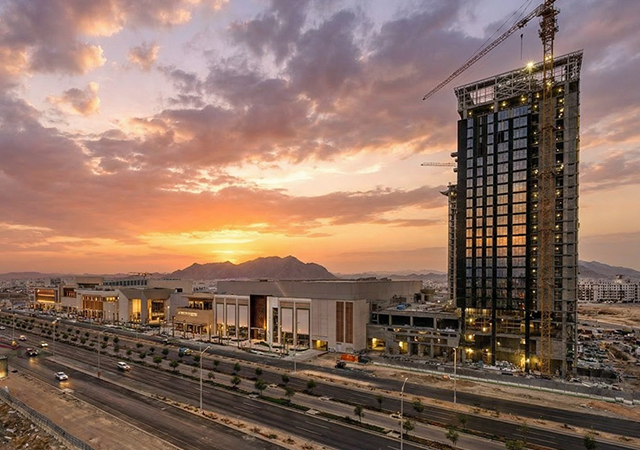
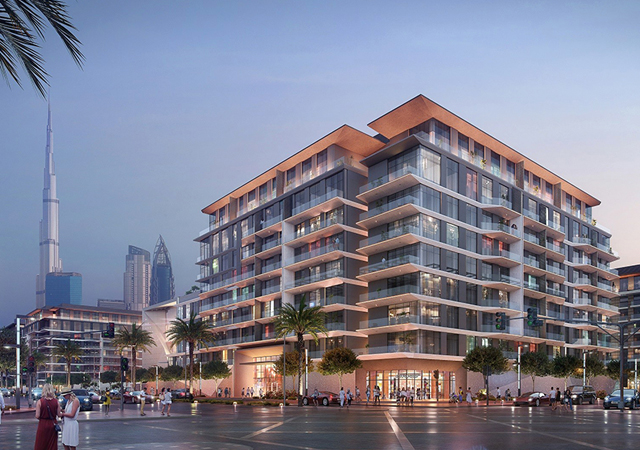
Mercato Mall Dubai ... GRC used in cladding work. |
GRC has been one of the most versatile building materials available to architects and engineers in the Gulf for more than two decades. It belongs to a family of high-performance cement-based composites reinforced with special alkali-resistant glassfibres that can be engineered to suit a wide range of applications. Concrete made with Portland cement is relatively strong in compression, but weak in tension and tends to be brittle. The weakness in tension can be overcome by the use of conventional rod reinforcement and also, to some extent, by the addition of a sufficient volume of alkali-resistant glassfibres. The glassfibres alter the behaviour of the fibre-matrix composite when it begins to crack, thereby improving its toughness.
Toughness
The strength of GRC stems from the concept of toughness. In a typical stress-strain curve, toughness is the area under the curve – the addition of glassfibres to concrete greatly increases the toughness of the latter. In other words, GRC is able to sustain loads at deflections or strains much greater than those at which cracking first appears in the matrix.
There are several pre-requisites for the glassfibre to be effective:
• Fibres should be significantly stiffer than the matrix (that is, have a higher modulus of elasticity);
• Fibre content by volume must be adequate;
• There must be a good fibre-matrix bond;
• Length of fibres must be sufficient; and
• Fibres must have a high aspect ratio – must be long relative to their diameter.
Unlike conventional reinforced concrete, glassfibres are blended throughout the concrete mix, rather than being embedded in it.
GRC has excellent tensile and compressive strength properties. While the compressive strengths are better than normal concrete, the impact strengths are also good. The worst-case scenario on impact is ‘localised’ cracking (and hence quick repair) rather than the crack propagating throughout the structure. The salient feature of GRC is its behaviour in bending that facilitates commercial production of strong, lightweight hollow components, resulting in reduced weight of nearly 70 per cent of a solid unit. The products are lightweight, require low maintenance and are a good fire retardant. When subjected to loads, glassfibres restrain crack opening and crack growth in the composite by effectively bridging across the microcracks.
Architectural material
GRC has all the attributes of an architectural material – it reduces loading on buildings, resulting in significant reduction in superstructure and foundation cost, is easy to handle and fast to erect, is excellent for reproduction and renovation and is also environment-friendly. It can be painted, faced with fine aggregates for a smooth or textured finish and can be coloured.
 |
|
The American University of Sharjah ... GRC used extensively. |
Production techniques
Premix GRC or vibration cast form is produced in a two-stage process. A mixture of cement, sand, water and chemical admixtures is first prepared in a high-speed mixer. Glassfibres are added in the second stage at slower speed. The premix GRC is then poured into moulds and compacted by vibration.
In machine spray GRC, a mixture of sand, cement, water and chemical admixtures is prepared in a high shear slurry mixer. The machine conveys the slurry to a spray gun where the glassfibres are added at the nozzle and the GRC is sprayed on a mould. Although the density of GRC and traditional precast concrete are in the same range of 1,900 to 2,200 kg/cu m, the composite nature of the former allows for thinner panels (sections) to be produced. GRC can be de-moulded, 16 to 18 hours after casting.
Commercial applications
GRC’s ability to be moulded into thin lightweight panels with smaller aggregates and its high strength allows design of cladding elements that have the option of being coloured with pigments, paints and natural stone facings. GRC cladding can replace non-structural precast concrete where weight and shape can be a cause for concern. It does not suffer from corrosion and subsequent spalling, unlike steel-reinforced concrete. Unlike traditional concrete, the material does not require a minimum of concrete cover to the reinforcement. As the glassfibres are evenly dispersed in the cement matrix, there is homogeneity in the material, enabling products to be created with the finest of details.
Semi-dry concretes are generally used in domestic construction – their low cement content and open textures retain atmospheric pollution, resulting in poor weathering resistance and consequent deterioration over time. GRC, by comparison, has smaller aggregates and studies on architectural GRC have proved that its weathering characteristics are as good as any precast concrete and definitely superior to semi-dry concrete. A 12-mm-thick GRC panel uses about two to five per cent by weight of glassfibre, which is the universal norm.
Examples of extensive cladding work done in the region can be seen at the Al Taawun Shopping Mall, Sharjah and the Al Husn Palace (VIP entrance), Salalah, Oman, carried out by Dubai International Reinforced Plastic (DIRP).
Applications
Thin and lightweight GRC panels (nominally 12 mm thick) are a natural choice for renovation of buildings as their ability to be moulded and finished with natural materials implies that traditional architectural forms can be maintained when required. The panels are easy to fix and minimise the weight imposed on the existing structure.
As permanent formwork under suspended in-situ concrete floors, GRC provides economic benefits coupled with excellent appearance. In wall construction, insulated GRC base course and sill units can be incorporated, thereby contributing to the overall wall insulation performance.
GRC permanent soffit formwork provides a practical and economical way of supporting freshly poured in-situ concrete in composite bridge decks. Depending on the depth of the concrete deck formwork, spans of up to 1,200 mm do not require temporary support. GRC formwork is capable of supporting various slab thicknesses over a variety of spans between main bridge beams. Its characteristics also allow it to behave as a composite part of the in-situ concrete under normal service dynamic loading.
GRC’s good resistance to weathering renders it ideal for landscaping in theme parks to create rockscapes, replica buildings and leisure facilities, apart from kiosks, sculptures, fountains, seating systems and planter bins. In all these cases, its ability to be tailor shaped, results in a surface finish that is aesthetically compatible with the chosen environment. As GRC panels can be fabricated in thin sections, lightweight panels find extensive use in bridges and tunnels. GRC parapet panels provide aesthetically-pleasing architectural features without burdening the base structure with excessive weight.
As GRC panels are one-fifth the weight of a comparable precast concrete product, they are extensively used in water drainage channels, where the dense smooth surface minimises resistance to water flow. The channels are light in weight, easy to install in long sections with reduced excavation, are maintenance free, and require fewer silt traps and manholes due to superior hydraulic performance. Lightweight GRC sections permit easy transportation and assembly at site with minimum labour.
Moulded GRC window sills, window surrounds, cornices, door portals and columns combine the dual purpose of decoration and functional needs in residential and commercial buildings. Standard prefabricated panels incorporating a choice of surface finish including exposed aggregate, natural stone and brick effect are possible. For example, Arabian Profile Company, Sharjah, has carried out extensive GRC work (5,500 sq m) on window frames and cornices among other features, on the famous Al Noor Mosque in Sharjah.
The past decade has also witnessed the growing popularity of alkali-resistant glassfibres to reduce plastic shrinkage in concrete mixes during the setting phase. Addition of relatively small amounts of fibre (0.5 to 0.6 kg/cu m) directly to the concrete mixer or readymix truck, controls early stage plastic shrinkage cracking and avoids the need to use light steel mesh for crack control. The handy packet is literally (manually) thrown into the mixer (at site or in the mixing plant) where the fibres disperse uniformly, ensuring a three-dimensional reinforcement throughout the matrix and effectively suppresses cracking. Extended mixing times are not necessary. The large number of glass filaments ensures very small distance between fibres, while the high aspect ratio gives maximum effect in the setting period.
GRC’s ability to disperse or absorb sound makes it a primary choice for both internal and external acoustic barriers and screens. Its high density, smooth surface finish and ability to be easily moulded have been used to advantage in concert halls and auditoriums. Despite its thin section, GRC is effective at blocking noise on roads/highways, due to its large surface mass which makes it effective. The design flexibility of GRC comes into play in dispersive noise barriers created with a profiled face. The reflecting face is angled upwards to break up the noise. GRC is most effective as absorption noise barriers where the panel effectively blocks the transmission of noise and also reflects very little noise back at the road.
International standards
There are several American and British/European Standards on preparation and testing of GRC products that are used by manufacturers and specifiers in ensuring the quality of the GRC products. A few standards for ready reference are as follows:
• EN 1169-1999: Precast Concrete Products – General Rules for Factory Production Control of GRC Products;
• EN 1170-1998 Parts 1-8: Precast Concrete Products – Test Methods for GRC;
• EN 14649-2005: Precast Concrete Products – Test Method for Strength Retention of Glass Fibres in Cement and Concrete;
• EN 15191: Classification of GRC Performance; and
• EN 15422: Specification of Alkali-resistant Glassfibres for Reinforcement of Cement and Concrete.
The reduced weight of GRC vis-a-vis steel reinforced concrete products results in a lower environmental impact due to reduced cement usage per product and reduced transport costs. This was the conclusion arrived at by a field assessment carried out by the UK Government DETR/Concrete Industry Alliance after case studies.
There are several leading manufacturers of GRC products in Sharjah – Arabian Profile Company, Terrazzo and Trade Circle Technical Industries (TCTI), to name a few. GRC products from these companies are aesthetically pleasing and find a pride of place at several leading malls, hotels, mosques, theme parks and educational institutions throughout the UAE.
Conclusion
The construction sector has and will continue to be the growth driver of the region’s economy in the immediate future. Most construction companies in the region have affiliations with leading architectural companies and designers of the West. A significant plus factor is the availability of design criteria and guidelines from Europe and the US that should enable designers to be in the comfort zone while resorting to/recommending use of GRC for load-bearing applications.
GRC products have been around in the Arabian Gulf since the 90s. With an increase in infrastructure activity, there is ample scope for enhanced use of GRC in the construction sector – more so in view of the fact that GRC is environment-friendly, apart from added advantages of lightweight, ease of transportation and low maintenance costs. Bridges and tunnels, drainage channels and noise barriers are just some of the many applications for GRC in the Arabian Gulf. The future holds bright prospects for the growth of the GRC industry in the region.
* S Sundaram is a freelance writer with more than 25 years experience in the global composites industry.
