

















The Gulf Cooperation Council (GCC) and North Africa are set to expand their hotel inventory by 27 per cent, with around $90 billion worth of hospitality projects and 200,000 new rooms currently in the development pipeline, according to data from global hospitality consultancy HVS.
More than half of the region’s overall pipeline is planned by Saudi Arabia, which is driving regional expansion with approximately 110,000 rooms under development across Riyadh, Makkah, Madinah, and the projects along the Red Sea including NEOM, the Red Sea Project, and Amaala.
The figures, released ahead of the recent Future Hospitality Summit (FHS World) in Dubai, show that around 88,000 rooms are currently under construction across the region, with a further 25,000 in final planning stages. More than 55 per cent of the upcoming regional pipeline is scheduled for delivery between now and 2030, HVS said.
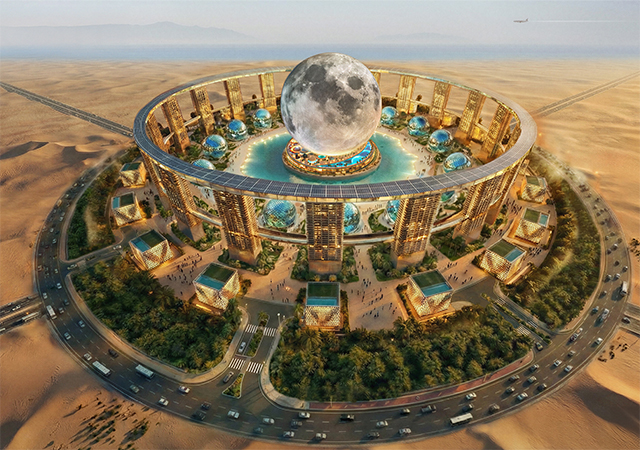
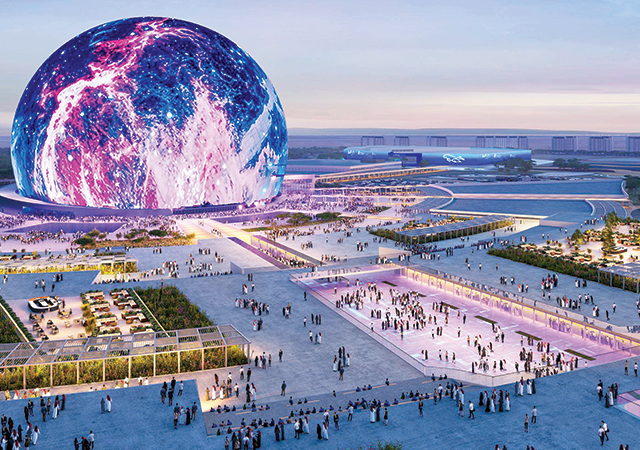
Egypt ranks as the second-largest market with roughly 42,000 planned rooms, followed by the UAE, which continues to add destination-led mega-projects such as Wynn Al Marjan Island in Ras Al Khaimah.
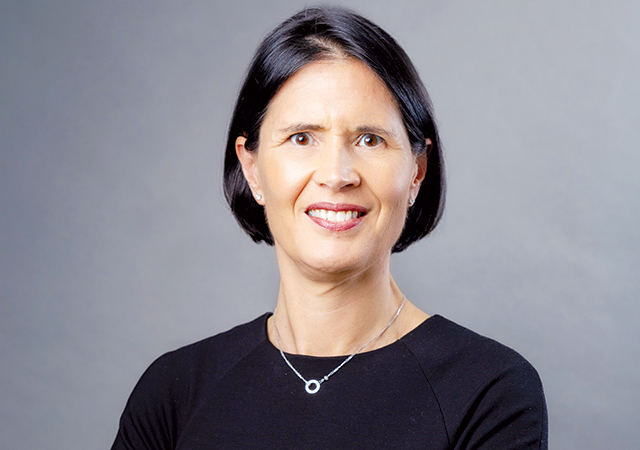
HVS’ President for the Middle East, Africa, and South Asia Hala Matar Choufany noted that the region’s pipeline reflects sustained investor confidence, but highlighted a shift in how capital is being deployed and structured.
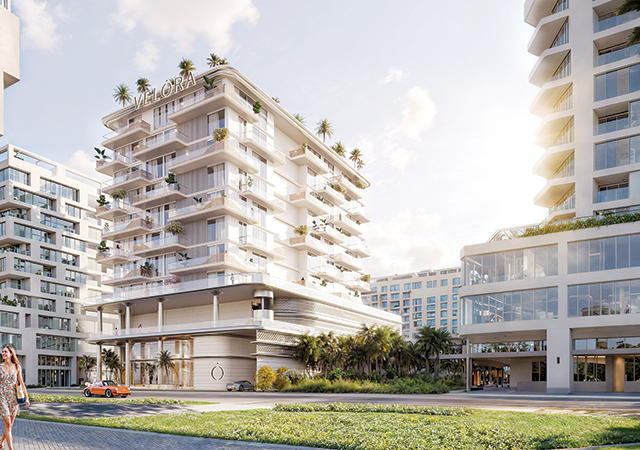
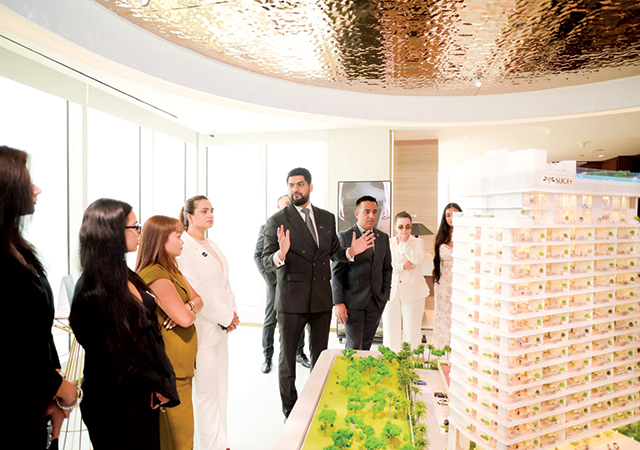
Investors are increasingly favouring mixed-use developments, branded residences and phased delivery models, which can improve project economics and help manage risk.
Funding structures have also become more diverse, moving beyond the traditional combination of developer equity and bank financing.
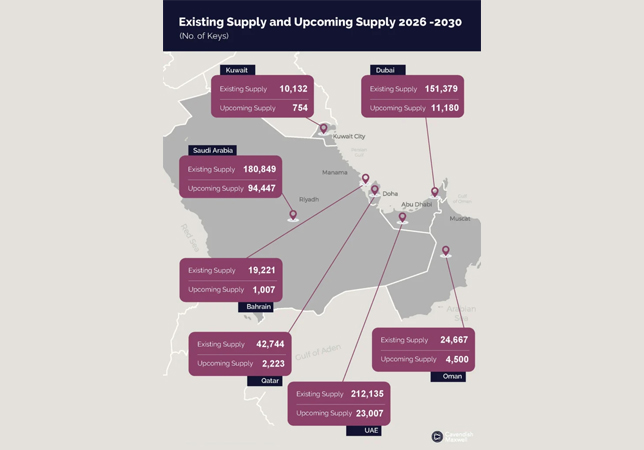
Source: STR, a CoStar Group Company, Cavendish Maxwell
In Saudi Arabia, government-backed investment vehicles and strategic public-private partnerships (PPPs) are supporting large-scale destination projects, while developers across the wider region are using branded residences and mixed-use components to diversify revenue streams.
“The region’s hotel pipeline is no longer just a story of scale, it’s one of discipline, with capital deployed with far greater intention,” Choufany said. “The sector has moved well beyond the traditional mix of developer equity and bank debt. In Saudi Arabia especially, large-scale destination developments are being underpinned by government-backed investment vehicles and strategic public-private partnerships.”
Luxury and upper-upscale developments continue to dominate planned supply, though HVS reported rising activity in the upper-midscale segment, particularly in Saudi Arabia, where international brands such as Hampton by Hilton, Holiday Inn Express, Fairfield by Marriott, and ibis are expanding.
According to HVS, long-term success across emerging markets will depend heavily on supporting infrastructure, air connectivity, service delivery, and workforce development rather than room counts alone.
The 200,000 new rooms are not expected to enter the market simultaneously. Instead, they will be delivered in phases, with around 44 per cent of the pipeline currently under construction and much of the remaining supply expected to be completed progressively through 2030 and beyond.
Delivery timelines vary significantly between markets. In Saudi Arabia, major destination developments are being delivered in phases that extend well into the next decade.
The UAE has a shorter-term pipeline, with a significant proportion of projects expected to open between 2028 and 2030.
Egypt’s development cycle is also spread across several years, particularly in the North Coast, Cairo and Red Sea destinations.
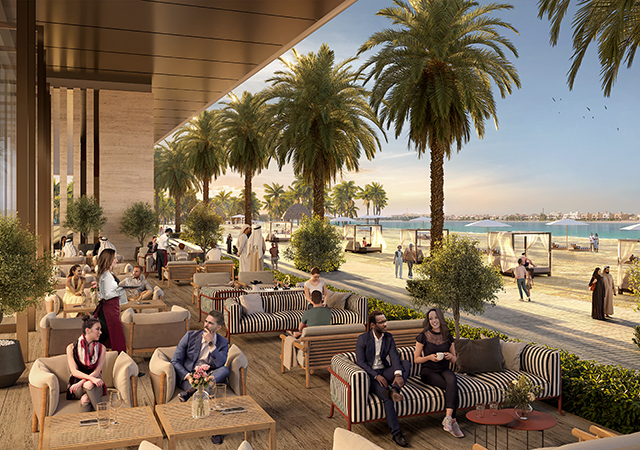
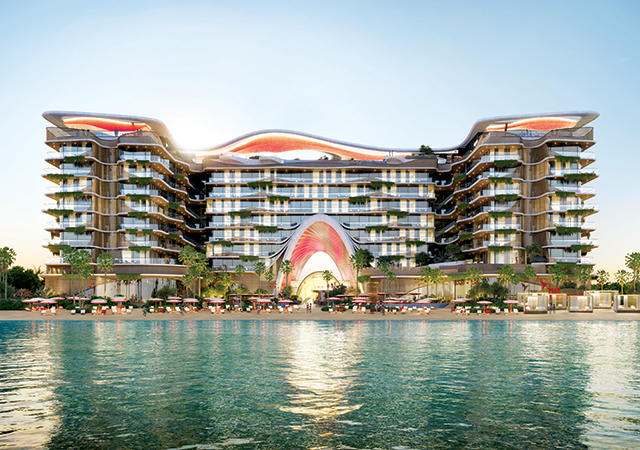
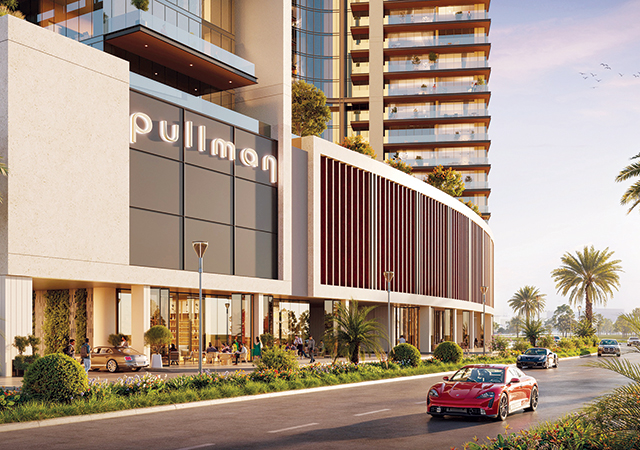
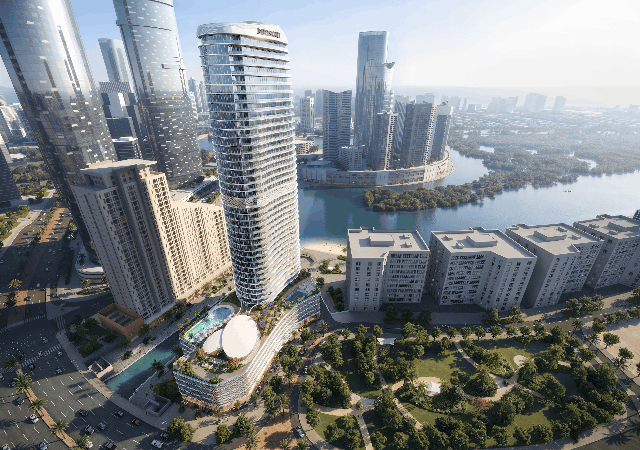
Address The Bay will add 182 keys to Dubai’s mid-2026 tally of 152,140 rooms.
In terms of hotel occupancy, the GCC hospitality market entered 2026 with considerable momentum, but the ongoing regional tensions from March onwards triggered a pronounced demand shock, disrupting international air connectivity, dampening traveller confidence and creating challenging trading conditions across the region, according to a report by property consultants Cavendish Maxwell. The trajectory from Q1 through Q3 has been one of sharp contraction followed by gradual and uneven recovery, with meaningful divergence in both the depth of the decline and the pace of improvement across individual markets.
Q4 will be an important period for the GCC. Cooler temperatures, the holiday season and a denser events calendar should provide seasonal support.
Bahrain
Bahrain is reported to have 12 new hotels in the pipeline, while total hotel room capacity has surpassed 24,000 rooms. A key project taking shape is the Tivoli and Avani hotels at Bilaj Al Jazayer, where construction began in 2024. The two properties, managed by Minor Hotels, comprise 200 rooms – a five-star Tivoli and four-star Avani – alongside 150 branded residences. The wider Bilaj Al Jazayer development covers 1.3 million sq m and includes resorts, residences, retail, F&B, entertainment and a Wavegarden surf park.
Kuwait
Kuwait is boosting its hospitality offerings through a combination of new-build developments and repositioning of existing assets. Real estate developer Mabanee is moving ahead with the refurbishment of the 331-key Hilton Kuwait Resort, with works around 40 per cent complete and the reopening targeted later this year. The beachfront resort occupies a 242,000-sq-m site and includes the hotel, chalets and about 1.3 km of beachfront.
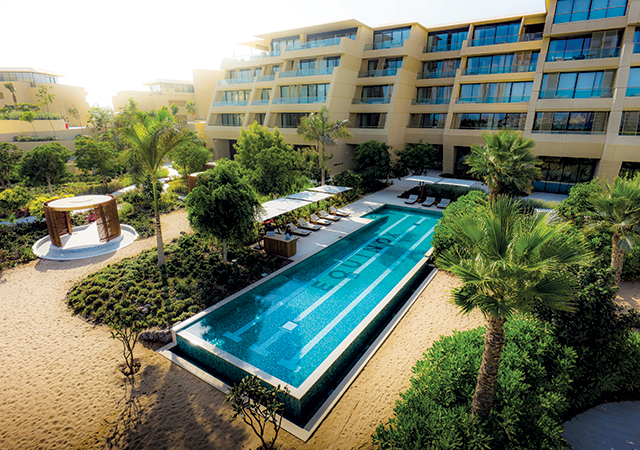
The newly opened Equinox resort at Amaala along the Red Sea.
Further supply is under construction at Sabah Al-Ahmad City, where Mabanee is developing the Souq Sabah and Hampton Hotel mixed-use project under a public-private partnership with Kuwait’s Public Authority for Housing Welfare. The development includes a 110-key Hampton by Hilton alongside a traditional souk and regional mall. The hotel is scheduled to open in the second half of 2027.
Another addition to Kuwait’s coastal hospitality offering is Safir Seaview in Sabah Al Salem. The five-star property will comprise 209 rooms and suites, with restaurants, wellness facilities and meeting space, and is scheduled to open in the first quarter of 2027.
Oman
The Sultanate of Oman is set to deliver 700 new hotel rooms by the end of 2026, bringing its total hospitality inventory to 40,800 keys slightly lower than the 41,400 previously projected, as developers reschedule select project completions into 2027 to align with market absorption, according to Cavendish Maxwell.
The upcoming additions follow 400 rooms delivered in the first quarter of the year, with overall pipeline expansion having slowed during the second quarter amid regional air travel disruptions and reduced international tourist arrivals.
Oman’s hospitality pipeline is expected to expand further in the medium term, with 1,500 rooms scheduled for completion in 2027 and another 1,600 rooms due in 2028, taking total national hotel inventory to 43,900 keys by the end of 2028.
“The upcoming, phased pipeline should help manage near-term supply growth, but the pace of visitor recovery will be key to the absorption of new capacity,” said Khalil Al Zadjali, Head of Oman at Cavendish Maxwell. “With a limited number of keys coming in the near future, supply growth is unlikely to be a major constraint in the short term.”
The research released ahead of the recent FHS World showed that regional travel disruptions weighed on first-half hotel operations. Oman’s three- to five-star hotels hosted 992,000 guests in H1 2026, down 13 per cent year-on-year.
Qatar
According to a recent report by consulting firm ValuStrat, Qatar’s total hospitality inventory stood at 42,131 rooms in the second quarter. About 890 hotel rooms remain in the pipeline for completion this year. ValuStrat said, however, that soft leisure demand could lead some developers to defer late-2026 openings into 2027 to better align delivery with market conditions.
Saudi Arabia
According to Lodging Econometrics Q2 2026 Middle East Construction Pipeline Trend Report, Saudi Arabia leads all Middle Eastern countries with 387 projects/105,648 rooms, up 13 per cent by projects and 15 per cent by rooms year on year (YoY).
By city, Riyadh tops the Middle East with 106 projects and a record-high 21,666 rooms, up 20 per cent by projects and 19 per cent by rooms, Jeddah has 62 projects/14,435 rooms, up 11 per cent by projects and 14 per cent by rooms YoY, and Makkah has 34 projects/21,689 rooms, up 17 per cent by projects and 18 per cent by rooms YoY.
UAE
Lodging Econometrics puts the UAE’s Q2 2026 hotel construction pipeline at 103 projects and 24,985 rooms, making it the third-largest country pipeline in the Middle East, after Egypt. Dubai accounted for 60 projects and 13,828 rooms.
According to Cavendish Maxwell, Dubai is set to deliver more than 8,200 new hotel rooms through 2028 as the market navigates temporary head winds and prepares for a medium-term recovery in international tourism.
Despite short-term occupancy pressures caused by regional airspace disruptions and geopolitical uncertainty, developers are adding around 3,150 rooms to Dubai’s hospitality supply by the end of 2026.
The new additions will lift total hotel inventory in the emirate to 155,300 rooms across 727 properties, up from 152,140 rooms at mid-2026.
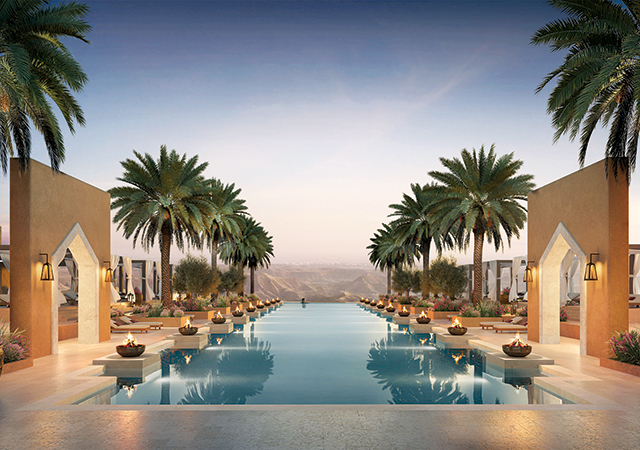
Oberoi Sukoonvilas, Wadi Safar ... set to open next year in the Diriyah region of Riyadh.
Development momentum is projected to continue over the coming years, with a further 2,580 rooms scheduled for completion in 2027 and 2,470 rooms due in 2028, according to Cavendish Maxwell’s Dubai Hospitality Sector H1 2026 Market Performance report.
The planned additions follow a minor 0.3 per cent contraction in total supply during the first six months of 2026, when three new hotel openings were offset by temporary property closures for extensive renovations and refurbishments.
Most of Dubai’s hotel supply continues to be in the premium segments – upscale, upper upscale and luxury – which collectively accounted for almost 70 per cent of all rooms in H1. Upscale had the biggest share at almost a quarter of rooms, upper upscale commanded almost 22 per cent and the luxury segment 21.5 per cent.
While Dubai has continued to play a dominant role in boosting the UAE’s hotel inventory, Abu Dhabi and the Northern Emirates have been pursuing distinct tourism strategies ranging from major entertainment destinations to beachfront, mountain and nature-based resorts. Abu Dhabi and Ras Al Khaimah and the other Northern Emirates are, therefore, becoming increasingly important components of the country’s medium-term hospitality pipeline.
Ras Al Khaimah is emerging as one of the UAE’s most active hotel construction markets, with the Wynn Al Marjan Island resort serving as a catalyst for an expanding pipeline of beachfront resorts, branded residences and nature-led hospitality projects. The emirate is targeting a substantial increase in room supply over the coming years, with more than 20 new properties in the pipeline and a longer-term target of between 24,000 and 25,000 hotel keys by 2032.
The pipeline spans both the coast and the mountains. Projects listed by the Ras Al Khaimah Tourism Development Authority (RAKTDA) include the 258-key Mangrove Rotana, the 70-lodge SAIJ Mountain Lodge by Mantis on Jebel Jais, and the Four Seasons Resort & Residences Ras Al Khaimah at Mina, comprising 150 rooms, suites and villas and 130 private residences. Fairmont Al Marjan Island, with 250 rooms, and W Al Marjan Island, with 300 rooms, are also part of the expanding coastal pipeline, alongside the Nobu Hotel, Restaurant & Residences Al Marjan Island.
The 258-key Rotana property will add meeting and events capacity to the Al Qawasim Corniche, while SAIJ will introduce a mountain-lodge concept focused on nature, wellness and outdoor experiences.
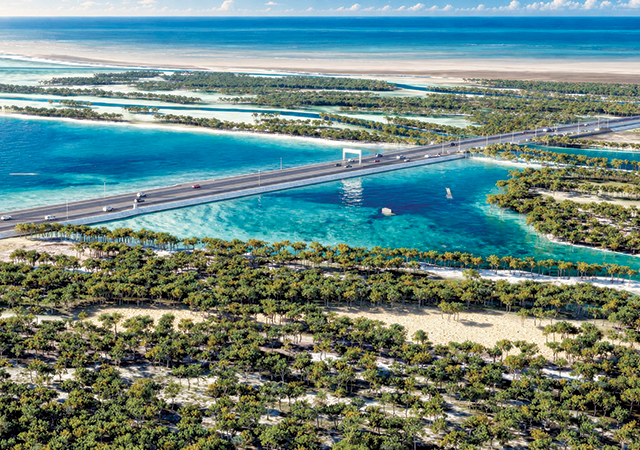
The largest project in the pipeline is Wynn Al Marjan Island, which is scheduled to open in 2027. Construction of the integrated resort and its associated infrastructure is progressing, with the 548-m Marjan Bay Bridge also under construction to improve access between the resort, surrounding developments and the UAE road network (see Northern Emirates feature).
Other projects are moving ahead around Al Marjan Island. Among them is Dubai Investments’ Danah Bay, where the hotel tower is scheduled for completion in the third quarter of 2027.
The scale of development reflects Ras Al Khaimah’s ambition to move beyond its traditional position as a short-break destination and establish itself as a full-scale international leisure market. The emirate recorded more than 670,000 visitors in the first half of 2026, its strongest first-half performance, despite disruption to international travel, with domestic arrivals providing significant support.
Sharjah has continued to build out its lifestyle and cultural tourism proposition. Vida Aljada, a 175-room five-star lifestyle hotel, opened in September 2026, while Shurooq is expanding Al Faya Retreat in Mleiha from five rooms to 20 accommodation units.
Ajman is also repositioning its beachfront stock, with the existing Al Zorah resort being transformed into Four Seasons Resort Ajman at Al Zorah, with 23 villas and 74 rooms and suites.
Fujairah has a longer-term pipeline, including the 232-room, 16-villa Avani+ Fujairah Resort, which is scheduled to open in 2028 and will mark the Avani brand’s debut in the emirate.