





























Giga-projects don’t fail because someone forgot to pour concrete on time. They fail or nearly fail because a structural engineer in one office, an MEP consultant in another, and a landscape architect three time zones away were all working off slightly different versions of the same model.
When you’re building at the scale that regional Vision-driven development demands, think of entire new cities, transit networks, tourism corridors, and industrial zones rising in parallel, that kind of misalignment doesn’t stay small. It compounds.
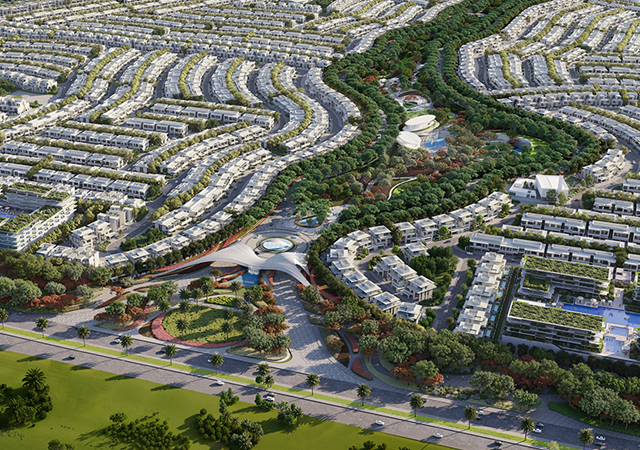
Over the past decade, giga-projects tied to national transformation agendas have become one of the most demanding proving grounds in the built environment. These aren’t just large buildings; they’re ecosystems of buildings, infrastructure, utilities, and public realm, often designed and built simultaneously by dozens of firms across multiple countries. Coordinating that many disciplines at that scale teaches you things no textbook covers.
Here are the lessons that actually hold up once the scaffolding comes down.
Alignment has to happen before the first line is drawn
The instinct on any large programme is to get moving fast, award packages, mobilise teams, start modelling. But on multi-discipline giga-projects, speed without alignment just means everyone races off in slightly different directions. The teams that avoid painful rework are the ones that spend real time upfront agreeing on modelling standards, level of development (LOD) requirements, coordinate systems, and naming conventions before a single discipline model is issued for coordination.
This sounds administrative, almost boring. It isn’t. A shared federated model strategy, agreed early, is what lets a civil team in one office and a structural team in another trust what they’re looking at when they open a coordination file. Without it, you’re not coordinating disciplines you’re translating between them, constantly, at a cost.
Clash detection is a process, not a software feature
Every large project runs clash detection software at some point. Far fewer run it as an actual process with ownership, cadence, and accountability attached. On giga-projects, the volume of clashes generated by architectural, structural, MEP, and civil models overlapping across hundreds of thousands of square metres can be overwhelming if there’s no triage system.
What works is treating clash resolution like a production line: automated detection runs on a fixed schedule, clashes get categorised by severity and discipline, responsibility is assigned immediately, and resolution is tracked with the same rigour as budget or schedule variance. Firms that specialise in BIM coordination at this scale, like Pinnacle, have built entire workflows around exactly this discipline because on a project with dozens of consultants, clash detection without process just generates noise nobody acts on.
A single source of truth is non-negotiable
Multi-discipline coordination collapses the moment two teams are confident they’re both right and both working from outdated files. On giga-projects spanning multiple design packages and often multiple design firms, version control isn’t a nice-to-have; it’s the thing standing between you and a six-figure rework bill.
The projects that run smoothly are the ones that commit early to a common data environment (CDE), with strict protocols for who publishes what, when, and how conflicts between disciplines get flagged and resolved. It’s less glamorous than the design work itself, but it’s arguably more important to the project’s success.
Local context doesn’t bend to global standards, it’s the other way around
Vision-driven development programmes are ambitious by design, often pulling in international design talent, global engineering firms, and offshore delivery teams to move fast and bring world-class expertise. That’s a strength, but it creates a real tension: international teams bring standards and workflows built for other markets, while the project itself has to answer to local codes, climate conditions, utility infrastructure, and regulatory bodies that don’t always map cleanly onto those standards.
The lesson here is uncomfortable but important: global best practice has to be adapted to local reality, not the other way around. Projects that try to force an imported standard onto a local regulatory environment end up with rework, delays, and approval friction. Projects that build local code compliance and site-specific constraints into the coordination process from day one move faster, even if it means slower ramp-up initially.
Communication cadence beats communication volume
On a project with so many stakeholders, it’s tempting to solve coordination problems by adding more meetings. That usually backfires as teams spend so much time reporting status that they have less time actually resolving issues. What works better is a tighter, more disciplined cadence: fewer meetings, but ones where the right people show up with real answers, backed by a coordination model everyone has reviewed beforehand.
The best-run programmes treat coordination meetings as decision points, not status updates. If a meeting doesn’t end with an assigned owner and a deadline, it wasn’t a coordination meeting – it was a conversation.
Build in slack, because scale punishes optimism
Every schedule for a giga-project looks reasonable on paper. Very few survive contact with the reality of coordinating that many disciplines across that much geography. The teams that hold their timelines are the ones that build contingency into the coordination schedule itself, not just the construction schedule, extra review cycles for complex zones, buffer time around major design freezes, and realistic expectations for how long it actually takes to resolve a clash that touches five disciplines at once.
Optimistic scheduling at this scale isn’t ambition. It’s a liability that shows up six months later as compressed construction timelines and quality shortcuts.
Document the lessons while they’re still fresh
Giga-projects run for years, and institutional memory leaks constantly, consultants rotate off, teams get reassigned, project managers move to the next phase. The programmes that improve over time are the ones that capture lessons learned at the end of each major coordination milestone, not just at project closeout when most of the people who lived through the problem have already moved on.
That documentation doesn’t need to be elaborate. It needs to be honest, specific, and read by the next team that inherits a similar coordination challenge.
The bigger picture
None of these lessons is exotic. Alignment, process discipline, a single source of truth, local context, focused communication, realistic scheduling, and honest documentation – none of it is a secret. What makes giga-projects tied to regional Vision-driven development different is the scale at which small coordination failures get magnified, and the speed at which national ambitions demand results.
Getting multi-discipline coordination right at this scale isn’t about having the most sophisticated technology stack. It’s about having the discipline to use ordinary best practices consistently, across every discipline, on every package, for years at a time. That consistency more than any single tool or platform is what separates the giga-projects that deliver on their vision from the ones that just deliver square footage.
• Pinnacle is a digital design and BIM engineering firm working across the AECO industry, which has hands-on experience delivering BIM and digital construction work on major regional projects, including Lusail Stadium (Qatar) and Riyadh Metro stations.