



































































The Abu Dhabi National Oil Company (ADNOC) is accelerating construction of a second crude export pipeline designed to bypass the strategically sensitive Strait of Hormuz, with the project now 50 per cent complete and targeted for delivery in 2027, according to Dr Sultan bin Ahmed Al Jaber, UAE Minister of Industry and Advanced Technology and ADNOC Managing Director and Group CEO.
Speaking to the Atlantic Council, Dr Al Jaber said the new pipeline forms part of the UAE’s long-term strategy to strengthen global energy security by reducing dependence on one of the world’s busiest oil transit chokepoints.
The second pipeline will effectively double ADNOC’s export capacity through Fujairah on the UAE’s east coast, enabling larger volumes of crude to reach international markets without passing through Hormuz, through which around a fifth of global oil trade moves daily.
“Right now, too much of the world’s energy still moves through too few chokepoints,” Dr Al Jaber said. “That is exactly why the UAE made the decision more than a decade ago to invest in infrastructure that bypasses the Strait. And it is why we moved ahead with our second pipeline in 2025. Today it is already 50 per cent complete, and we are accelerating delivery toward 2027.”
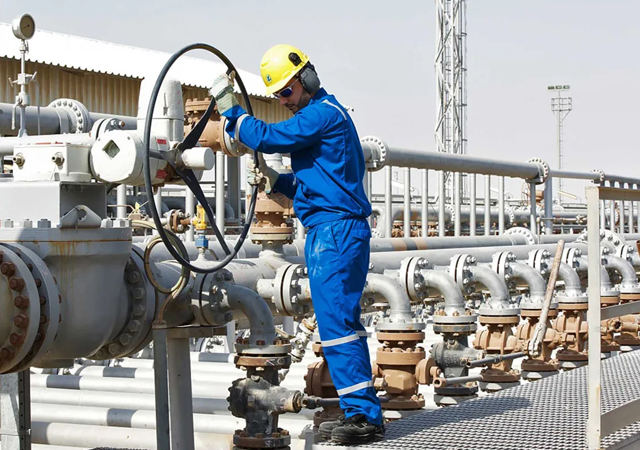
The new line builds on the UAE’s existing Abu Dhabi Crude Oil Pipeline (ADCOP), which currently transports crude from Abu Dhabi’s onshore fields to the emirate of Fujairah on the Gulf of Oman. The current pipeline, operational since 2012, has capacity of about 1.5 million barrels per day and was developed specifically to secure exports outside the Strait of Hormuz.
Dr Al Jaber said the UAE remained committed to ADNOC’s $150 billion (AED551 billion) five-year capital expenditure programme aimed at expanding production capacity, strengthening supply chains and supporting long-term energy demand growth.