









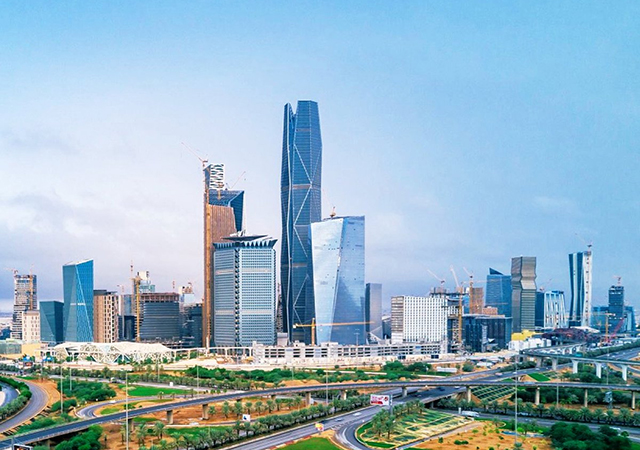



Dubai’s rapidly evolving skyline continues to push the boundaries of concrete technology, requiring formwork solutions that provide speed, structural precision, and crane independence. As developers aim for increasingly ambitious timelines, the efficiency of the concrete casting cycle has become the primary metric of success for high-rise and masterplan construction.
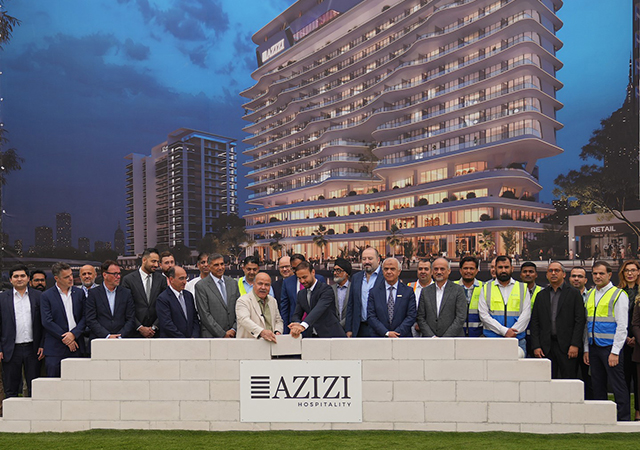
Global formwork leader Doka has recently helped set new structural benchmarks in the region by deploying integrated climbing and shoring systems on two major projects for Azizi Developments – Rêve Riviera and Azizi Venice – demonstrating how advanced engineering can overcome dense urban constraints and high-volume structural requirements.
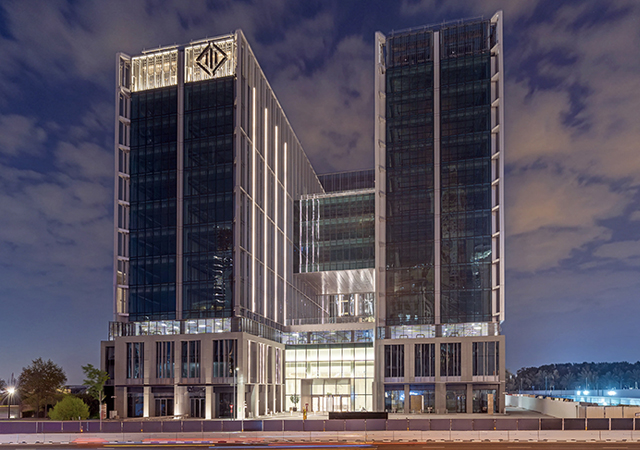
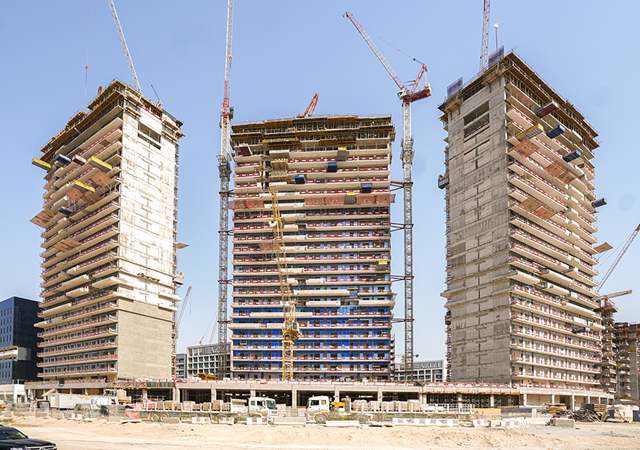
In the Mohammed Bin Rashid (MBR) City district, the construction of Rêve Riviera, a 110-m complex featuring three 26-storey luxury towers, presented significant logistical hurdles due to extremely limited working and storage space.
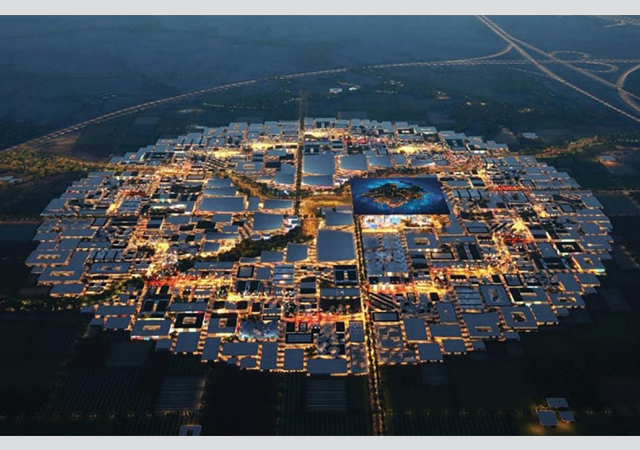
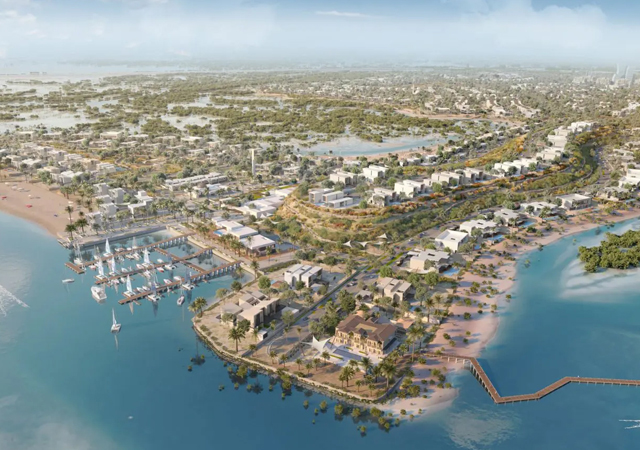
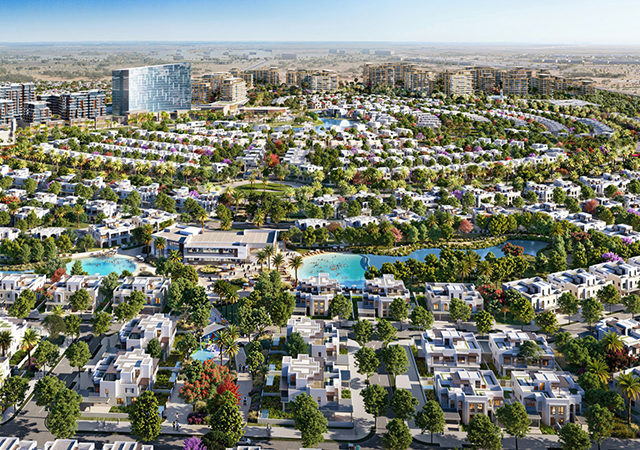
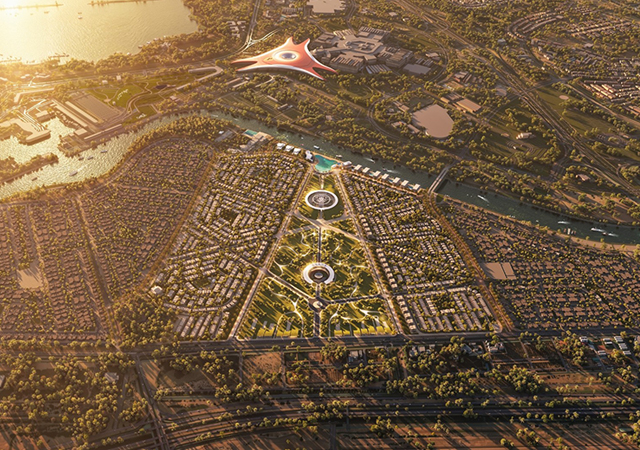
Further south in Dubai South, the Azizi Venice masterplan highlights Doka’s ability to scale technical solutions across a 136-hectare site. The project, featuring mid-rise towers ranging from 10 storeys to 22 storeys high, required a vertical solution capable of accelerating the core construction of multiple structures simultaneously.
Rêve Riviera
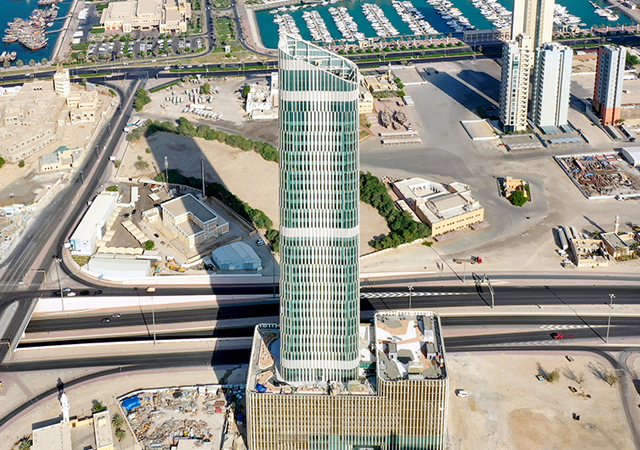
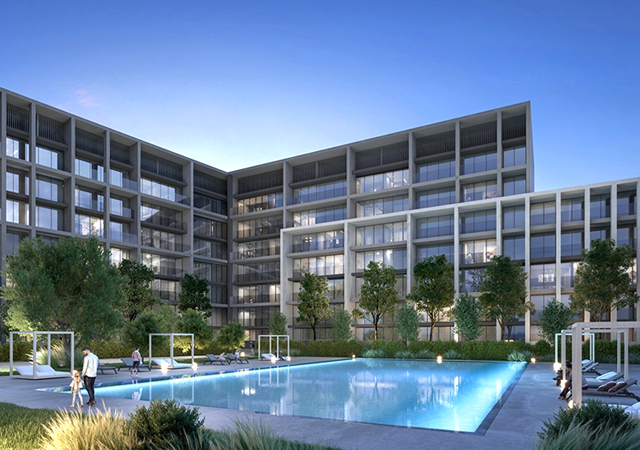
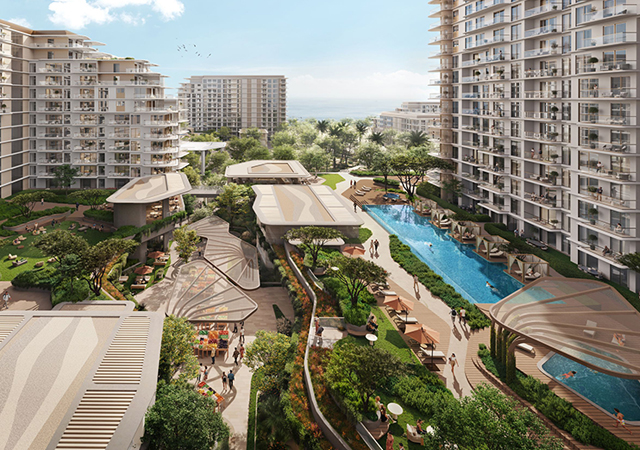
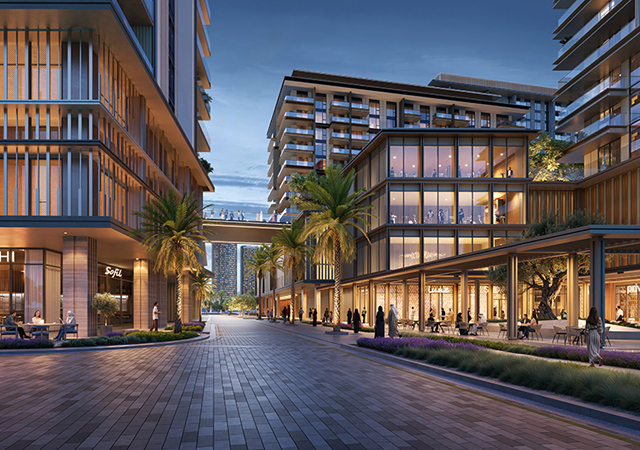
Rêve Riviera is a striking multi-building complex designed to redefine waterfront urban living. Inspired by the elegance of the French Riviera, this ambitious project comprises high-rise towers with distinctive, flowing, wave-like façades and panoramic glass elements.
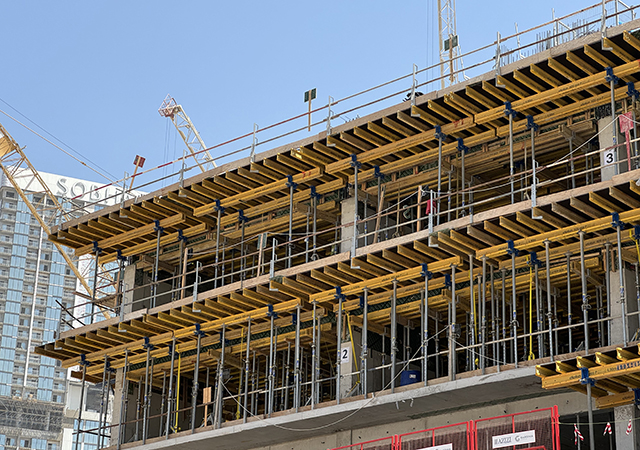
For slab construction at the Rêve Riviera, Dokaflex and Dokaflex table systems were deployed to reduce crane dependency. during forming.
To ensure the highest levels of structural precision and to manage the complexities of a dense, fast-paced construction environment, Azizi Developments appointed Doka as the formwork and scaffolding partner to provide a highly integrated system strategy that could guarantee efficiency and safety across all vertical and horizontal construction phases. By deploying a comprehensive suite of climbing systems, adaptable wall formwork, and compact shoring solutions, Doka played a pivotal role in maintaining the demanding project schedule and upholding the structural integrity of this premium residential landmark.
The extremely limited working and storage space at the construction site necessitated formwork solutions that were easy to handle, compact to store, and minimised the need for large laydown areas, while the project’s tight construction schedule demanded a rapid delivery schedule for ready-to-use (RTU) formwork and consistently fast cycle times to meet the timeline for the three towers. This ultimately required systems with minimal dependency on the main tower crane for repositioning.
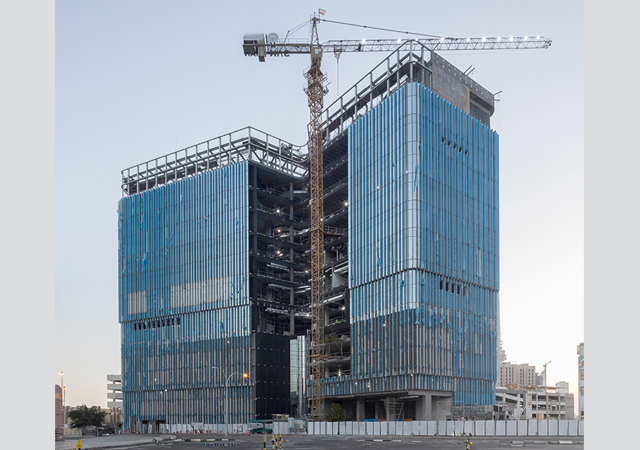
Doka’s engineering team developed a tailored, multi‑system strategy to optimise speed and efficiency across all structural elements. Central to the approach was the climbing formwork 150F, a proven crane‑lifted system offering safe, efficient forming for vertical structural elements. With its fully railed‑in working platforms, integrated ladder access, and quick rollback and adjustment features, the 150F system enabled fast, streamlined workflows while minimising crane time. The team also integrated a Shaft Platform to ensure efficient and safe shaft forming operations throughout the build.
To manage all wall and slab forming, the solution integrated versatile, high-performance systems, including large-area rormwork Top 50 and Frami Xlife, which were chosen for their flexibility and compact handling, while remaining suitable for the restricted site conditions and the varied architectural requirements of the towers.
For slab construction, Dokaflex and Dokaflex table systems were deployed to reduce crane dependency during forming. The Dokaflex table provided pre-assembled units that could be moved swiftly via trolley or crane, maximising re-use and efficiency in the slab cycle. Furthermore, to address high shoring requirements in limited areas, the load-bearing tower d3 was utilised. This system provided compact, high-capacity support for heavy loads, which were critical for maintaining safety in the high-density areas of the structure.
Work on Rêve Riviera is in its final construction phases. Doka says the project underscores the value of its comprehensive service offerings, which extend beyond delivering cutting-edge systems. The project benefited from detailed engineering support and a strong commitment to delivering RTU materials on a tight schedule.
Azizi Venice
Doka has also successfully completed its extensive formwork supply for Azizi Venice, one of the most significant residential milestones in Dubai South located in the immediate vicinity of Al-Maktoum International Airport,
Designed to redefine southern Dubai with its expansive crystal lagoon and high-end retail boulevard, the project’s mid-rise towers presented a rigorous construction schedule and high-volume structural requirements. To meet these demands, Azizi Developments and Gardinia Building Contracting partnered with Doka UAE, relying on its engineering agility and proven track record in large-scale masterplan delivery.
With the supply window spanning from February to July 2025, Doka was tasked with delivering vertical and horizontal systems that could maintain fast casting cycles across multiple mid-rise structures simultaneously.
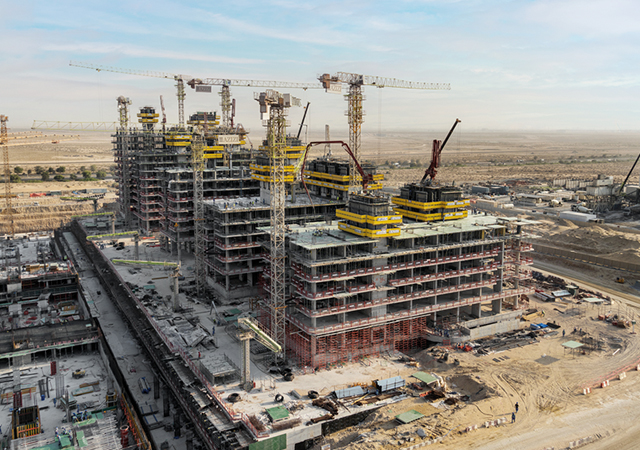
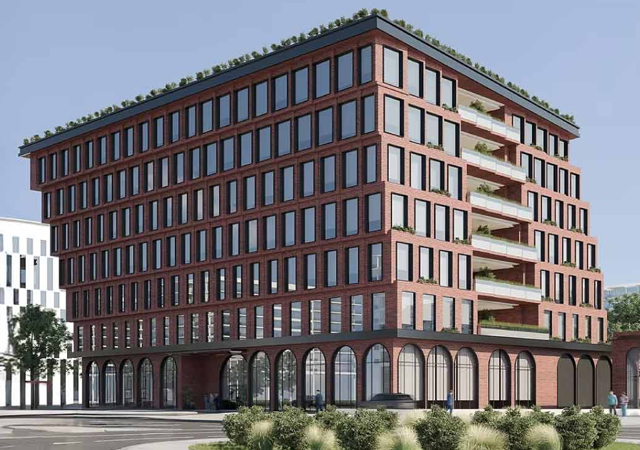
Azizi Venice features mid-rise towers ranging from 10 storeys to 22 storeys high.
The structural core of the project’s mid-rise towers necessitated a vertical solution that combined speed with high safety standards. As a result, Doka’s engineering team proposed the automatic climbing formwork Xclimb 60 as the primary system, of which eight were deployed to work on 11 core walls. A key factor in the client’s preference for Xclimb 60 was its inherent flexibility, specifically how the system allows for independent shutters to climb ahead of the main slab, decoupling vertical progress from horizontal schedules. This enabled typical floor cycles to be reduced to an average of approximately six days.
By utilising hydraulic climbing, the site team was able to move the core formwork to the next casting section without the need for the main tower crane, which was then freed for other critical material movements. This crane-independence was vital for maintaining the project’s momentum, allowing the core structures to progress at an accelerated pace while ensuring that site crews worked within a fully enclosed, safe platform at all times, Doka explains.
For the horizontal elements of the residential blocks, the project demanded systems that were lightweight yet robust enough for high-reuse cycles. Doka deployed a combination of Dokaflex and Dokaflex Tables, supported by Staxo 40 and d3 shoring systems.
To satisfy the client’s demand for greater product durability and flexibility, Doka provided high-performance aluminium beams, as opposed to H20 timber, while Dokaflex allowed site teams to adapt to the varying floor layouts of the 10- to 22-storey towers. This combination of flexibility and speed was essential in reducing the overall slab casting cycle, directly contributing to the developer’s Q2 2026 completion target.
Doka provided detailed engineering and on-site supervision throughout the project, while Doka formwork instructors were instrumental in conducting initial training and providing ongoing technical support, bridging the gap between design and execution. This high level of engineering responsiveness ensured that any design changes were addressed immediately, minimising programme risk.
Doka Sales Manager, Shoaib Mohammed, said: “Our technical solutions and proactive approach to on-site services were vital in managing the scale of Azizi Venice. Our ability to provide advanced engineering like the Xclimb 60 system, combined with reliable delivery coordination, EU standards towards HSE and custom engineering, allowed us to maintain our casting cycles and fulfil the high-quality requirements expected by Azizi Developments.”
Upon completion, Azizi Venice will include 30,000 residential units, delivering much-needed supply for Dubai’s fast-growing southern corridor.