

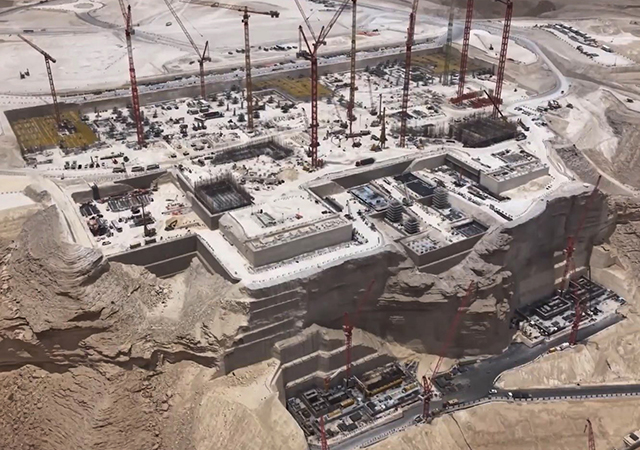












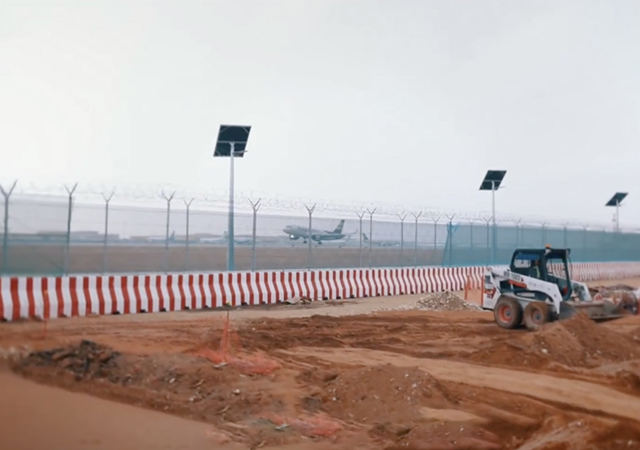
Construction activity at King Salman International Airport (KSIA) is gathering momentum as Saudi Arabia presses ahead with one of the most ambitious aviation infrastructure projects ever undertaken, positioning Riyadh as a global air transport hub and reinforcing the kingdom’s Vision 2030 diversification plans.
The latest milestone was the commencement of construction works on the airport’s third runway, a critical airfield component being delivered by a joint venture between Spain-headquartered FCC Construcción and the local Al-Mabani General Contractors. This move highlights continued progress in airfield development and enhances the airport’s operational readiness to support long-term growth in air traffic demand.
FCC Construcción brings extensive experience in large-scale transport and aviation works, while Al-Mabani is a long-established Saudi contractor with a strong track record in airports and complex civil projects.
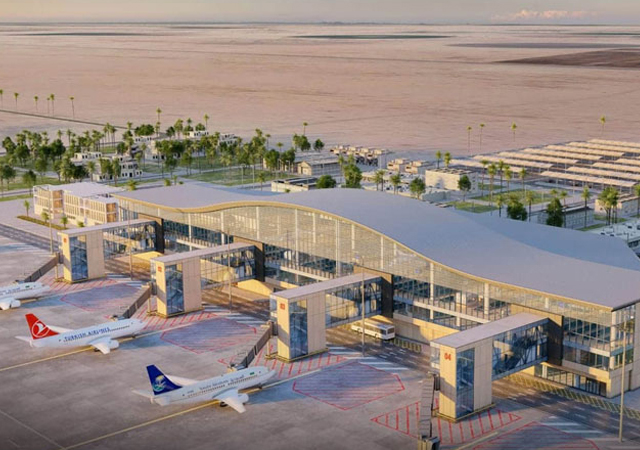
Spanning 57 sq km on the existing site of King Khalid International Airport, KSIA is designed to handle 100 million passengers annually and more than two million tonnes of cargo by 2030.
The third runway project represents a defining early package within the KSIA masterplan and reflects a deliberate sequencing strategy that prioritises airfield capacity, operational resilience and scalability.

Foster + Partners has designed the masterplan for the King Salman International Airport.
At 4,200 m in length, the runway has been designed to align with Riyadh’s prevailing wind conditions, supporting safe and efficient aircraft operations across all traffic and weather scenarios. Multiple access taxiways are incorporated to optimise aircraft circulation and reduce ground congestion during peak movements.
Once operational, the third runway is expected to raise airport capacity from 65 aircraft movements per hour to 85 movements per hour, providing a substantial boost to operational efficiency even before the delivery of additional terminals and supporting infrastructure.
“Launching construction of the third runway marks a pivotal step in delivering the KSIA masterplan and reflects our commitment to developing world-class infrastructure capable of supporting future growth, enhancing operational efficiency, and expanding long-haul connectivity without constraints,” said Marco Mejia, Acting CEO of King Salman International Airport.
The plan to develop King Salman International Airport was announced by HRH Crown Prince Mohammed bin Salman bin Abdulaziz in November 2022. This ambitious project aims to support Saudi Arabia’s aspirations by establishing a world-class aviation hub for international, regional, and domestic travel.
King Salman International Airport forms a central pillar of Vision 2030’s objectives to transform Riyadh into a global capital, expand non-oil economic activity and establish Saudi Arabia as a leading logistics and aviation gateway connecting Asia, Europe and Africa.
From a design and construction perspective, KSIA stands apart not only for its scale as one of the world’s largest airports but also for its integrated development model. In addition to incorporating the existing King Khalid terminals, the masterplan includes three new passenger terminals, six runways, dedicated cargo and logistics facilities, residential, commercial and leisure assets and extensive support infrastructure and utilities networks.
This integrated approach is expected to drive significant demand across multiple construction disciplines, including airfield works, vertical construction, MEP systems, digital infrastructure and sustainability-driven design solutions.
Design
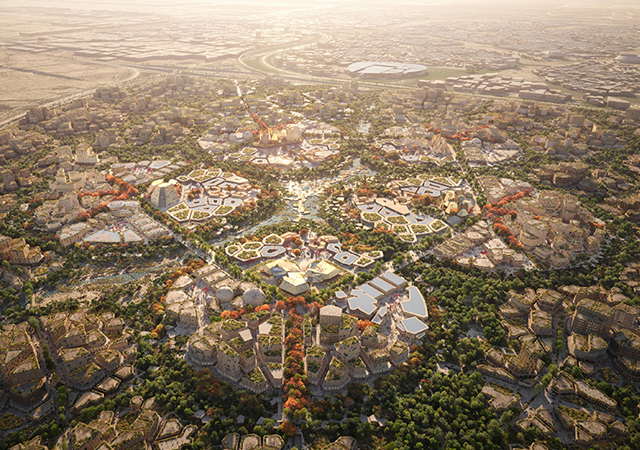
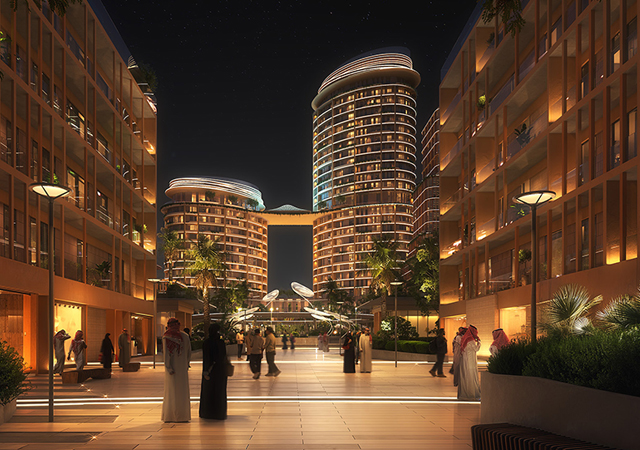
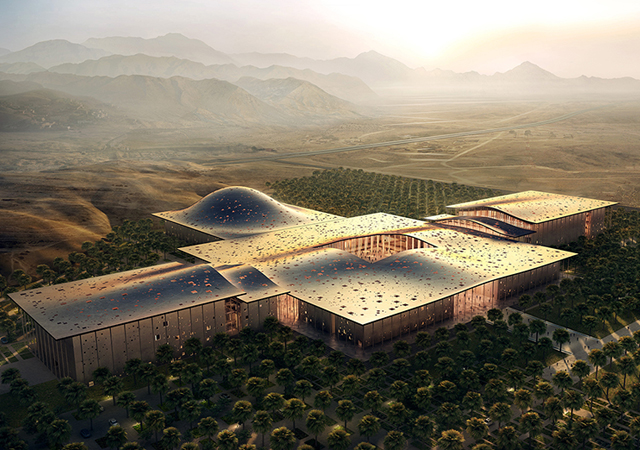
Foster + Partners has designed the masterplan for the airport, which includes 12 sq km of residential and recreational facilities, retail outlets, airport support facilities and other logistics real estate.
According to the masterplanner, these facilities are linked together by the Wadi Loop, a green infrastructure corridor that builds up the existing wadi and joins the existing west midfield to the new east midfield. The loop brings landscaping and real estate developments directly into the heart of the new terminal and allows for seamless journeys across the site. By extending public transportation networks, the masterplan also enhances the airport’s connections with the wider city.
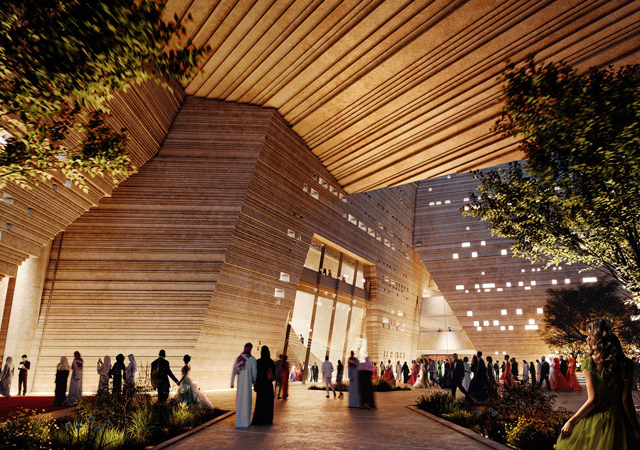
The main terminal seeks to replicate the diverse experiences of the city at a human-scale and integrate natural elements. Passengers get an immediate sense of their surroundings as they step into the terminal, with multiple views through the buildings and visual connections to the outside world. Natural ventilation and climate-controlled lighting efficiently maintain an optimal internal environment throughout the year. Movement through the terminal is intuitive, with clear wayfinding and minimal level changes, according to Foster + Partners.
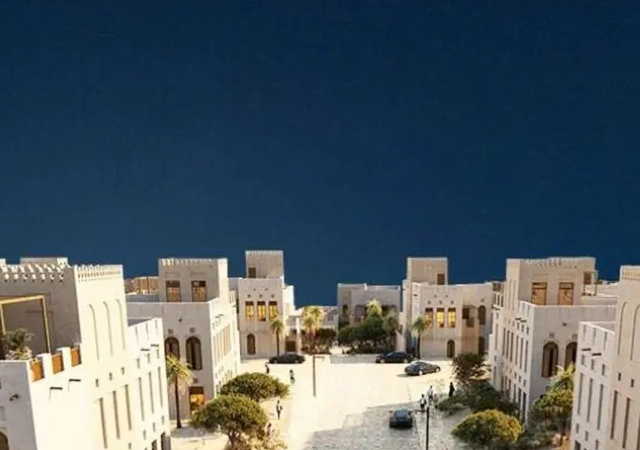
The airport will become a dynamic aerotropolis centred around a seamless customer journey, world-class efficient operations, and innovation. Riyadh’s identity and the Saudi culture were taken into consideration in the airport’s design to ensure a unique travel experience for visitors and transit travellers.
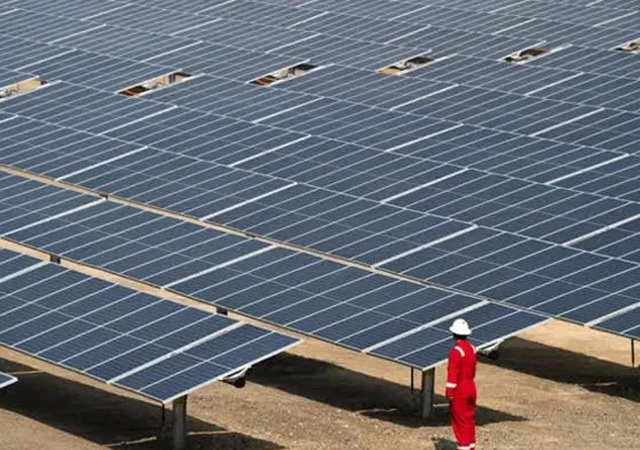
With sustainability at its core, the new airport will achieve LEED Platinum certification by incorporating cutting-edge green initiatives that take into account both embodied and operational carbon, and will be powered by renewable energy.
While architectural concepts for KSIA’s terminals have drawn global attention, project stakeholders stress that operational efficiency is a defining design driver across the development.
The runway layout, taxiway configuration and airfield systems have been engineered to accommodate long-haul wide-body aircraft, high-frequency regional services and future fleet evolution. This includes allowance for advanced air traffic management systems and potential integration with next-generation digital and automation technologies.
By embedding operational enhancements early, the airport aims to avoid capacity bottlenecks that have constrained other fast-growing hubs globally.
Beyond passenger growth, KSIA is positioned as a major cargo and logistics hub, supporting Saudi Arabia’s ambition to become a top global logistics centre. As it will handle more than two million tonnes of cargo annually by 2030, the airport’s logistics facilities are expected to integrate seamlessly with road, rail and future multimodal transport networks.