



















.jpg)
FOLLOWING the announcement at the end of 2013 of one of the nation’s largest infrastructure projects – the prestigious Sharq Crossing – Qatar’s Public Works Authority ‘Ashghal’ has kick-started this year with the award of contracts worth QR10.18 billion ($2.79 billion) under its ambitious road upgrade programmes. With this latest move, Ashghal has reiterated its commitment to spearhead the country’s infrastructure plans and looks set to announce a series of tenders shortly.
Of this impressive amount, a total of QR7.71 billion ($2.11 billion) will go towards three key deals under the Expressway programme, one of the two main nationwide roads programmes that Ashghal is currently working on.
The Expressway programme, work on which began in 2012, will provide vital highway links across Qatar, connecting key cities, towns and villages. Contracts worth QR7.2 billion ($1.98 billion) were awarded in June last year for the design and construction of other projects under the programme.
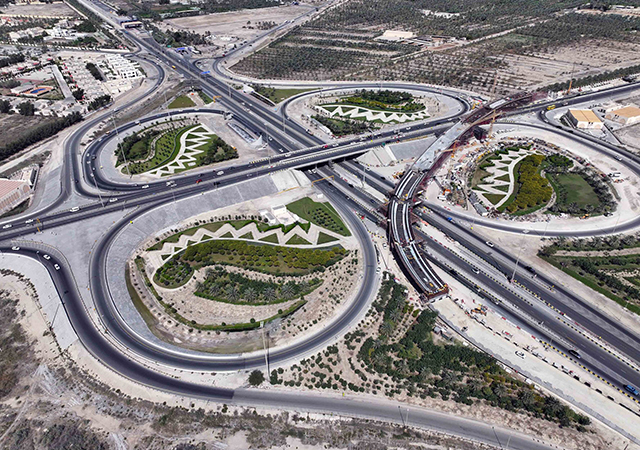
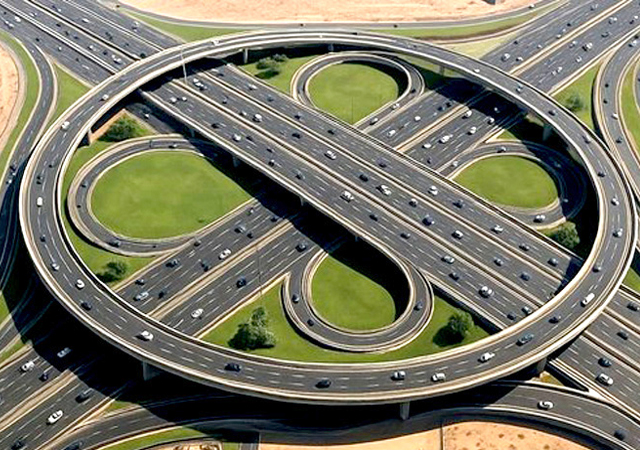
“Creating an impressive urban road network, this seven-year programme includes delivering more than 34 major projects with 240 interchanges, over 980 km of new roads and an array of underpasses, flyovers and multi-level interchanges to enable free-flowing traffic and improved journey times,” Nasser bin Ali Al Mawlawi, Ashghal’s president, tells Gulf Construction.
The consultant for the Expressway programme is Kellogg Brown and Root (KBR) and a number of different contractors have already been appointed on the programme.
The second scheme under the nationwide programme is the Roads and Infrastructure in Local Areas programme that includes developing and upgrading local roads, drainage and new infrastructure across the country’s five regions – Qatar North, Qatar South, Doha North, Doha South and Doha West areas.
“As part of this programme, more than 200 projects will be delivered in the next five to seven years, with 16 major projects already under construction and many more slated to start this year,” Al Mawlawi indicates.
The consultant for the local roads and drainage programme is Parsons-Brinkerhoff and a number of different contractors have already been selected to undertake the projects.
 |
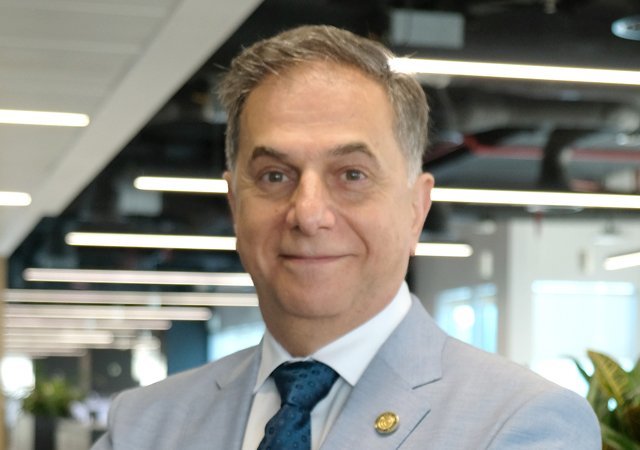
Al Mawlawi ... focused on excellence. |
Over the past year, Ashghal has forged ahead with the construction of roads and drainage infrastructure, expressway and building projects so as to develop the nation into one of the most structurally advanced countries in the world.
The authority – which this year marks 10 years since its inception – is responsible for the design, construction, delivery and maintenance of all infrastructure projects and public buildings of national importance in the country. It is managing and coordinating a five-to-seven year development programme for infrastructure projects worth an estimated QR100 billion ($27.46 billion) that will help create a sustainable future for the country.
Steady progress has been made on Ashghal’s nationwide infrastructure programmes. As part of the Expressway programme, the authority completed the construction of Salwa Road project forming part of a strategic corridor between Doha and the Saudi border. Six Expressway projects have moved into construction since the beginning of 2013 bringing the total number of projects under construction to 15, according to Al Mawlawi. Design and supervision consultants were also appointed for all the remaining packages of work.
As part of its Roads and Infrastructure in Local Areas programme, five new contracts were awarded and mobilised to develop infrastructure in various key commercial and residential areas. “In addition, we were successful in undertaking and completing crucial road projects of converting eight critical roundabouts on Doha’s Corniche Street and surrounding areas to signal-controlled intersections in a record time,” Al Mawlawi explains. “Ashghal also initiated the process for expanding the sewerage infrastructure to accommodate the projected population growth in south Doha through the Inner Doha Re-sewerage Implementation Strategy (Idris), its flagship project.”
In 2013, Ashghal made some key project announcements. To enhance Qatar’s transportation network ahead of the 2022 Fifa World Cup, the authority revealed the concept designs of its masterpiece project Sharq Crossing. As one of the most ambitious engineering projects ever undertaken in the Middle East, the Sharq Crossing will comprise three iconic bridges interconnected by 8 km of subsea tunnels.
The 12-km project, designed by renowned architect, engineer and artist Santiago Calatrava, will include three bridges, each spanning between 600 m and 1,310 m, which will link Doha’s new Hamad International Airport with the city’s cultural district of Katara in the north and the downtown central business district of West Bay.
 |
The Western Duheiliyat bridge, part of the Dukhan Highway ... a key Expressway project under way. |
“Sharq Crossing is an engineering masterpiece of design, and while providing an important new artery to Doha’s existing road network, it will be instantly recognisable across the world and will be an emblem for Qatar,” says Al Mawlawi. Construction is expected to start in 2015 and the project is estimated to be completed by 2021.
Calatrava’s design is inspired by natural forms, and draws from the image of flying fish to form iconic arches which will provide a stunning addition to Doha’s skyline. One of the bridges will have a two-deck arched structure incorporating a recreational park accessible via an elevated walkway and a funicular cableway.
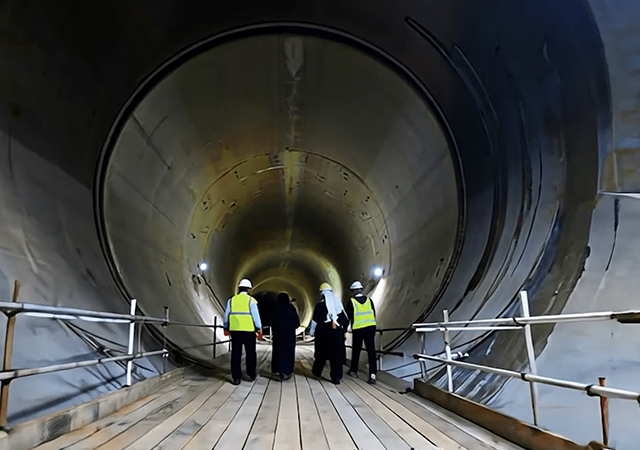
The Sharq Crossing’s subsea connected tunnel links will provide an expressway of three lanes in each direction between Hamad International Airport and West Bay; and two lanes in each direction between West Bay and Lusail. The crossing tunnels have been designed to meet strict international traffic management and safety requirements. To further enhance safety criteria, heavy goods vehicles will be excluded from accessing Sharq Crossing.
Ashghal has appointed Fluor Corporation as the programme management consultant for construction supervision of the Sharq Crossing.
Sewerage works
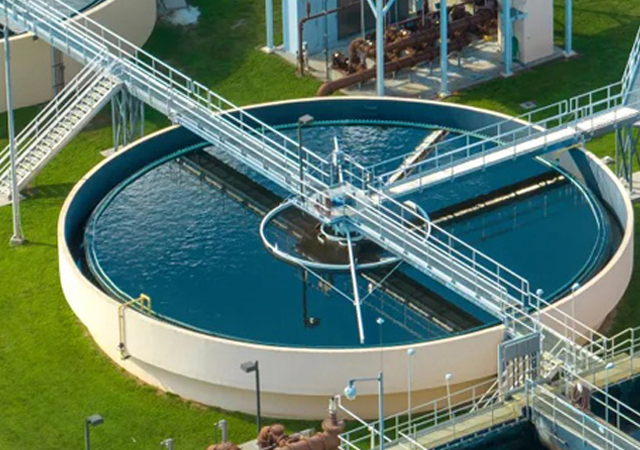
Addressing the demand for a more comprehensive sewage and drainage network across the country, Ashghal is nearing completion of the Doha North sewage treatment plant.
This is one of the biggest projects for an integrated drainage system that aims to serve more than 900,000 people around the north of Doha and West Bay areas, in addition to Doha West, The Pearl Qatar, and Lusail areas.
Expected to be completed by the second half of this year, the project is part of an integrated drainage programme, which includes similar networks varying in size that serve all parts of the country. The supervision consultants are KEP International Consultant and Stanley Consultants and the project is being implemented by Keppel Seghers Engineering Singapore.
Community projects
Ashghal’s remit also includes a number of buildings projects that serve local communities and the authority works closely with the relevant Qatar authorities to design, commission, construct and maintain buildings for education, healthcare and other public needs.
The authority is currently building 44 educational institutions and working on various medical and healthcare projects in different areas of the country, including the extension of Hamad General Hospital surgery department, physical medicine and rehabilitation hospital, women’s hospital, the Translational Research Institute and Bio-Bank, infectious diseases hospital, and five health centres in different areas of Qatar, amongst others. Also in progress is the New Doha Zoo project, and the West Bay City Gate Park.
Ashghal launched the concept masterplan of the New Doha Zoo project in 2013, which is set to become a world-class destination and a unique zoological experience.
Priorities & initiatives
Contributing towards achieving the National Vision 2030, Ashghal’s main priority is to ensure that road network and infrastructure is upgraded to create a long-term, sustainable road network that continues to support the growing social and economic development of Qatar beyond 2022, according to Al Mawlawi.
“Ashghal aims to implement all national infrastructure projects to the highest international standards. In line with its slogan ‘Qatar Deserves the Best’ Ashghal’s goal is to achieve excellence in each of its projects,” he says. “Ashghal will continue to plan and implement projects in the most efficient way it can and minimise the disruption its work causes.”
 |
The Lusail Expressway ... vital connection. |
Al Mawlawi adds that Ashghal is truly transforming as an organisation to meet its strategic goals of being more responsive, dynamic and customer-centric.
“To capitalise on a more customer-centric approach, Ashghal also launched its new customer contact centre, revamped its website and engagement on social media platforms including Twitter, Instagram, YouTube and Facebook to ensure Qatar’s residents are informed of all we are doing,” he says.
Al Mawlawi points out that the transformation of an entire country at such a scale does come with varying levels of disruption. “The biggest challenge with such a massive undertaking is to keep the country moving amidst all construction work. Ashghal provides alternative roads where possible to ensure smooth and continuous traffic flow, however, we cannot avoid there being a degree of traffic flow slowing during works,” he says.
One priority element of Ashghal’s operations that Al Mawlawi highlights is its open and transparent compulsory competitive tendering process whereby tenders are advertised on its website and in relevant publications. With major projects, Ashghal also holds pre-tender briefings to ensure companies are aware of the tender requirements of each stage of the project.
The authority has also been integrally involved in important national initiatives such as the National Road Safety Strategy, Work Zone Traffic Manual Guide and Intelligent Transportation Systems. All three initiatives contribute to road safety in Qatar with the aim of reducing accidents and incidents on the country’s roads and subsequently, lowering the instances of personal injuries and fatalities.
Ashghal has also made significant achievements internally in terms of streamlining its business processes and improving its systems. “We have started using an enterprise resource planning (ERP) system to automate processes in addition to launching the Inteqal programme which focuses on people, processes and technology,” says Al Mawlawi.
Looking ahead
Ashghal has numerous projects that are under construction, about to be mobilised or in the planning stages. “With various nationwide infrastructure and building programmes being implemented across the country, there are numerous projects that are under the tendering process as well, including Idris, expressways, buildings and local roads and infrastructure projects. New tenders for upcoming projects will continue to be issued and further information and updates on these will be available on Ashghal’s website,” Al Mawlawi concludes.


