











WITH infrastructural projects worth more than $200 billion expected to unfold in the next 15 years, and the bulk of the outlay going towards creating world-class developments over half that period in time for the 2022 Fifa World Cup, Qatar’s construction sector has much to be optimistic about.
The country’s construction industry is expected to grow at the rate of 10.1 per cent this year, as the $150-billion infrastructure programme in preparation for the World Cup gathers momentum, according to Business Monitor International (BMI), a leading, independent provider of proprietary data, analysis, ratings, rankings and forecasts.
In fact, the upsurge in activity was apparent last year when the country is estimated to have awarded contracts worth a total of $56 billion, more than double the value of deals signed in 2012.
Qatar is spearheading its twin goals of national development in line with its Vision 2030 and infrastructure construction to host the World Cup in 2022, with key projects being predominantly being infrastructure, transportation, energy and utilities and industrial sector related.
Some of the major infrastructure projects in the pipeline include a $20-billion investment in roads; a $40-billion railway plan; a stadium development programme estimated at $4 billion; a $8-billion deep-water seaport; a $1-billion transport corridor project in Doha; an airport city around the new Hamad International Airport, and tens of thousands of hotel rooms to be built to support the influx of tourists and World Cup visitors. Qatar is expected to build more than 80,000 new hotel rooms by 2022, at a rate of 10,000 to 15,000 annually.
In addition, Qatar Tourism Authority plans to invest about $20 billion on tourism infrastructure in line with the growth in tourist arrivals which is rising at a rate of 15.9 per cent compounded annually, to reach 3.7 million by 2022, creating opportunities for the development of commercial facilities such as shopping malls around Qatar.
 |
|
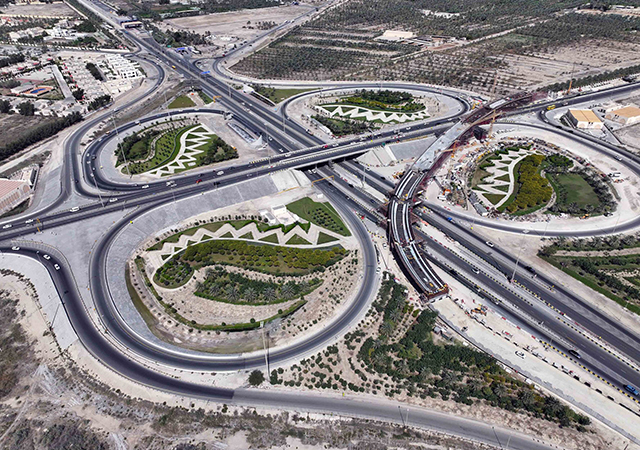
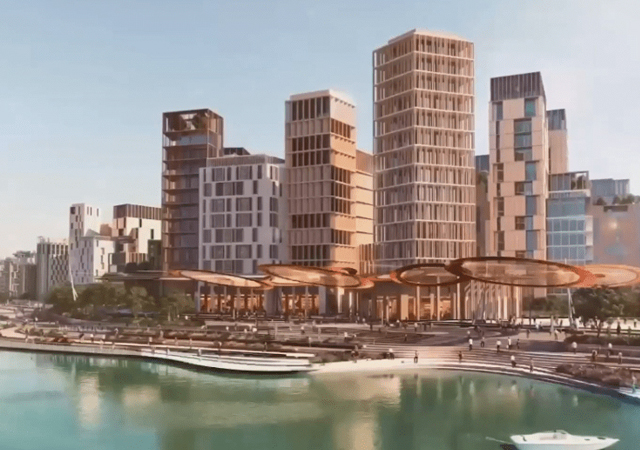
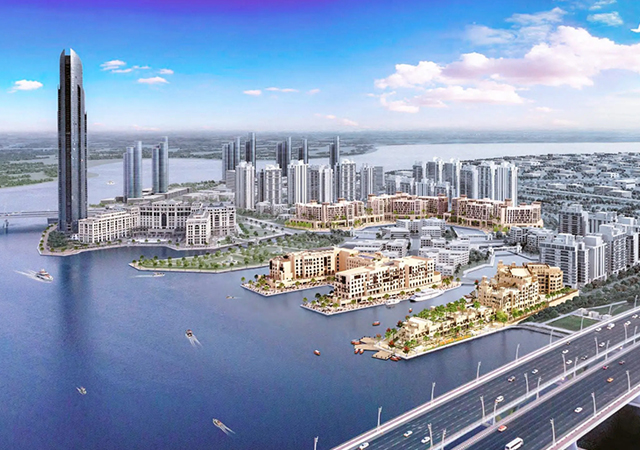
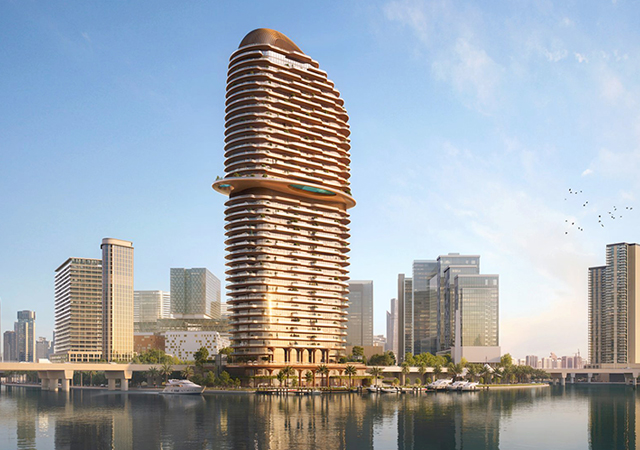
The Sharq Crossing ... engineering marvel. |
Meed sees Qatar’s projects market showing significant activity this year with infrastructure and transport contract awards expected to peak at $24 billion. Doha alone has a considerable backlog of work to execute between 2014 and 2019, with associated contractor and third-party opportunities valued at $90 billion, according to the leading business intelligence firm, which is hosting at a key conference Qatar Projects 2014 this month (March 18 to 19) to highlight the massive opportunities offered by the country.
Infrastructure development is also set to spur the economy with the country’s real GDP projected to reach 4.6 per cent this year. Strong investment in the infrastructure and real estate sectors along with high public spending and population growth will maintain the momentum in the economy, says the Qatari planning ministry in its half-yearly report.
The report said Qatar’s budget would remain in surplus through 2013-2014 but the balance would be lower because of the “large increase” in infrastructure spending.
Given the pace of development and a construction bonanza in the offing, Qatar is expected to be confronted with a number of challenges such as material and labour shortages and price escalation and needs to have mechanisms in place ensure the availability of cement, steel and other construction requirements as well as the technical expertise to executive these world-class projects to the quality standards stipulated. The country has recently come under attack from the international community as reports of labour rights abuses surfaced. A step in the right direction is the workers welfare standards charter issued by the 2022 Supreme Committee for all the projects under its ambit.
Roads & bridges
Driving some of the nation’s infrastructural plans is Qatar’s Public Works Authority (Ashghal) which early this year awarded contracts worth QR10.18 billion ($2.79 billion) towards the country’s ambitious Expressway and the roads and infrastructure in local areas programmes.
This latest batch of contracts follows deals worth QR7.2 billion ($1.98 billion) awarded in June last year for the design and construction of other projects under the programme.
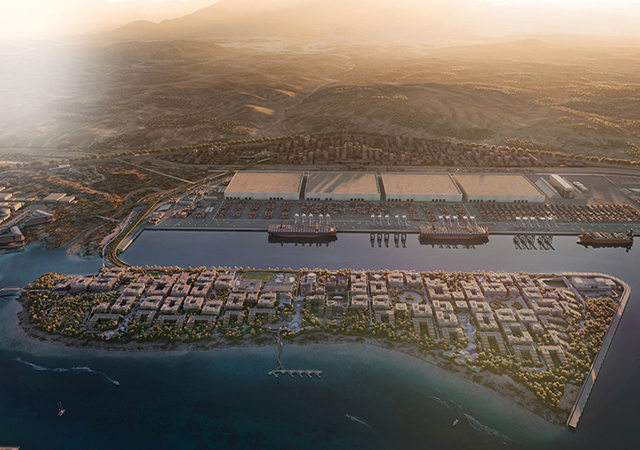
Ashghal also announced plans at the end of last year to launch the Sharq crossing project, which will be one of Qatar’s largest infrastructure developments (see separate article).
Airport
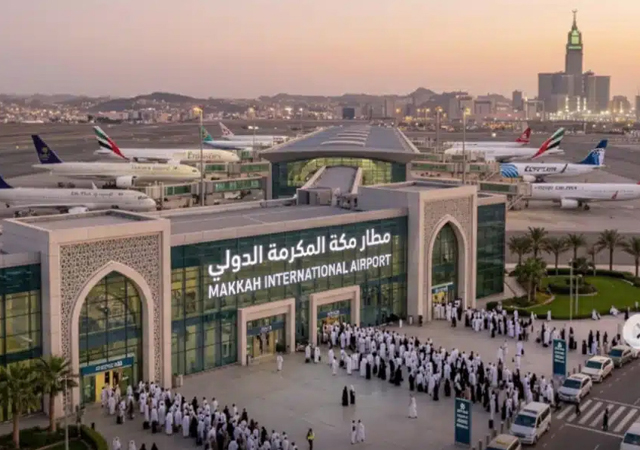
The state-of-the-art Hamad International Airport (HIA) has suffered a series of delays and is now slated for a phased opening by the middle of this year. The $16-billion airport will have an initial capacity of 30 million passengers a year, rising to around 50 million by the time it is fully operational beyond 2015.
HIA is a key project in Qatar’s national development strategy and will significantly contribute to efforts at diversifying the economy away from oil and gas. It will be the hub around which a new 10-sq-km Airport City will be built linking the airport with the capital.
HIA and Airport City span 29 sq km, 60 per cent on land reclaimed from the Arabian Gulf.
The passenger terminal is spread over an area of 600,000 sq m and has three concourses and 33 contact gates – which will increase to five concourses and 65 contact gates, including eight for the A380 in the final build-out.
OMA, a leading international partnership practising architecture, urbanism and cultural analysis, has been named as the masterplanner for the proposed Airport City. Its masterplan for the city, where 200,000 people will live and work, comprises a series of four circular districts along a spine parallel to the HIA runways.
Phase One of the 30-year masterplan, which links airside and landside developments for business, logistics, retail, hotels, and residences, will be mostly complete in time for the 2022 Fifa World Cup.
Railway
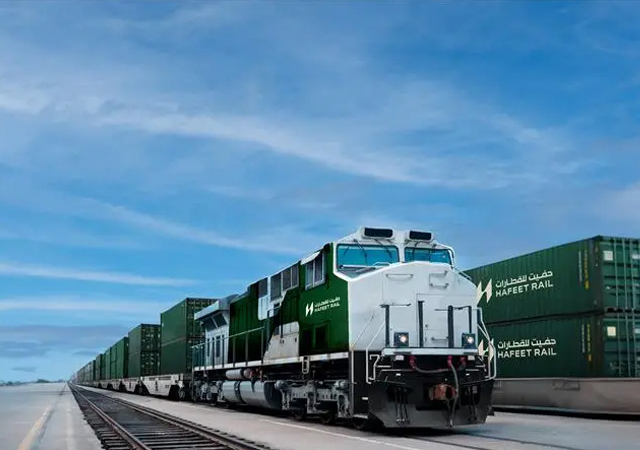
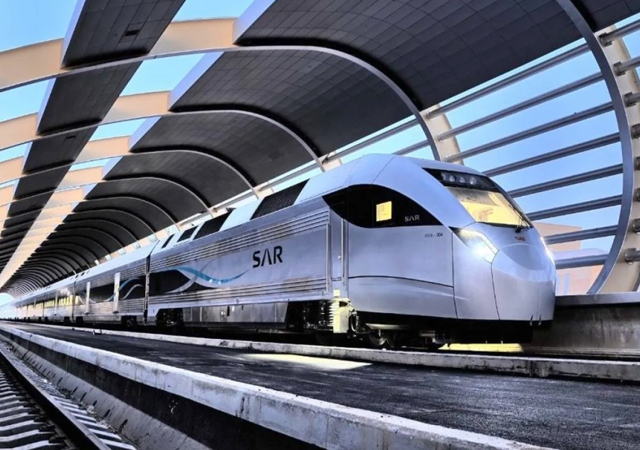
Significant progress has been made on Qatar’s integrated railway network, with Qatar Railways Company (Qatar Rail), the firm overseeing its construction, having awarded contracts worth more than $32 billion to date to speed up the project.
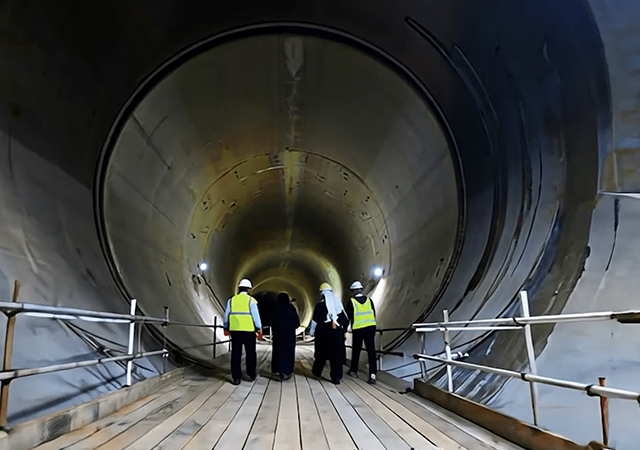
The company is leading three vital developments – the Doha Metro, which will link the capital’s inner and outer areas; the long distance passenger and freight rail; and the Lusail light rail transit, which will work in full integration to connect Qatar’s key areas with each other and with their vital extensions.
Last June, Qatar Rail awarded four design-and-build contracts worth QR30-billion ($8.34 billion) for Phase One of the Doha Metro project, marking a key milestone in the development of the Qatar Rail Development programme (QRDP).
The contracts comprise underground sections for the Red Line North (RLN), Red Line South (RLS), Green Line (GRN), and major stations (MS).
 |
|
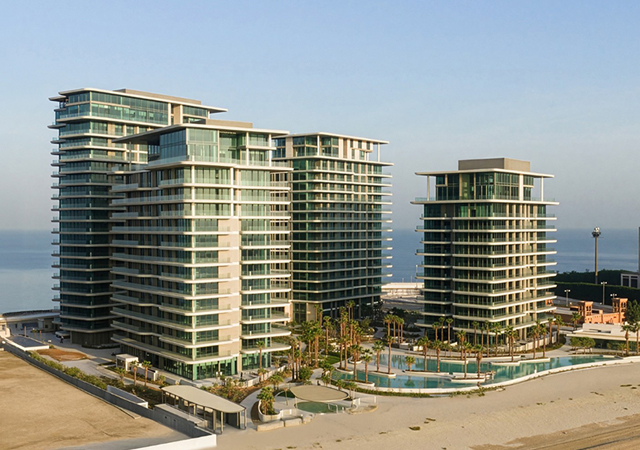
Msheireb Downtown Doha ... a major project in Qatar. |
Work is currently under way on Phase One construction, which is expected to be completed by 2019. Construction is progressing on 21 stations (see Regional News).
The estimated $40-billion Doha Metro will be one of the most modern rail networks in the world.
Speaking on the overall technical progress, Qatar Rail’s CEO Saad Al Muhannadi said the work on the Doha Metro projects was moving as per schedule, while the Lusail light rail transit work had reached an advanced stage.
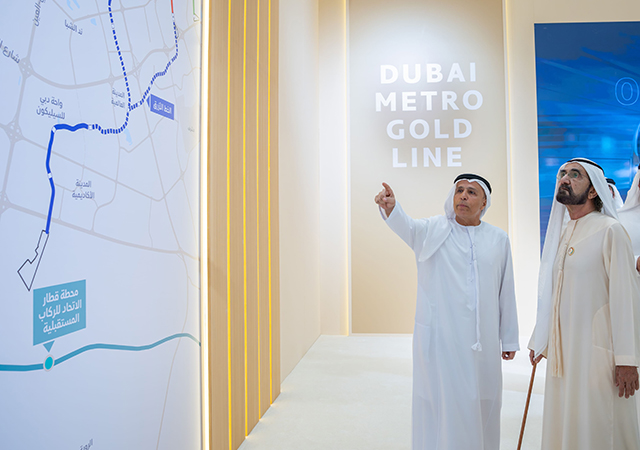
The Doha Metro network will cover more than 90 stations distributed among the Red Line, Gold Line, Green Line, and Blue Line, which will also be connected to each other.
On the progress of Lusail Light Rail Transit, Al Muhannadi said Qatar Rail had finalised the tunnelling works and completed more than 60 per cent of the structure for drilling works for its stations.
The long distance passenger and freight rail project will be in three different categories – a shuttle service for GCC transit travellers, transportation services for locals, and freight transport services for international and domestic routes.
The project will be executed over four phases – with plans to initiate the enabling works in 2015 and complete the fourth and final phase in 2030 and the network extended to Saudi Arabia, Bahrain, and Qatar’s New Doha Port, and Hamad International Airport.
Stadiums
Early works have commenced on Al Wakrah Stadium, with work also to be initiated on four other stadia during the year. In advance of major construction work beginning on Qatar’s first proposed venue for the 2022 Fifa World Cup in Al Wakrah, the Supreme Committee for Delivery and Legacy has released its Workers’ Welfare Standards, which set clear guidelines that protect the rights of workers.
Tenders are to be issued shortly for the enabling works on the Al Wakrah Stadium, with the contract award slated for the fourth quarter. Qatar has appointed KEO and Aecom as the lead project manager and design consultant for Al Wakrah Stadium.
The $4-billion stadium building programme will see the construction of nine new eco-friendly football stadia and the expansion of three existing stadia. It includes the construction of the 86,000-seater Lusail Stadium, which will host the tournament’s opening and final matches.
Real estate
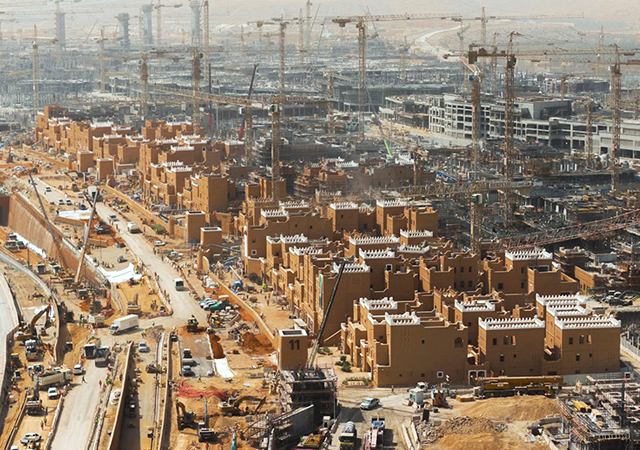
Work on Qatar’s highly prestigious Msheireb Downtown Doha project – described as the world’s first sustainable regeneration of a downtown area in a modern city – is progressing well with infrastructure works having been completed last year.
Last May, Qatar’s leading sustainable real estate developer Msheireb Properties awarded a consortium comprising Japan’s Obayashi Corporation and Qatar’s HBK Contracting, a contract worth QR2.5 billion ($686 million) for Phase Three of its flagship project.
Phase Three involves the construction of a built-up area of approximately 310,000 sq m comprising 14 buildings that are up to 22 storeys in height as well as four basement levels offering 2,200 parking spaces.
It will comprise two office buildings, 350 residential units spread across 11 buildings, four communal swimming pools in addition to a mosque, and retail, hotel, hospitality and community facilities.
The 31-hectare development broke ground in Doha in early 2010 and will be delivered in five phases. The QR20-billion ($5.49 billion) project combines traditional local building practices and design influences with the latest technologies in energy efficiency and environmental management.
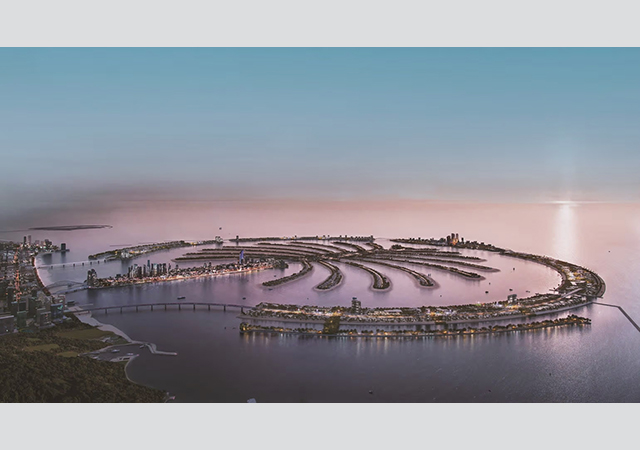
Another landmark man-made island development, The Pearl-Qatar – the country’s first international urban development that was conceptualised a decade ago – continues to evolve and see the development of several luxury developments.
Work has been launched on two Abraj Quartier AQ01 and AQ02 gateway office towers at the island following the signing of a QR795-million ($218 million) contract by United Development Company (UDC), the developer behind the island project, and a leading Qatari construction company
Abraj Quartier is one of the 10 precincts that make up The Pearl-Qatar island. Standing at around 201-m tall on opposite sides of the main access road to The Pearl-Qatar, the two 40-storey towers will boast a built- up area of more than 230,000 sq m.
Work is also nearing completion on the luxurious five-star Kempinksi Marsa Malaz Hotel within The Pearl-Qatar. The hotel, which will be operated by the renowned international hotelier Kempinski, has 281 guest rooms spread over six levels (see separate article).
Meanwhile Doha Festival City, Qatar’s largest retail and entertainment destination, is launching the next phase of development with one of the largest shopping malls in the country. A joint venture of Gulf Contracting Company (GCC) and ALEC Qatar has been appointed as contractor to commence foundation work for the QR6-billion ($1.64 billion) mall.
The mall is the Phase Two development of Doha Festival City project scheduled for opening in the third quarter of 2016. Phase One comprised Qatar’s first Ikea store that was launched in March last year.
Offering a gross leasable area (GLA) of some 250,000 sq m, Doha Festival City will feature more than 550 shops and stores including more than 85 restaurants and cafes.
Another massive mall is being developed by Qatar-based UrbaCon Trading and Contracting (UCC) in Doha, at a cost of more than QR3 billion ($823.2 million).
Featuring more than 400 stores, fine dining and world-class entertainment facilities, the Mall of Qatar is expected to be one of the region’s leading shopping and leisure destinations when it opens in the third quarter of 2015.
The project is adjacent to the Al Rayyan Sports Club and a future Fifa 2022 World Cup stadium. A dedicated metro station integrated into the mall will give all of Doha and surrounding regions good access to the mall.
Over 162,000 sq m of retail leasable space on three levels will make it one of Qatar’s largest shopping and entertainment destinations.

.jpg)


