












When a private developer announced plans to build the world’s tallest tower within a futuristic city in Kuwait, the $77-billion project sent out a clear message to the world: that Kuwait is continuing an ambitiously drive to become a regional commercial hub and elite tourism destination.
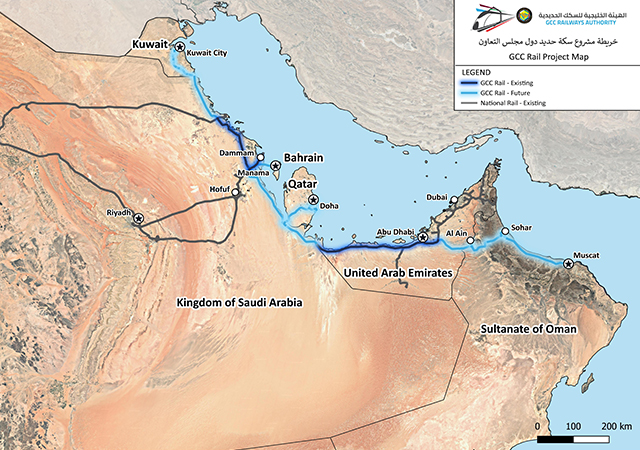
Kuwait’s government, meanwhile, appears equally proactive: new business towns and tourism islands are in various stages of planning and execution, there is a proposal for a $11-billion national rail network which will be linked to the entire GCC, while a five-year plan includes construction projects worth KD35 billion ($128 billion).
On paper, the statistics continue to impress. Kuwait is believed to hold an estimated 101.5 billion barrels (bbl) of proven oil reserves, according to the June 2008 BP Statistical Review of World Energy, which gives Kuwait an eight to nine per cent share of the world’s total oil reserves.
Its foreign exchange reserves, meanwhile, are estimated to be in excess of $250 billion.
Yet, despite being one of the richest countries in the world with abundant oil supplies and the resources of some of the leading real estate developers, contractors, consultants and project managers in the region, Kuwait has one of the lowest growth rates in the region, despite having big-ticket projects in the pipeline.
Many industry observers attribute this to Kuwait’s ongoing political problems as well as its slow-moving bureaucracy.
The latest of the political crises has seen the cabinet resign last month. Another factor that is drawing down the industry, according to market analysts, is that more than 90 per cent of land in Kuwait is owned by the state, with a large portion controlled by state-owned Kuwait Petroleum Corp for oil exploration and other related projects. Also the state’s action of restricting private firms from residential real estate deals has put a damper on the market, with one report indicating that Kuwait property sales had fallen 65 per cent in July, which was the fourth month of decline. The residential real estate deals form the biggest portion of total property transactions.
With the global slowdown, the downtrend in the real estate sector has continued. A key pointer is Global Investment House’s Global Real Estate Index for Kuwait, which was down by 14.2 per cent in November and by 32 per cent in October, while its Global Investment Index for Kuwait was down by 13.9 per cent in November and by 26.1 per cent in October.
On the oil front, prices are at three-year lows, which does not bode well for the 1,100 projects that Kuwait has chalked out for the new five-year plan announced at the end of September. The 2008/09 budget assumes oil would fetch $50 per barrel. Kuwait’s crude peaked at over $135 in July and was trading at $42.77 at the end of last month.
However, Kuwait’s leadership has been astute enough to foresee this drop in oil prices in the midst of the global credit crunch and at the end of October, called for the diversification of the nation’s economy away from its mainstay oil income, saying tough economic conditions throughout the world would not guarantee high oil revenues.
Kuwait’s Emir HH Sheikh Sabah Al Ahmed Al Sabah said the government had taken measures to preserve confidence in the nation’s financial establishments and economic system as a whole, but needed to diversify its income away from oil via “unimpeded private sector ventures and initiatives.”
“We have been lagging behind on the path of development and progress and any justifications to waste more time and potential can no longer be acceptable,” he continued.
Kuwait’s goal of steering the nation forward are enshrined in the $131-billion policy strategy plan, which indicates a return to the traditional practice of developing five-year plans. The last plan, which dates back to 1986, was interrupted following the Iraqi invasion in August 1990. The authorities hope to commence the plan in April 2009, which marks the start of fiscal year.
The five-year plan, although ambitious, appears to be the way forward for Kuwait. Also, the real estate sector would receive a considerable boost if the country goes ahead with its plans to ease land ownership rules and give the private sector more access to land. This would allow GCC nationals to own land in Kuwait.
The five-year plan envisages private sector firms assuming a primary role in the economy. For its part, the government looks at playing a supportive role through provision of an efficient bureaucracy besides putting in place a modern infrastructure.
Moving from government sources to the market and trend trackers, analysts are predicting $3 billion in government investment and $8 billion in private investment in construction and real estate in Kuwait over the next five years – indicating confidence not just in the sector, but for the overall development of Kuwait’s economy.
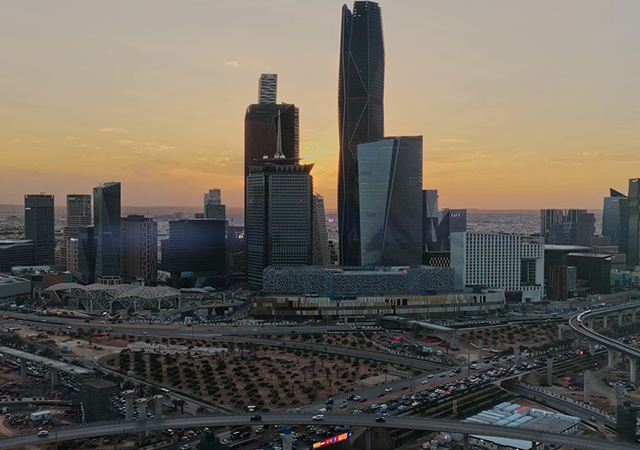
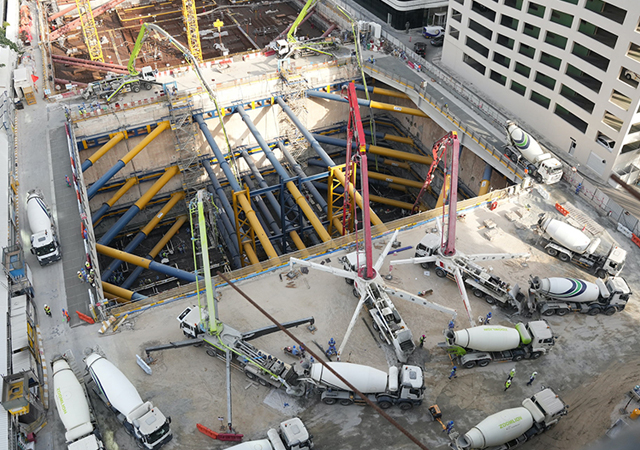
Developers, meanwhile are busy sculpting a new skyline for Kuwait City, filled with modern office towers, while commercial and entertainment complexes are dotting the country’s landscape. Among the major projects that are now making a statement on the horizon are the Al Hamra tower, the Kuwait Trade Centre and the Arraya office tower (see Page 94), exemplifying the prime development taking place in Kuwait City. Soon to rise up on the horizon will be the Kuwait Business Town towers. Work on two towers in one zone of the multi-phased development is currently at the basement level (see Page 88).
Other large projects include the Jaber Al Ahmad Township, Subiya City, Arefijian and Khairan, Failaka island, Bubiyan Island, Jahra housing scheme and Kuwait University projects.
Five-year plan
The 2009-2014 plan outlines gradual governmental withdrawal from direct participation in economic activities and the state’s monopoly on owning land and at the same time, has proposed plans for huge infrastructure projects such as improving the airport, roads, power plants, telecommunication networks, among other aspects.
The government’s new ‘restructuring chart’, as Dr Fadhil Safar, Minister of Public Works and Minister of State for Municipality Affairs at the time pointed out, lays out practical, viable and well-calculated plans for urban expansion and major infrastructure and service projects.
The new plans will also capitalise on Kuwait’s strategic geographic location. The scheme aims to turn Kuwait City into an international business and finance city, and will be implemented as soon as it is endorsed by an Amiri decree. It includes projects such as the launching of the heritage city, the green belt, Sabah Al Ahmad business and finance centre and Kuwait gate tower. The urban development projects include updating and expanding the key state organs such as Al Sief Palace, the Cabinet and the National Assembly (parliament).
Housing & real estate
Implementation of the Cabinet’s five-year development plan will take Kuwait to new horizons, said Mudhi Al Humoud, who was State Minister for Housing and Administrative Development at the time. The development plan includes construction projects worth KD35 billion, KD26 billion of which will be used to implement 60 projects through the BOT (build-operate-transfer) system, though everything, according to her, is still under discussion.
Al Humoud said that the plan – which has already been approved by the Higher Council for Planning and Development – would take the country to “new and great horizons”.
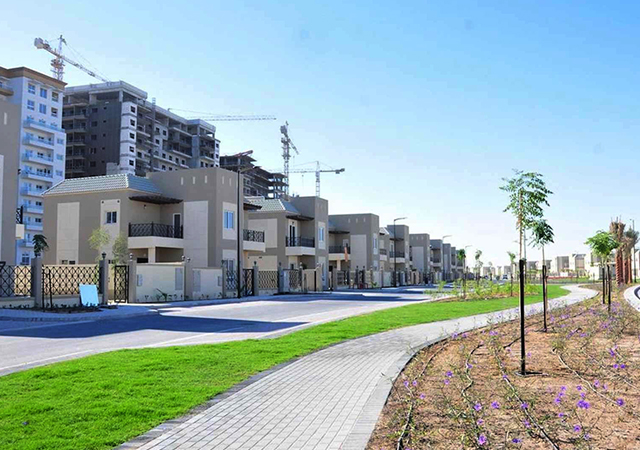
Commenting on the establishment of new housing units, Al Homoud points out that the current housing legislation stipulates that at least 100,000 houses be built within the next three years in cooperation with the private sector. The authority, according to her, plans to construct new townships such as the Sabah Al Ahmad city, Khairan, Metlaa, Saad Al Abdallah and Jaber Al Ahmad city as per schedule.
For Saad Al Abdullah City, Kuwait’s Public Authority for Housing Welfare (PAHW) signed three contracts last August to build 824 houses and government buildings at a total cost of KD56.61 million. The city incorporates around 5,400 plots of land and will include 2,257 housing units. Two Kuwaiti contracting companies are expected to be carrying out the construction, which is scheduled for completion within the next two years.
Two phases of Saad Al Abdullah City have already been completed; the first, comprised 4,084 homes, which were distributed to citizens in the first quarter of this year and the second, consisted of a further 1,319 units, which were distributed during the third quarter. Work is presently under way to complete the construction of 1,442 more homes, which are scheduled for distribution in the first half of next year.
The $3.3 billion Failaka island project, meanwhile, aims to transform a 43 sqkm island located 20 km east of Kuwait City, into a landmark offshore tourist location with modern entertainment facilities.
The development of Bubiyan Island is another major project being implemented by the Ministry of Public Works and the Ministry of Municipal Affairs. The project aims to turn the island into a naval facility of the country, a centre of shipping activities, and a multi-media transport network, besides launching it as a natural reserve area. The plans also include developing a harbour and the development of Bubiyan Lake, the resort area and residential area along the coastline there.
City of Silk
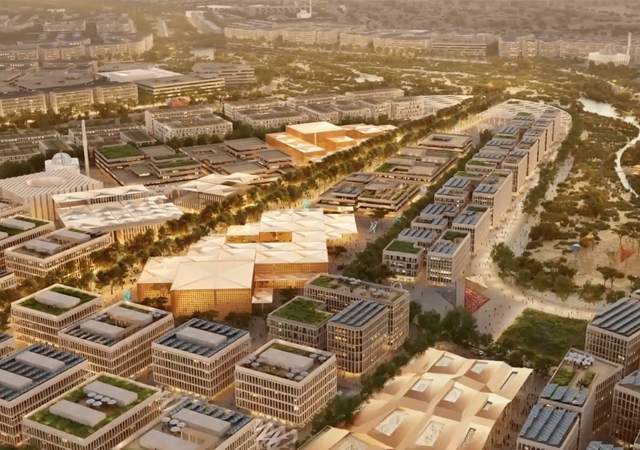
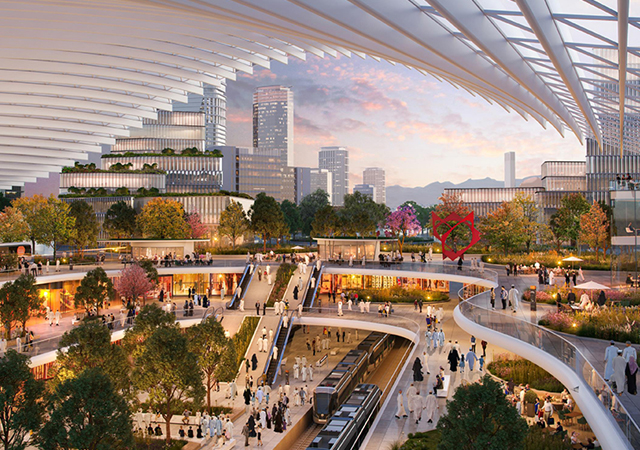
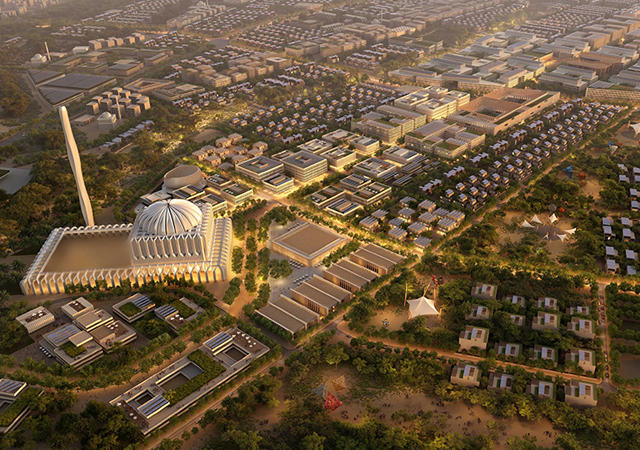
The 250-sq-km City of Silk at Subiya on the edge of Kuwait Bay is the centrepiece of Kuwait’s new development plans. The Dh77-billion Madinat Al Hareer (City of Silk), which is being developed by a joint venture of Kuwait’s Tamdeen Real Estate Development Company and Ajial Real Estate Entertainment Company, aims to revive the ancient Silk Road trade route by becoming a major free trade zone linking central Asia with Europe. The city will have financial, leisure and cultural sectors, as well as an ecological zone and a wildlife reserve. When complete, it will be home to around 700,000 people in over 175,000 residential units. The project will extend 30 km along Kuwait Bay.
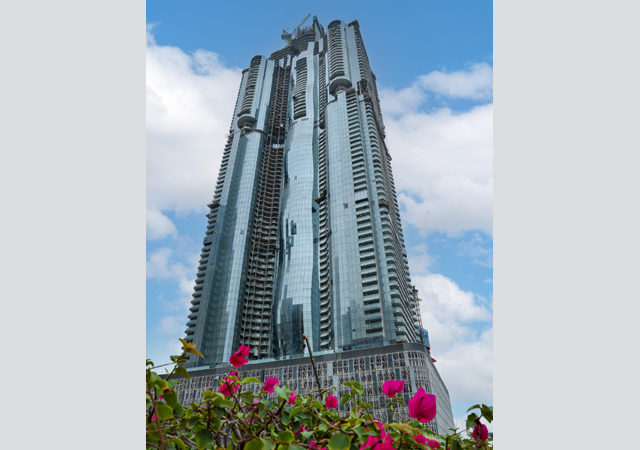
The iconic centrepiece of the city is , the Burj Mubarak Al Khabir tower which will stand 1001 m high, making it the world’s tallest building, Inspired by the Arabian book One Thousand and One Nights, the tower will have 234 storeys (the same as the number of stories in the book).
The entire city won’t be ready until 2030, although the tower should be completed within 10 years. Eric Kuhne, managing director of Eric R Kuhne and Associates, which designed much of the city, said it would be carbon neutral once completed.
Airport
The expansion of Kuwait International Airport is another key project in the long-term development of the country in order to cater to the mounting air traffic congestion, with the number of passengers rising to 7 million for a year. Besides aiming to increase the total area of the airport to 12 million sq m, the Civil Aviation Department (CAD) is planning to overhaul the airport’s infrastructure. The department intends to build a third runway and develop existing ones and establish new terminals. The expanded airport will have the capacity to accommodate up to 20 million passengers per year.
Ahmadiah Contracting and Trading is currently working on the expansion of the Airport, under a two-year design-and-build contract signed with the Kuwaiti Ministry of Public Works. Its scope of works covers the the Amiri terminal building, a satellite building, aircraft hangars, a multi-storey car-park, road and bridge construction, landscaping and other facilities (see page 97).
A public tender is expected to be announced shortly for a new terminal hotel, parking areas, maintenance and freight handling services, and bunkering.
Meanwhile, last April, Royal Aviation opened Kuwait’s first private fixed-based operation airport terminal at the Kuwait International Airport. The KD15 million project, covering 130,000 sq m is named the General Aviation Building. The 20-year BOT (build-operate-transfer) project took four years to build.
Hotels & leisure facilities
While Kuwait remains a strong business travel destination, there is a renewed focus on developing the tourism infrastructure, targeting one million local and intra-regional tourist arrivals by 2010.
Major plans in the tourism sector envisage the development of Failaka Island, home to Kuwait’s most significant archaeological site, to include hotels, shops, residential complexes and restaurants.
As a business travel destination, Kuwait currently offers around 5,000 rooms in 20 properties strongly represented by the major international hotel chains. By 2011 the number of rooms is expected to double, with 2,300 due to come online in 2009 alone. Serviced apartment numbers will also double to 4000 by 2010.
Hotel developments to watch for include the Missoni Hotel Kuwait (a Rezidor brand) scheduled to open during the first half of next year. InterContinental Hotels Group (IHG) is also focusing on Kuwait’s business travel market with the new InterContinental Kuwait Downtown set to open early 2010
To cater to the tourism and leisure sector, also under development are mega malls offering retail, dining and entertainment facilities, and amusement park projects. Notable among the latter projects is a joint venture between Cartoon Network and Future Kid and Real Estate Company, creating a fully branded indoor theme park in Kuwait City. This marks the first Cartoon Network Enterprises venture into branded theme parks within the Europe, Middle East and Africa (Emea) region. With more than 3,500 sq m, the park will include Cartoon Network-branded games and rides, character costume events, merchandise areas and promotions with onsite food and beverage outlets.
Power & water
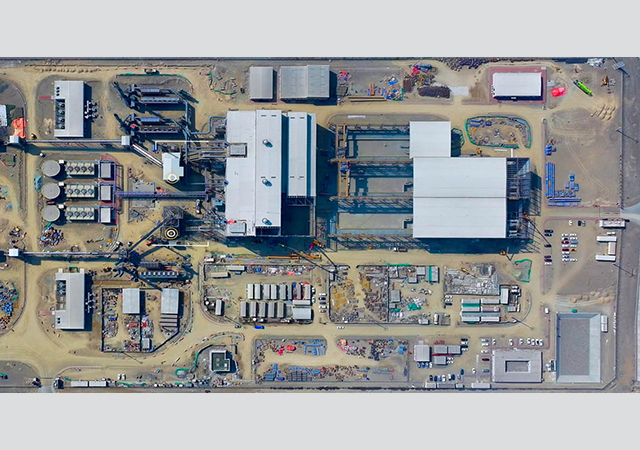
Kuwait is planning power expansion worth more than $2.5 billion to meet the rapid growth in demand through 2015. Current plans include three new power stations with a combined capacity of 6,700 MW and 225 million gallons of water.
As part of this plan, the government has shortlisted six firms for a tender to build combined cycle gas turbine units for a northern power plant with a capacity of 2,000 MW.
Kuwait is expected to launch a second tender by early next year to build another power plant in North Al Zour, with a capacity of 4,700 MW. The plant will be built in four phases, to be completed in 2011. Two of the phases will have capacity of 1,500 MW, one of 900 MW and another of 800 MW.
The third power station will also be built in Subiya and will be tendered at the end of next year. Kuwait aims to boost its power capacity to around 16,000 MW by 2012 from around 10,000 MW.
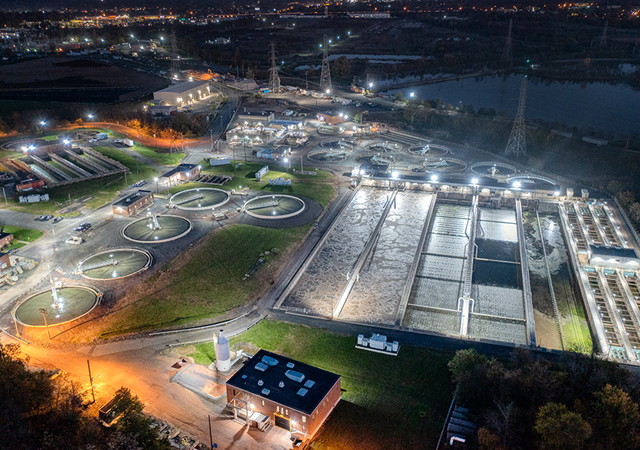
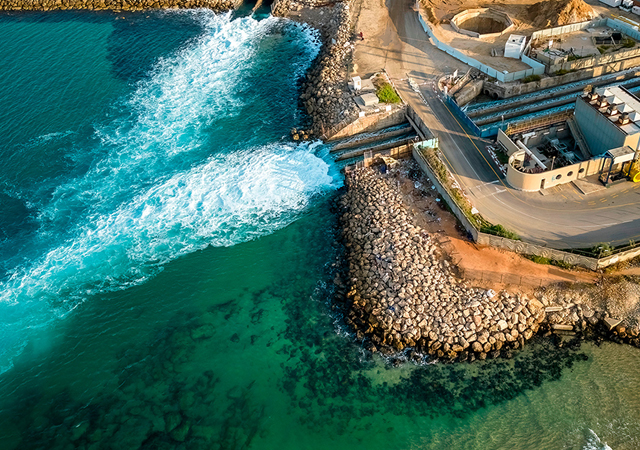
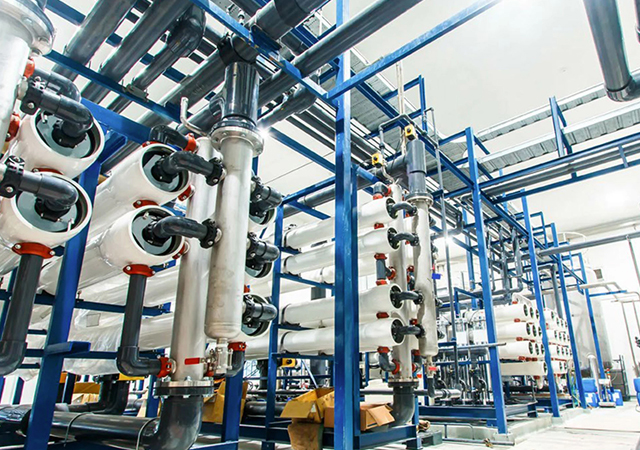
To meet the increase in water consumption in the country, the Ministry of Electricity and Water (MEW) has announced a plan to develop new water desalination projects by 2012.
Doosan Heavy Industries and Construction, the South Korea-based water and power developer, has been roped in the first of these projects. Doosan will build the $320 million Shuwaikh desalination plant, which will involve the construction of a reverse osmosis (RO) facility at Kuwait Port.
Upon completion, the Shuwaikh project will supply water for 450,000 people in the country’s capital. The project is scheduled for completion in August 2010 with Doosan expected to operate the plant for three years. Doosan is currently engaged in projects at the Subiya I, II and III desalination plants in the country,
Japan’s Mitsui Company, meanwhile is building a desalination plant at Shuaiba North. The $1.3 billion order is scheduled for completion in 2010 upon which it will have a water production capacity of 200,000 tonnes of water per day.
Road & rail construction
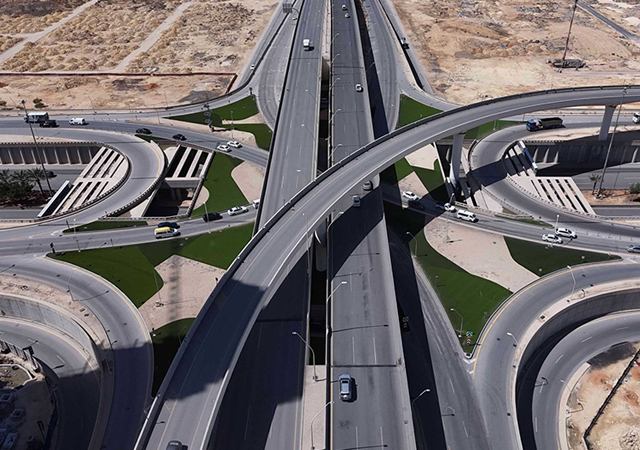
Among the most prestigious projects in this sector are the Subiya Causeway and the Jaber Al Ahmad Bridge.
Kuwait is to make a renewed effort to complete its long-delayed Subiya causeway project, despite the number of potential bidders being halved to four. The cost of the project is also thought to have more than doubled to KD1 billion ($3.7 billion), from an original estimate of $1.5 billion. The reduced level of interest should still allow the ministry to press ahead with the project without the need to restart the prequalification process. Once the final list of potential bidders is known, the tender documents will be issued by next month, with a bid deadline set for July.
The Jaber Al Ahmad expressway project would link the Silk City and the satellite cities to be built in the northern area.
As part of its overall plans to upgrade its infrastructure, Kuwait is planning to build an $11 billion rail network that will include a metro system for its capital.
A 245-km line will run from the country’s northern border with Iraq to the frontier with Saudi Arabia in the south, with links to the main airport and port. About 500 km of rail will be laid at a cost of KD1.8 billion ($6.59 billion) and will form part of a planned network across the Gulf region.
The rail network is expected to be 50:50 venture between the government and the private sector, will include a four-line, 171-km metro for Kuwait City, to be built at a cost of KD1.3 billion. The project would be 65 per cent above ground and 35 per cent underground.
Construction of the project is expected to start next year, for completion in 2017.
Conclusion
Despite the global economic gloom and falling oil revenues, Kuwait’s construction industry is expected to remain busy with both private and public projects with neither sector announcing any cutbacks as yet. And even if the cutbacks do kick in, it would not be to overly optimistic to say that, with private and public sector projects together worth hundreds of billions of dollars, there should still be plenty of work to keep the punters busy over the medium term.


