



Saudi Arabia’s holy cities are in the midst of one of the most intensive construction cycles in their history, with tens of billions of dollars committed to residential, hospitality, transport and infrastructure projects especially in the wake of a landmark change to the kingdom’s foreign ownership rules for the property market.
For decades, real estate inside the sacred boundaries surrounding the two holy mosques of Makkah and Madinah was strictly reserved for Saudi nationals or wholly Saudi-owned entities. The strategic liberalisation of property ownership laws, aligned with Saudi Vision 2030 objectives, has fundamentally restructured the economic model of the Western Region. By enabling international individual investors, institutional real estate investment trusts (REITs), and regional development consortiums to hold equity, long-term leaseholds, and fund-backed participation in prime holy city assets, Saudi authorities are looking to unlock billions of dollars in foreign investment.
The resulting development momentum is reframing Makkah and Madinah from seasonal pilgrimage destinations into dynamic, year-round urban ecosystems. The market reaction has been immediate: institutional joint ventures, Capital Market Authority (CMA)-licensed real estate funds, and public-private partnerships (PPPs) are rushing to supply high-density residential towers, international hospitality keys, and complex transport backbone infrastructure.
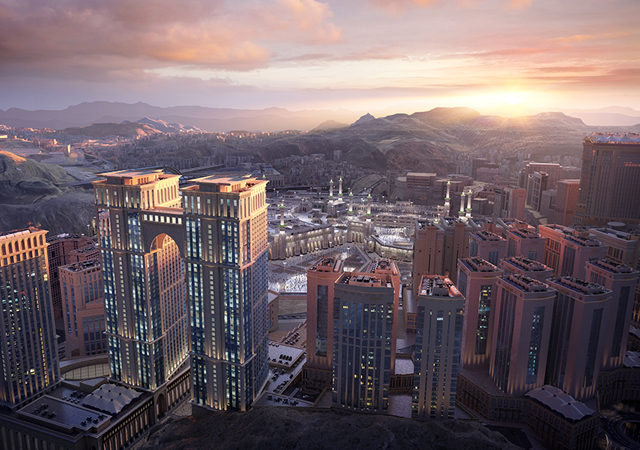
Across Makkah alone, developers and government entities have announced multibillion-dollar projects, spanning everything from sprawling urban-renewal districts to hotel towers steps from the Grand Mosque.
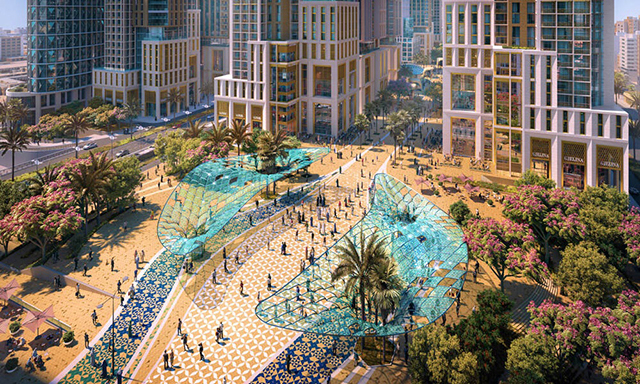
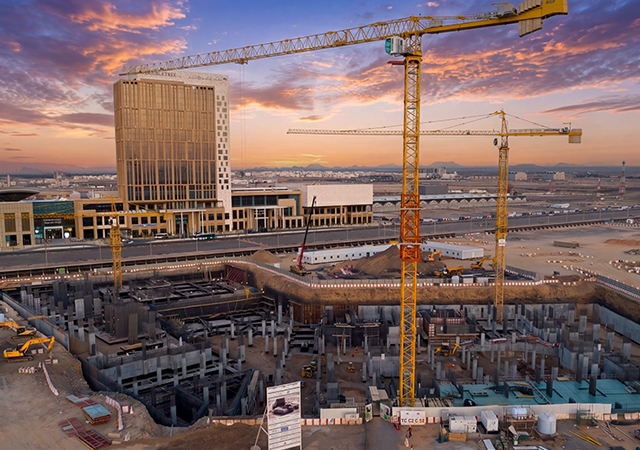
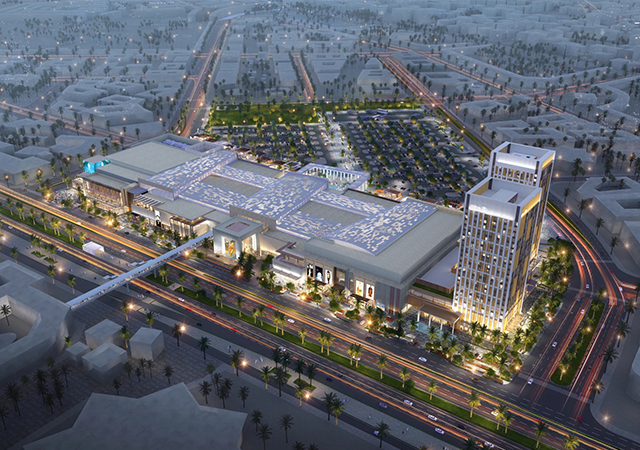
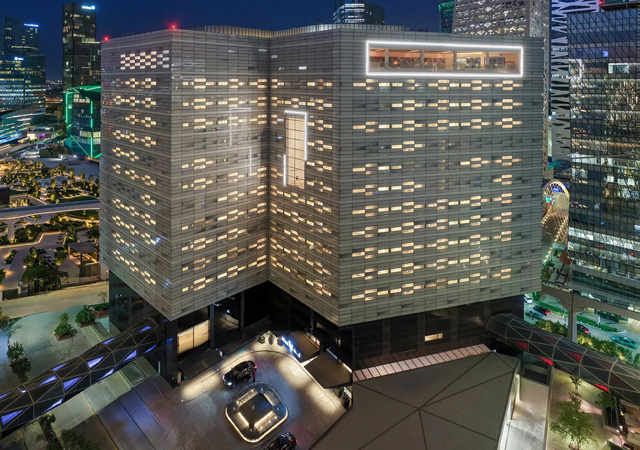
Masar Destination ... one of Saudi Arabia’s largest urban redevelopment schemes.
Makkah’s construction pipeline is anchored by several large-scale programmes, including the SAR13.3-billion ($3.54 billion) Developed Districts Programme by the Royal Commission for Makkah City and Holy Sites (RCMCHS), Masar Destination and the adjacent Masar Gardens extension, as well as the SAR26-billion Thakher Makkah project, in addition the massive Jabal Omar Development, which is now in its seventh and final phase.
Madinah’s pipeline, though smaller, is expanding rapidly as hospitality operators and master developers race to add capacity ahead of an anticipated surge in Umrah and Hajj visitor numbers. Prime developments include the Knowledge Economic City (KEC), which has become a magnet for developers, and the Rua Al Madinah Development.
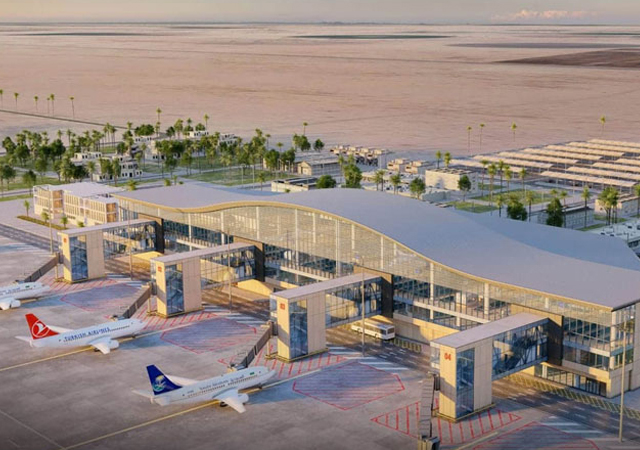
Beyond real estate, Saudi Arabia is spearheading efforts to ease access to and within these holy cities. Transport investment remains fundamental to supporting both permanent residents and millions of annual visitors. Plans have been officially approved for Makkah International Airport, the holy city’s first dedicated international airport, marking a historic breakthrough in the kingdom’s infrastructure expansion under Vision 2030. The strategic approval, confirmed by the Royal Commission for Makkah City, will allow millions of pilgrims to arrive directly in Makkah rather than routing through Jeddah’s King Abdulaziz International Airport before travelling roughly 100 km by road to the city.
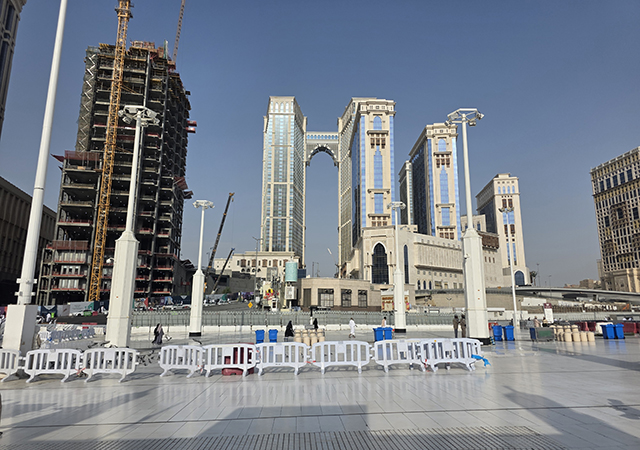
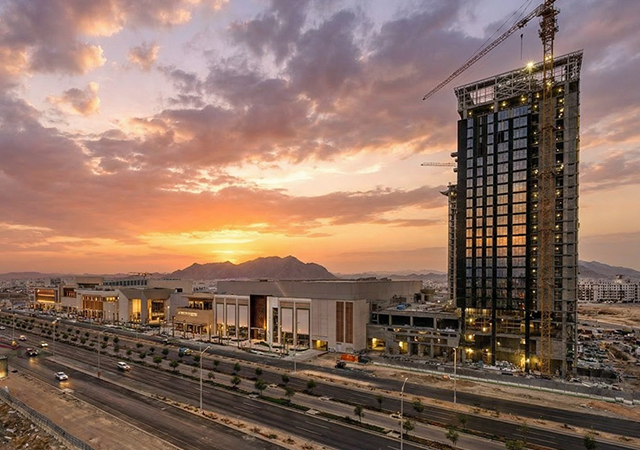
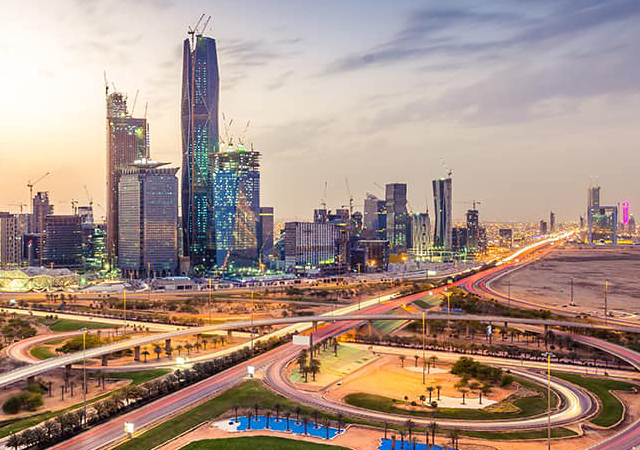
Makkah is in the midst of a major construction boom.
For decades, direct air access to Makkah remained impossible due to the city’s mountainous geography, which aviation specialists deemed too challenging for airport operations. Turbulence risks, visibility limitations, and difficult landing conditions prevented airport construction. Saudi planners are now pursuing advanced engineering solutions and new transport technologies to overcome these obstacles and support the kingdom’s rapidly growing religious tourism ambitions.
Progress is also being made on the long-planned Makkah Metro, where feasibility studies and preliminary designs have been completed. Together, the airport and metro projects represent transformative infrastructure investments intended to improve mobility, reduce congestion and enhance the pilgrim experience while supporting future urban expansion.
MAKKAH
Makkah remains the centrepiece of Saudi Arabia’s religious tourism expansion, with the city witnessing unprecedented levels of investment designed to improve the pilgrim experience while creating sustainable urban communities. In this holy city, where spatial constraints around the Grand Mosque (Al-Masjid Al-Haram) have historically created high land values and informal settlement pockets, a major transformation is in progress led by the Royal Commission for Makkah City and Holy Sites.
RCMCHS recently announced the awarding of six development sites under its Developed Districts Programme, spanning a combined footprint exceeding 2.7 million sq m. The initiative targets the priority re-engineering of informal and under-utilised urban fabric across Jurhum South, Al Khalidiyah, Al Hajlah, Al Hindawiyah East, Al Hindawiyah South, and Al Hindawiyah West.
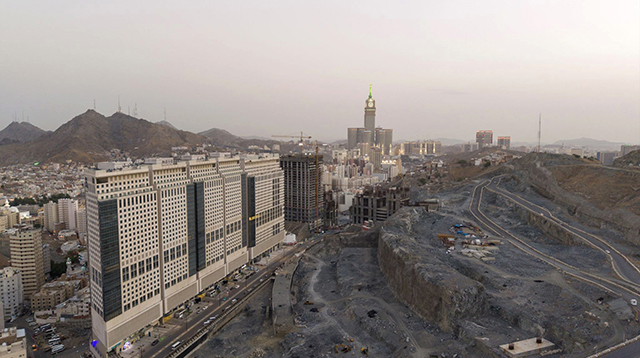
Thakher Makkah has seen several hotel properties and residential serviced apartment complexes handed over.
Among the primary contracts awarded within these priority zones, a consortium comprising Umm Al Qura for Development and Construction, Makkah Construction and Development Company, and Rajhi United Real Estate Company secured a SAR-6 billion deal to redevelop Hindawiya West and South across a 1.15-million-sq-m footprint. Positioned adjacent to Masar Destination, the mixed-use urban regeneration project is being executed through a CMA-licensed real estate investment fund.
In East Hindawiyah, located roughly 1.8 km from the Grand Mosque, the Rikaz consortium, combining Aljada First and AlMajdiah Real Estate Company, is investing SAR2 billion to deliver a 235,000-sq-m mixed-use masterplan incorporating residential, commercial, office, and hospitality space.
Ladun Investment Company, in partnership with Al-Ayuni Investment & Contracting Company, has signed a deal for the Al-Khalidiyah district, while the Jurhum South district is reported to be spearheaded by Jorhum Regeneration and Development Company (JRDC), an entity established to masterplan and build out a mixed-use residential and hospitality destination in coordination with RCMCHS.
Under the supervision of the RCMCHS, Thakher Development launched the Mathaba Project last month in partnership with Albilad Capital, with construction work set to begin simultaneously with the announcement. The Mathaba Project is an urban renewal and master-planned development, designed to replace informal settlements with a modern residential and service district. Covering 686,000 sq m, the integrated zone features 205 investment plots to support up to 10 million seasonal visitors and pilgrims annually.
Few projects symbolise Makkah’s transformation more clearly than Masar Destination, one of Saudi Arabia’s largest urban redevelopment schemes, which is being developed by Umm Al Qura Development & Construction Company. Occupying approximately 1.2 million sq m and situated only about 550 m from Masjid Al Haram, the development is creating a new western gateway to the Grand Mosque centred around a 3.6-km pedestrian boulevard linking visitors directly to the holy site. The massive project also includes subterranean transit links, and high-density hospitality zones positioned 100 m from the Haramain High Speed Railway station (see separate article).
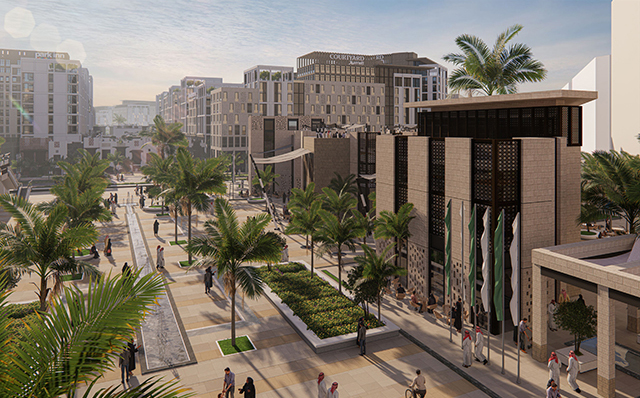
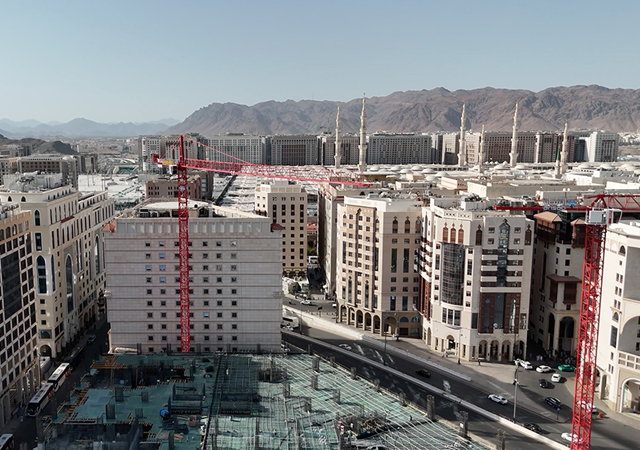
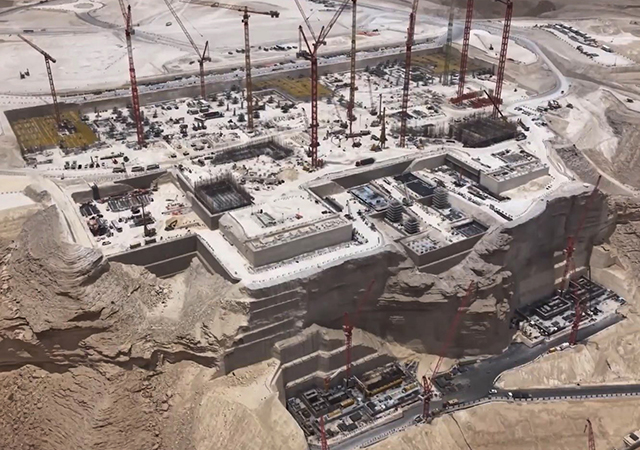
Construction work is now in progress at the Islamic World District in Knowledge Economic City.
Among other developments, Umm Al Qura in May announced plans for a SAR1-billion hotel tower comprising approximately 500 rooms, further expanding accommodation capacity close to the Grand Mosque. The tower will be developed through a land sale agreement with a real estate investment fund managed by Blom Investment Company Saudi Arabia.
Investor appetite also remains strong. Umm Al Qura recently signed reservation agreements to sell three non-boulevard-facing residential development plots within Masar Destination through a Watheeq Capital-managed real estate fund, demonstrating continued demand for well-located residential assets within the masterplan.
Private developers are also playing an expanding role within the corridor. Arabian Dyar Real Estate Development launched Phase Two of Dyar Al Haram, adding three residential towers to its existing portfolio of 13 towers within Masar. The overall scheme delivers nearly 4,000 ready-to-own apartments, penthouses, and serviced units aimed at global Muslim buyers utilising new ownership frameworks.
Complementing Masar Destination is Masar Gardens, a new mixed-use destination covering another 1.2 million sq m adjacent to the flagship project. Announced in early June, the project will integrate residential neighbourhoods, commercial districts, hospitality facilities, extensive public open spaces and sustainable mobility infrastructure over a five-year construction programme. Backed by an initial infrastructure and land investment of SAR6 billion, Masar Gardens forms part of Umm Al Qura’s strategy to transition from a single-site builder into a diversified urban destination platform across the Western Region over a five-year buildout.
The Thakher Makkah project, developed by Thakher Development Company, has seen eight four-star hotel properties and residential serviced apartment complexes operational or handed over, delivering over 2,276 hotel keys and 7,000 beds. Third-party developer interest and fund participation within the masterplan are expanding. In December last year Nama Capital, in collaboration with Alazm Holding, finalised a major land acquisition deal within Thakher Makkah to develop new private sub-projects.
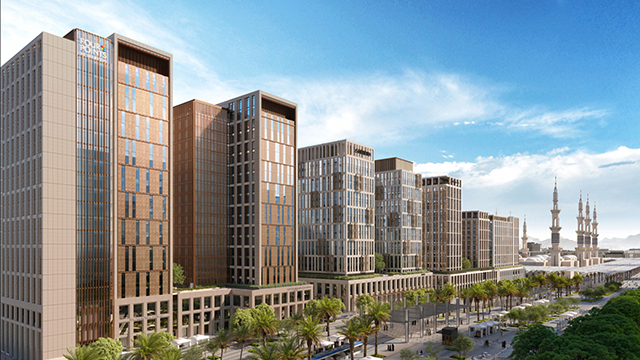
In April this year, Rua Al Madinah awarded the construction contract for Superblock 5.
International architecture firm RMJM recently unveiled the design for Thakher South Connection, a key urban destination within the masterplan. It is envisioned as a multi-level hub centred on pedestrian connectivity, public life, and urban integration.
Among the latest projects to be launched in Makkah is King Salman Gate, a mega-development being built by RUA AlHaram AlMakki, a PIF subsidiary, on land adjacent to the Grand Mosque in Makkah. Announced last October by Crown Prince Mohammed bin Salman, it spans up to 12 million sq m of gross floor area and is billed as a global benchmark in modern city planning. The scheme is expected to accommodate around 900,000 worshippers and includes roughly 50,000 residential units and 16,000 hotel keys, alongside the restoration of about 19,000 sq m of cultural and heritage sites and a target of some 300,000 jobs by 2036 under Vision 2030.
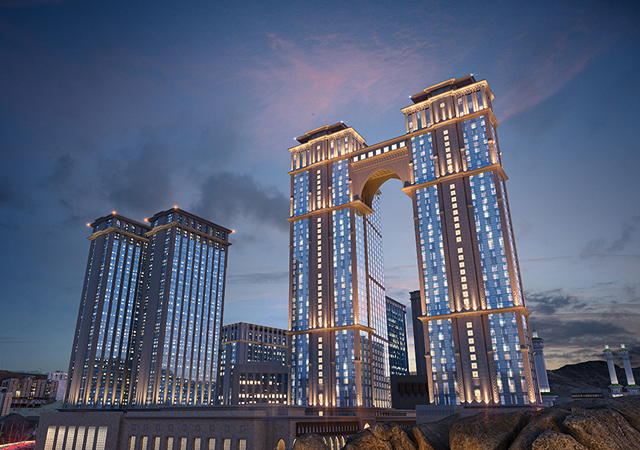
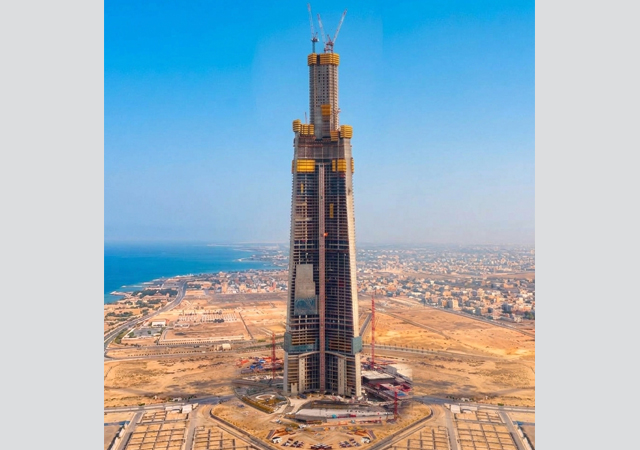
Meanwhile, Makkah’s pioneering redevelopment project, Jabal Omar is advancing into the final stages of its multi-billion-dollar masterplan. Phase Four of the mega mixed-use development reached 92.54 per cent completion as of July 2026, while the seventh and final phase – positioned directly facing the Grand Mosque – has transitioned from planning into early execution, standing at 10 per cent completion to expand hospitality, retail, and residential capacity for the holy city (see separate article).
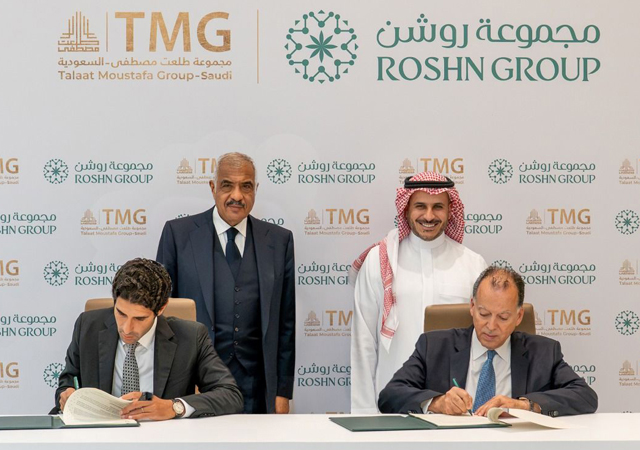
Apart from these large-scale urban masterplans, residential construction is also expanding as authorities seek to create permanent communities alongside accommodation for pilgrims. For instance, the PIF-backed ROSHN Group is developing its AlManar integrated community. It is also attracting private developers, such as Retal Urban Development Company with which the group has signed a SAR124 million agreement to build 163 residential units within the community over a three-year period.
MADINAH
While Makkah remains the kingdom’s principal destination for Hajj and Umrah pilgrims, Madinah is experiencing a parallel transformation as Saudi Arabia seeks to diversify the visitor experience, extend pilgrims’ stays and establish the city as a year-round destination for tourism, the knowledge sector and investment.
Planners are creating integrated urban districts that combine residential neighbourhoods, commercial centres, hospitality assets, education, healthcare and public spaces capable of supporting both residents and the growing number of religious visitors.
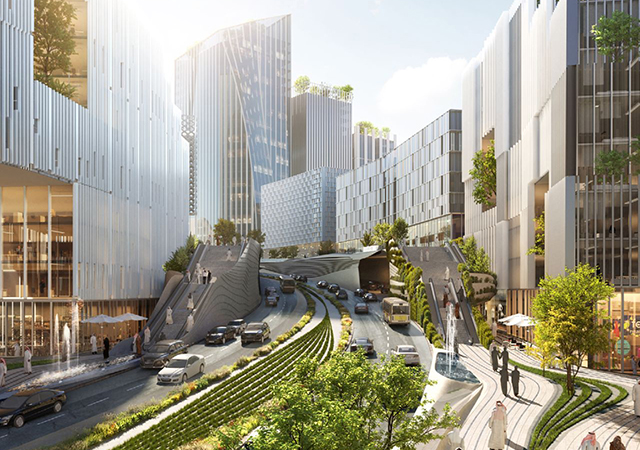
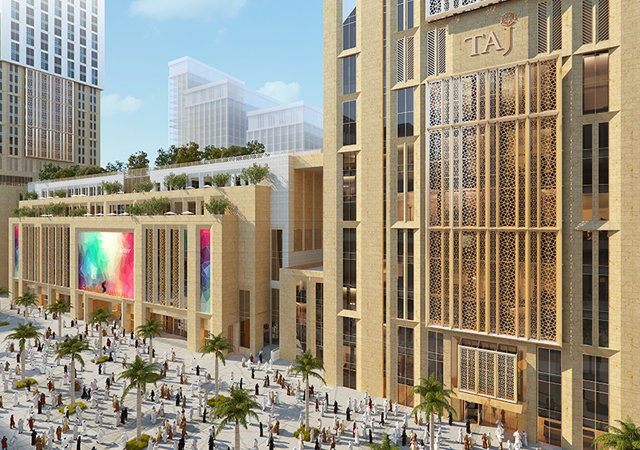
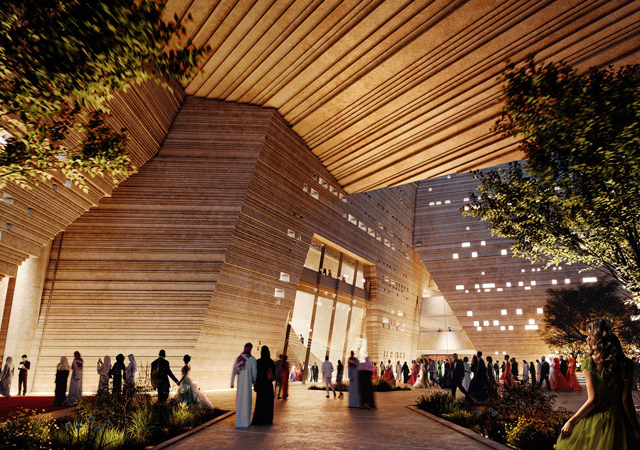
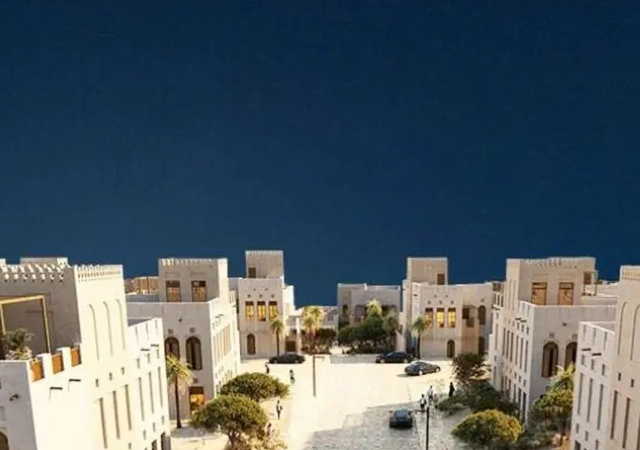
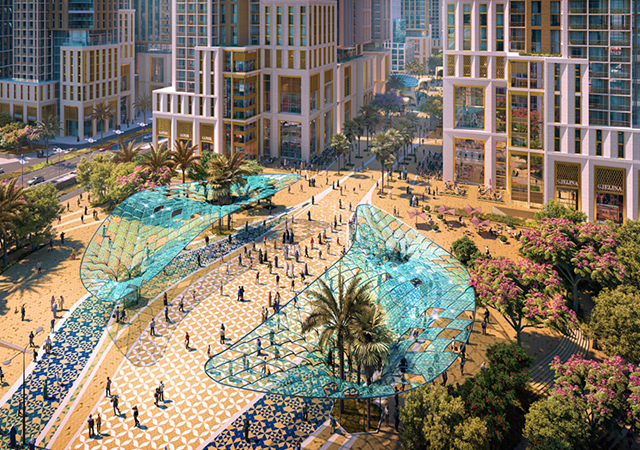
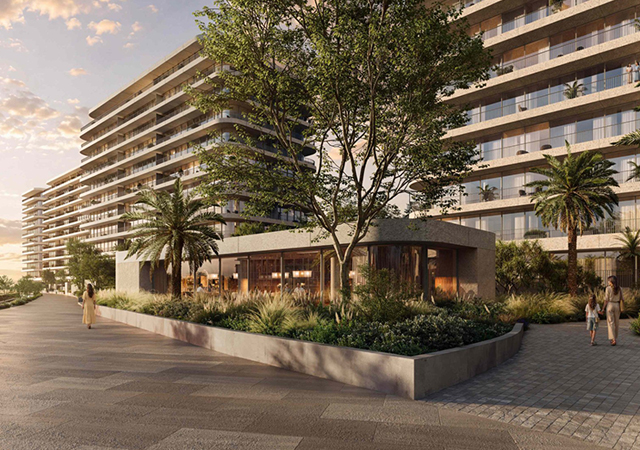
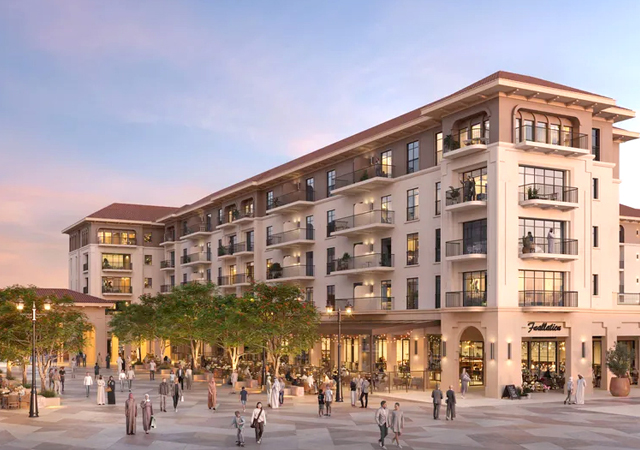
Thakher South Connection features layered pedestrian routes, landscaped terraces, shaded walkways, active retail frontages, hospitality spaces, and integrated water features.
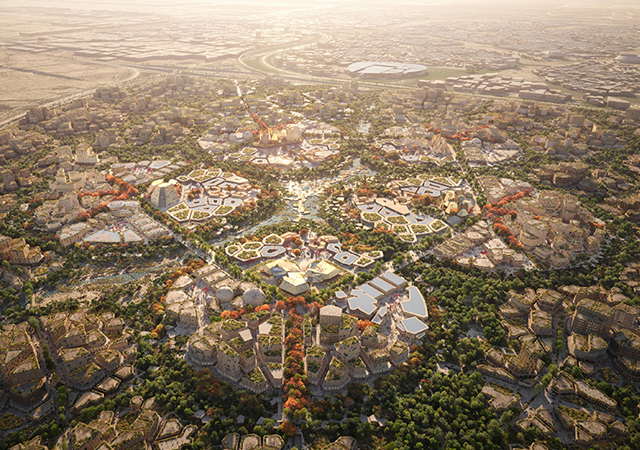
One of Madinah’s most ambitious long-term developments, Knowledge Economic City (KEC), continues to advance through a series of residential, educational and commercial projects. A flagship master-planned development spanning approximately 6.8 million sq m adjacent to the Haramain High-Speed Rail station, the development is being designed as an integrated urban destination combining residential, hospitality, commercial, educational and healthcare facilities with transport connectivity and public amenities (see separate article).
Hospitality remains one of Madinah’s strongest-performing sectors, with developers continuing to expand hotel capacity close to the Prophet’s Mosque. Among the largest recent investments is Taiba Investment Company’s partnership with Osool Integrated Real Estate Company to develop, refurbish and operate three hotels in Madinah’s central district through a SAR2.4-billion project. The development will deliver approximately 1,500 hotel rooms under a combination of international and domestic brands.
Rua Al Madinah Project is one of the most significant hospitality developments in Madinah, spanning 1.35 million sq m. The project aims to provide more than 47,000 hotel and residential units and create 93,000 job opportunities, supporting Madinah’s development in line with the objectives of the Pilgrims Experience Program.
In April this year Rua Al Madinah Holding, a PIF company, awarded the main contract for Superblock 5 which comprises construction of 18 hotel towers across three categories — three-star, four-star, and five-star — along with associated secondary infrastructure. The towers range in height from 11 to 21 storeys.
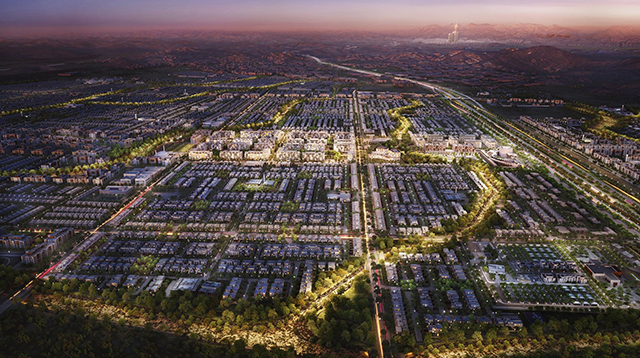
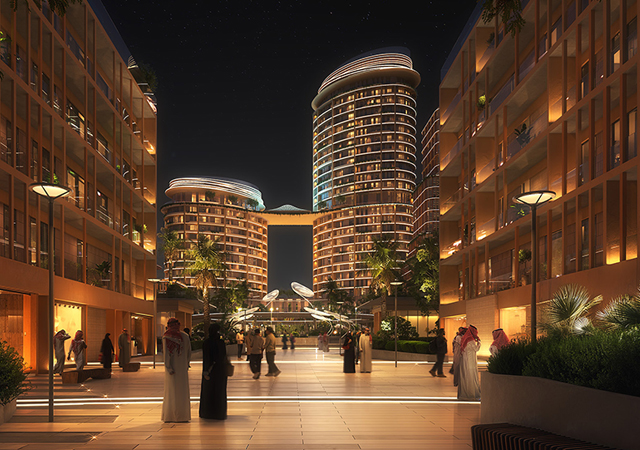
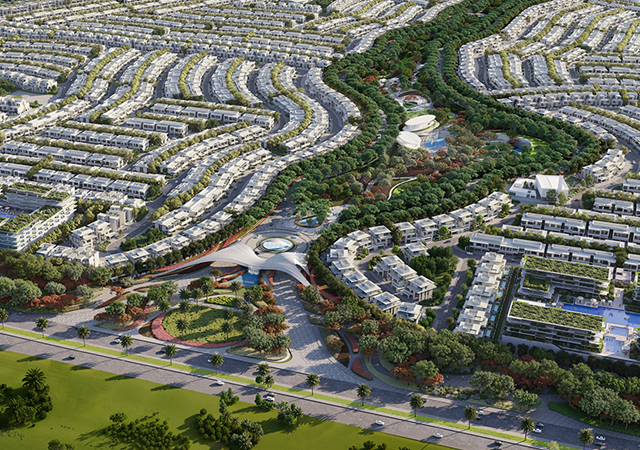
PIF-backed ROSHN Group is developing its AlManar integrated community in Makkah.
Last November, Rua Al Madinah Holding, a PIF company, signed a hotel management and operation agreement with IHG Hotels & Resorts to develop and open Crowne Plaza Rua Al Madinah and Holiday Inn Rua Al Madinah within its massive development. The two hotels are planned to provide 2,334 rooms.
Private-sector participation is also increasing through public-private partnerships and long-term land leases. The National Center for Privatisation & PPP (NCP), working alongside Al Madinah Regional Municipality and the Ministry of Municipalities and Housing, has recently launched procurement for the Sikkah Al Hadid mixed-use development. The project will transform an 84,657-sq-m government-owned site west of Madinah into a mixed-use district under a 50-year build-own-operate-transfer (BOOT) concession. Authorities expect the scheme to complement nearby National Housing Company developments while creating new residential, commercial and public amenities supported by flexible planning regulations that permit buildings of up to 20 storeys.
Another significant investment comes from Red Sea International Company, which recently activated a 50-year lease over a 63,088-sq-m site in Madinah following the completion of government approvals through the Furas investment platform. The lease, valued at approximately SAR162 million, will enable the company to develop, operate and maintain a mixed-use project occupying a prominent location at the intersection of Omar Bin Al-Khattab Road and Abdul Harith Bin Zaid Al-Dhabi Road.
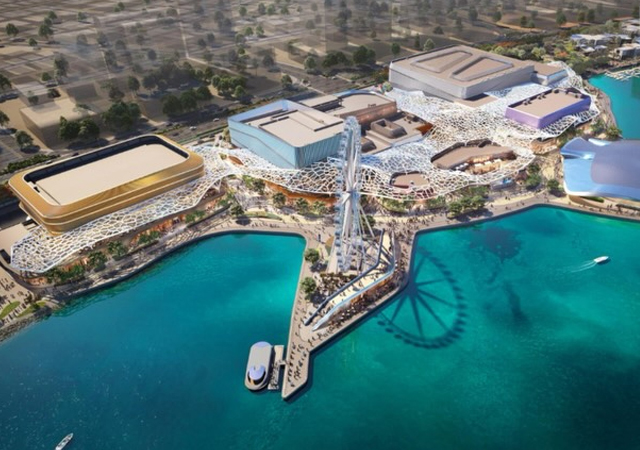
Meanwhile, to enhance Madinah’s visitor experiences, authorities are introducing new leisure attractions to encourage longer stays and higher spending. One proposal attracting considerable attention is the Hijaz Eye, a planned $135-million observation wheel promoted through the Invest Saudi platform.