




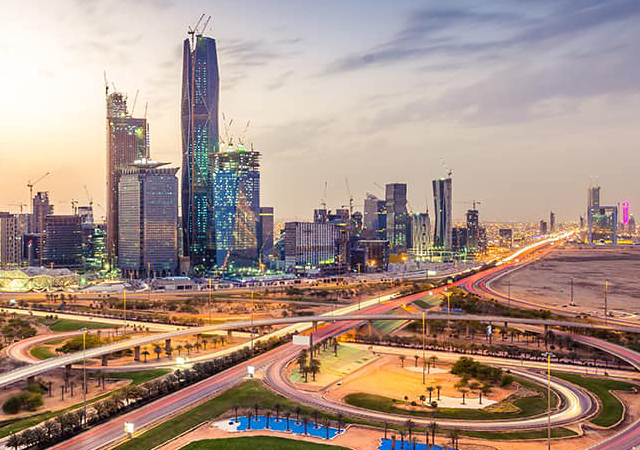
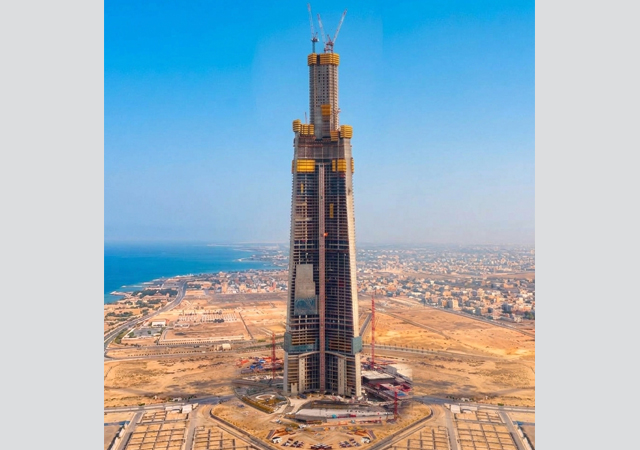


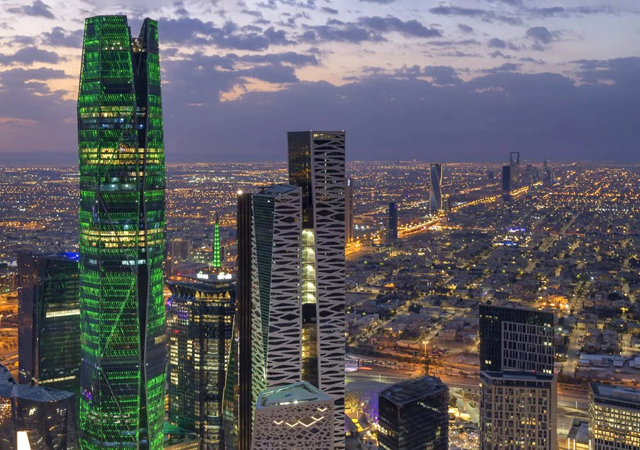
Riyadh’s construction story in 2026 is one of acceleration alongside recalibration. The capital continues to witness measurable, visible progress across its giga-projects, transport network and housing pipeline, while national authorities have openly reviewed which developments can be delivered on original timelines and which must be reshaped, deferred or rescoped. That duality, largely absent from the sector’s narrative early this year, has become the defining feature of Riyadh’s development story since then.
The landmark reform opening Saudi property ownership to foreign individuals, companies and entities has now moved from law into practice. Having taken effect on January 22, the Law of Real Estate Ownership by Non-Saudis reached its key operational milestone on June 23, when the Council of Ministers approved the law’s Executive Regulation and formally endorsed the geographic zones – concentrated in Riyadh and Jeddah, with Makkah and Madinah remaining subject to tighter controls – in which non-Saudis may now acquire freehold and leasehold interests.
The five-year rent freeze introduced in Riyadh, enforced through the Ejar platform, remains in force, as does the wider land-release programme in northern Riyadh aimed at delivering up to 40,000 affordable plots annually.
Construction cost pressures persist. Turner & Townsend’s most recent Global Construction Market Intelligence data indicates that one of the clearest shifts in the Middle East is that major spending is being channelled into specific projects within long-running programmes which serve greater immediate strategic purposes.
In Saudi Arabia, this is visible across the wider Vision 2030 portfolio, where priority schemes including Diriyah, Qiddiya, NEOM (Oxagon) and King Salman International Airport form part of a broader effort to diversify the economy, develop tourism, enhance mobility, strengthen logistics and improve quality of life.
At the same time, milestone events such as Expo 2030 Riyadh and the FIFA World Cup 2034 are helping to anchor delivery timelines and maintain momentum around hospitality, transport and public realm investment. This is driving competition in tendering conditions in the Saudi capital. The average price to build in the Riyadh market is at $2,874.0 per sq m up from $2,593 a year earlier – with skilled labour, particularly in MEP trades, remaining the tightest constraint and equipment lead times stretching to 25 weeks. Since Gulf Construction’s February report, regional conflict has affected material supply chains. Projects such as Expo 2030 Riyadh, for instance, are reported to have shifted toward Saudi-manufactured pipes, cabling and concrete to insulate the site from disruption linked to the Iran conflict, underlining how geopolitical volatility is now a live factor in delivery planning across the capital’s biggest sites.
Expo 2030 Riyadh: from masterplan to megasite
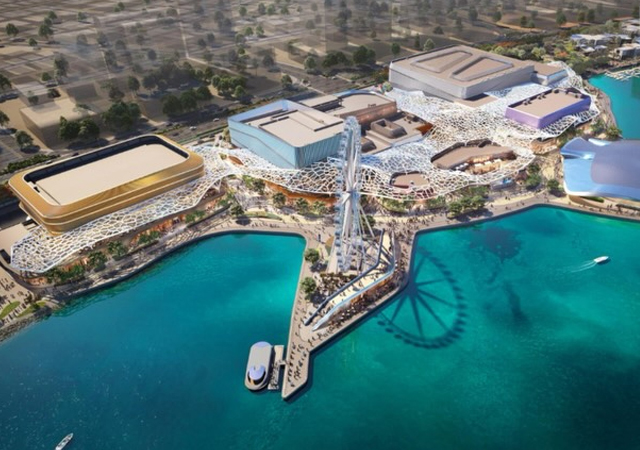
Expo 2030 Riyadh has seen significant development this year. Following January’s award of the main utilities and civil works package to Nesma & Partners, the Expo 2030 Riyadh Company (ERC) has since awarded a second major infrastructure contract, to Riyadh-based Al Yamama Company, and has continued to add engineering and design consultants for the 6-million-sq-m site.
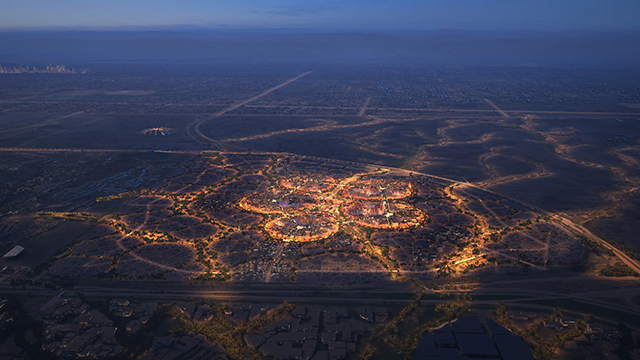
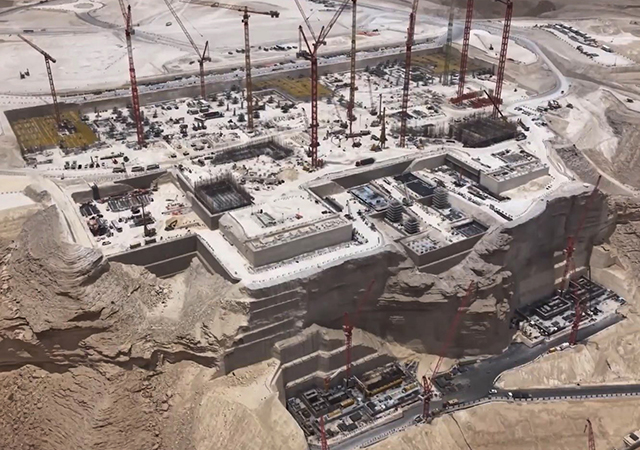
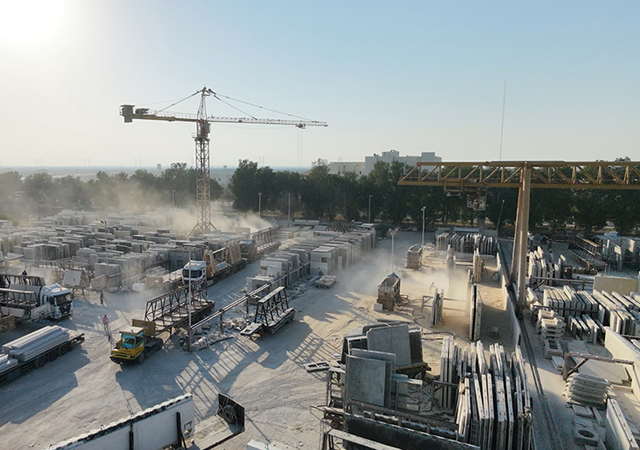
Expo 2030 Riyadh ... key infrastructure packages under way.
Work on the Expo’s key buildings, including the Saudi Pavilion and the Expo Icon, is targeted to begin soon, with participating-country pavilion works and further infrastructure contracts following (see separate report).
Diriyah: fastest-moving of the giga-projects
Diriyah has emerged as the giga-project delivering most consistently against its timelines. At MIPIM 2026 in March, Diriyah Development Company (DevCo) President Mohamed Saad disclosed that construction contracts exceeding SAR120 billion ($32 billion) have now been awarded across the Diriyah Gate and Wadi Safar masterplans, indicating the bulk of the superstructure and building-envelope programme is under contract, with residential handovers to owners set to begin from early October 2026. In the first half of 2026 alone, Diriyah Company signed a further SAR4.9 billion in contracts and launched the Grand Avenue, a 1.9-km lifestyle and entertainment spine within the masterplan (see separate report).
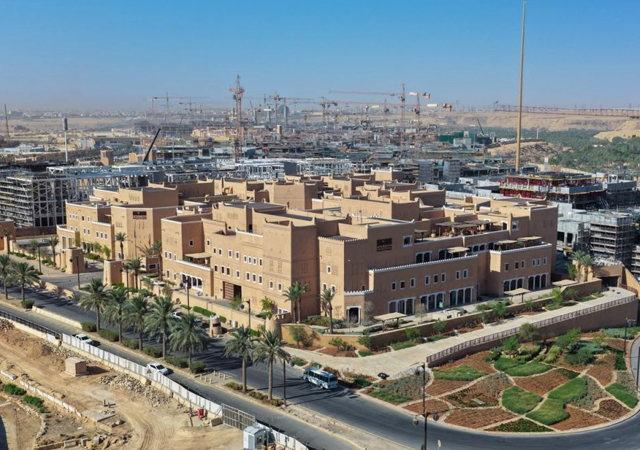
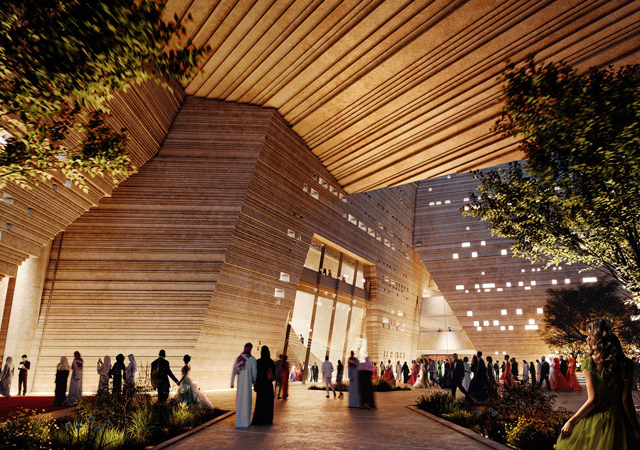
Diriyah is now home to the new headquarters of the Ministry of Culture.
Hospitality delivery is advancing in parallel: The Langham Diriyah is scheduled to welcome its first guests in 2026, adding to a luxury hotel cluster that will be followed by The Chedi Wadi Safar, Rosewood Diriyah and Orient Express Diriyah Gate in 2027. The January-announced Four Seasons Hotel and Private Residences Diriyah, an $827-million joint development with Midad Development and Real Estate Investment Company covering roughly 235,000 sq m with a 159-room hotel and private residences, remains on track. Diriyah’s daily construction workforce now stands at around 20,000, with the project reporting more than 50 million work hours without injury.
Qiddiya City: second flagship attraction opens
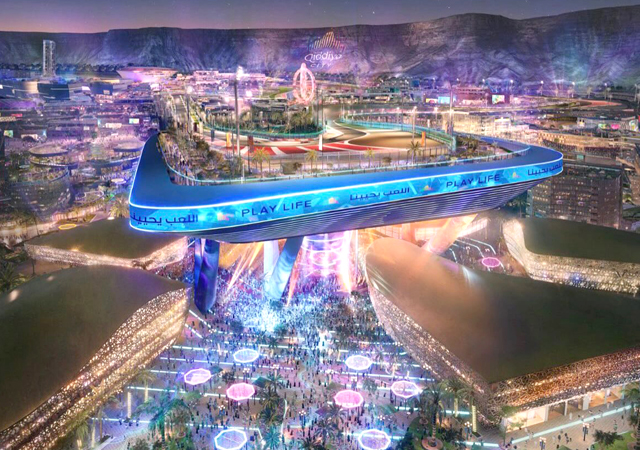
Qiddiya has delivered on its timeline for early this year. Aquarabia Qiddiya City, the Middle East’s largest water park, soft-opened during the Eid Al Fitr holidays on March 20, following the opening of Six Flags Qiddiya City on December 31, 2025. Spanning 250,000 sq m across eight themed zones, Aquarabia offers 22 attractions from WhiteWater, including the underwater ride Aquaticar: Legend of the Glowing Guardian and Saudi Arabia’s first surf pool. Together the two parks anchor Qiddiya’s first development phase, which is due to be followed by a second phase, including a performing arts centre and an esports district, by 2030.
Construction has also progressed on the Prince Mohammed bin Salman Stadium, Qiddiya’s 2034 World Cup venue, where Qatar’s Elegancia Arabia has secured a SAR829 million mechanical package (see separate article) as well as on the Speed Park Track, Qiddiya City’s motorsport circuit (see separate article).
Sports Boulevard: Investment push
Sports Boulevard, a large-scale linear park under Saudi Vision 2030 spanning 135 km, saw steady progress across investment, tendering, and construction activity throughout 2026. The project will comprise an interconnected network of sports, environmental, and entertainment destinations.
In August, Sports Boulevard Real Estate Development and Investment Company signed with Rikaz Properties to launch a third investment fund worth over $186 million, financing a five-star hotel in Urban Wadi’s Hittin District. The hotel will occupy 13,500 sq m of land with a gross floor area of 34,400 sq m.
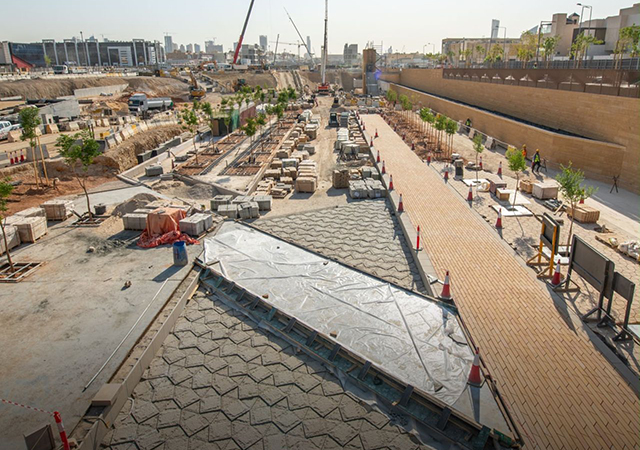
Sports Boulevard ... major developments in progress at Urban Wadi and on the King Abdulaziz Road underpass.
This takes the total number of funds signed for the development to three with a combined value exceeding $1.6 billion, following the second fund (over $1.4 billion) covering the Arts District, the Promenade and Urban Wadi.
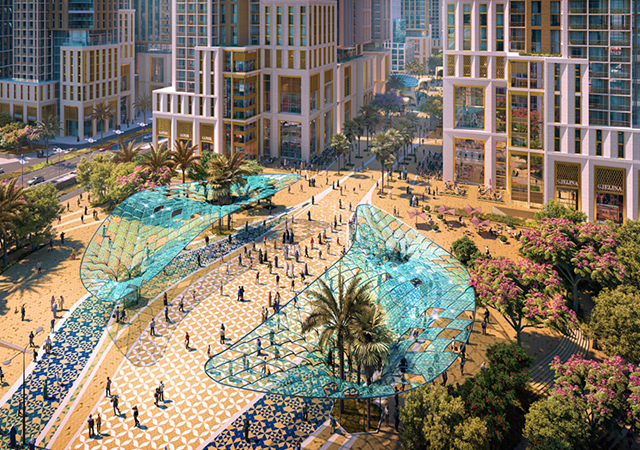
Urban Wadi is being shaped under the Sports Boulevard Code, a Salmani-inspired urban design framework blending sport, nature, entertainment, hospitality and community life.
Earlier in the year, the Sports Boulevard Foundation tendered an 11.4-km road package in Wadi Hanifa and began procuring a project management consultancy for the 130-m Global Sports Tower, which will house more than 30 sports facilities.
Meanwhile, construction is progressing on the King Abdulaziz Road Underpass, part of efforts to secure uninterrupted pedestrian and cycling routes along the boulevard. By the end of July, around 90 per cent of the excavation works were completed.
These milestones build on the project’s first phase, opened in February 2025, which brought the completed length to 83 km – about 40 per cent of the full route.
New Murabba: downtown recalibrated
In January, Reuters reported that construction on the Mukaab – the 400-m cube-shaped structure intended to be the world’s largest enclosed building – had been suspended beyond excavation and piling works, as authorities reassessed the project’s financing and overall feasibility. It marked the first Riyadh giga-project to be formally paused for review and came against the backdrop of wider reprioritisation across Vision 2030’s giga-project portfolio, including NEOM contract changes and the indefinite postponement of the Asian Winter Games at Trojena.
Since then, the project has begun moving back toward the market. With excavation and piling for the Mukaab complete, New Murabba Development Company is preparing to issue requests for proposals to contractors for the structure’s towers, podiums, basement and public realm, with contractor selection expected in 2027. Design work continues under an AECOM-Jacobs joint venture.
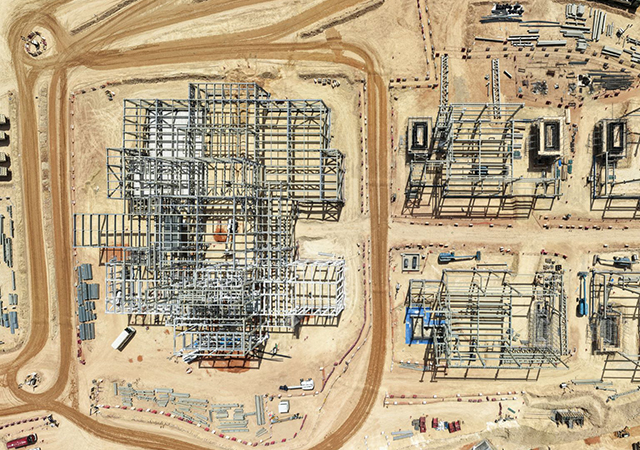
New Murabba ... infrastructure works continue.
Among other developments, New Murabba Development Company signed a SAR1 billion investment partnership in late August with Almana Medical Group to build a 200-bed general hospital in Riyadh’s modern downtown.
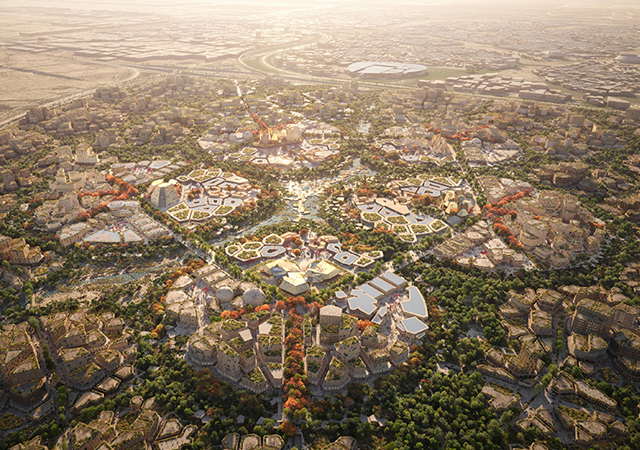
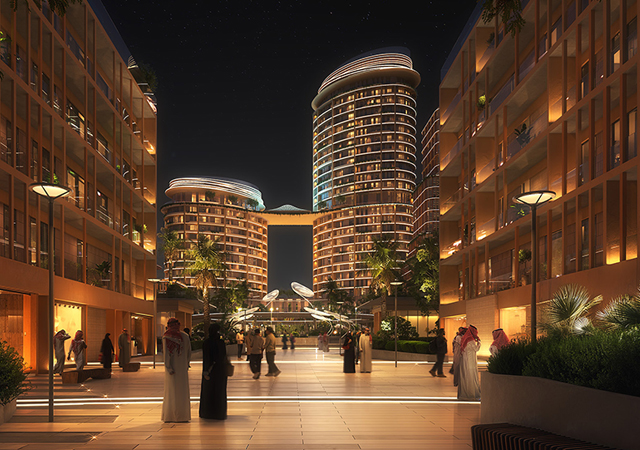
As a new model for destination-making and urban living, New Murabba is being developed to accommodate more than 280,000 residents, creating vibrant and integrated neighbourhoods supported by innovative urban planning, architectural excellence, and a comprehensive network of community services that enhance quality of life and contribute to Riyadh’s future growth. The planned hospital is one of several healthcare, education, and community assets being developed across the destination.
The wider $50-billion, 14.1-sq-km district – which is designed to eventually house more than 100,000 residential units, 10,000 hotel rooms and 1.4 million sq m of commercial space – now carries a significantly extended completion horizon. Infrastructure works continue across the site regardless of the Mukaab’s status, with primary utility tunnels reported to be around 40 per cent complete and metro connections to the district in detailed engineering, targeting construction start by early 2027.
Stadiums
Stadium delivery for the 2034 FIFA World Cup has moved into contractor procurement. The Ministry of Sport issued a prequalification call for King Salman International Stadium’s main construction works early this year. The 92,760-seat Populous-designed venue, part of the wider King Abdulaziz Park development, is targeted for completion in 2029.
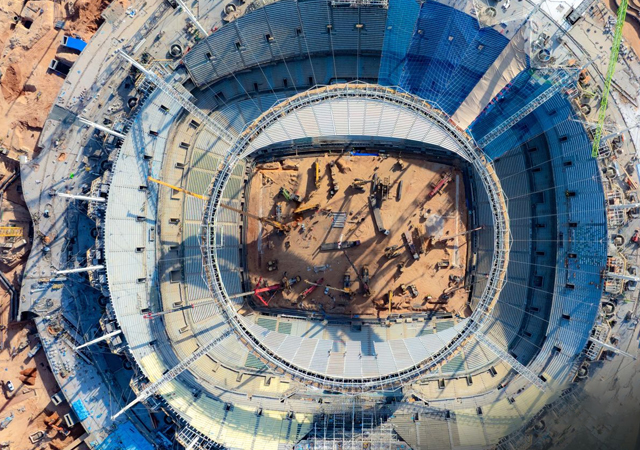
King Fahd Sports City ... contractors are now hoisting the iconic tents over the stadium.
Construction work is in progress on the Prince Mohammed bin Salman Stadium in Qiddiya City. Located on the dramatic 200-m-high cliff edge in the Tuwaiq Mountains, the multi-purpose stadium is a designated venue for the 2034 FIFA World Cup and is designed as a year-round destination to host major sporting, entertainment and cultural events.
Meanwhile, the Prince Faisal bin Fahad Sports City project, a new 47,000-seat venue which will be developed under a design-build-finance-operate-maintain (DBFOM) public-private partnership, remains in its bidding phase.
Work to bring the existing King Fahd Sport City up to FIFA standard continues under Aecom’s site-supervision consultancy, with the contractors now hoisting the iconic tents over the stadium.
Misk City
Construction at Mohammed Bin Salman Nonprofit City (Misk City), the world’s first purpose-built non-profit city, rising on a 3.4 sq km site in Riyadh’s Irqah district, continues to advance toward a phased opening.
One of the most visible recent milestones came at the ilmi Science Discovery and Innovation Centre, a 38,000-sq-m cultural and educational facility within Misk City, which reached a topping-off ceremony earlier this year.
Work is also well advanced on the College of Business and Digital Innovation at University of New Haven’s Riyadh campus in Misk City. NHU-Riyadh is the University of New Haven’s international branch campus in Saudi Arabia. The campus opens in the fall of 2026 with the College of Business and Digital Innovation, the first of three colleges planned in the kingdom.
Elsewhere on site, work is progressing on Al Mishraq, described as a new central zone within the nonprofit city. Earlier project updates also pointed to steady momentum across the wider masterplan, with contractor Freyssinet Saudi Arabia reporting the basement of Misk City’s first hotel completed and the Misk Art studio building topped out.
The SAR20.4 billion development is planned to eventually deliver around 99,000 sq m of retail and leisure space, 300,000 sq m of office space, and 6,500 residential units, alongside cultural, educational and sporting facilities.
King Abdullah Financial District
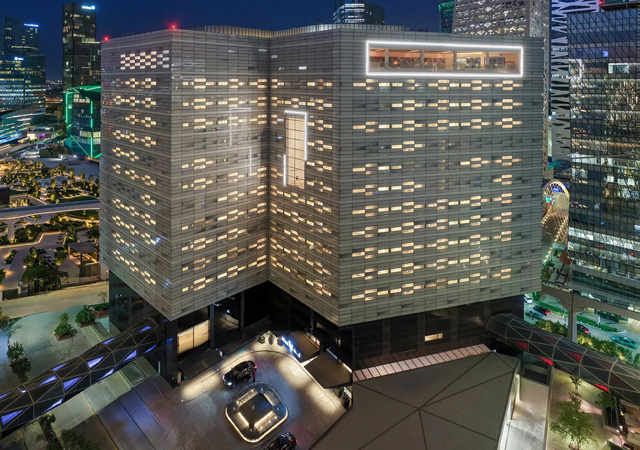
KAFD DMC, the developer and operator of Riyadh’s King Abdullah Financial District, has welcomed Atheel, a new addition to its hospitality portfolio, marking the latest milestone in the district’s continued expansion.
Operated by Adeera Hospitality Company, Atheel features 214 rooms and suites, alongside a range of dining option, a rooftop lounge and pool, a ballroom, five meeting rooms and a wellness centre. Its opening brings KAFD’s operational hotel capacity to more than 630 rooms, alongside W Riyadh – KAFD and Kimpton KAFD Riyadh, with a Hilton property to add a further 450 rooms in the future.
The hotel’s opening follows KAFD DMC’s securing in June of a SAR12 billion, 15-year senior-secured Murabaha facility, its first independently arranged debt facility, which will fund continued development across the district.
Transportation infrastructure
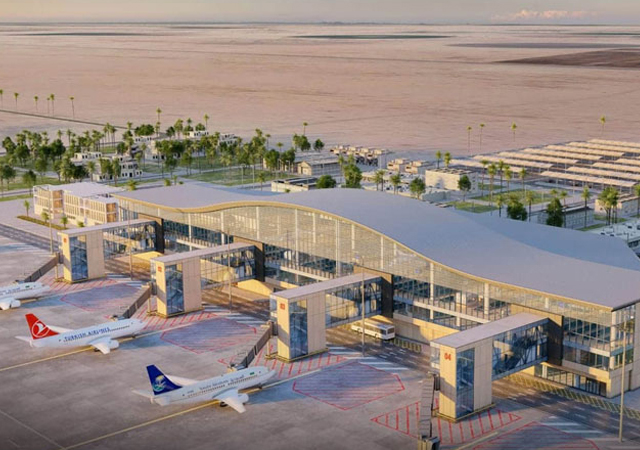
King Salman International Airport’s third runway, on which construction began in January, continues to advance under the FCC Construcción/Al-Mabani General Contractors joint venture. The 4,200-m runway remains central to plans to lift hourly aircraft movements from 65 to 85, and is being followed by preparations for a new mega-terminal designed to handle up to 40 million passengers annually.
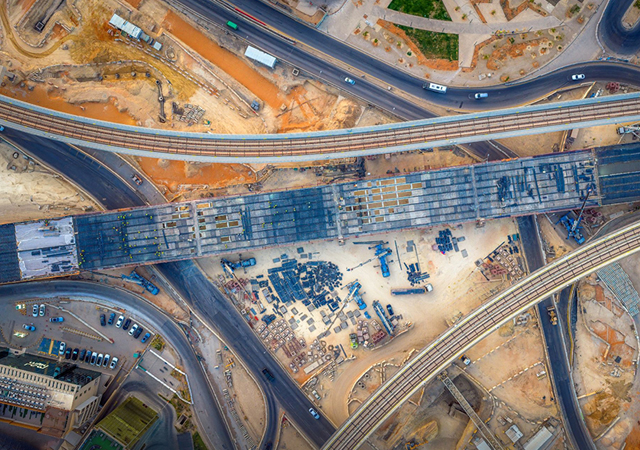
RCRC’s Main and Ring Road Axes Development Program will extend the capital’s road network by more than 500 km and raise road capacity by 85 per cent.
Contractors are now expected to submit proposals by October 8 for an estimated SAR3-billion contract to build an aviation complex located within the King Salman International Airport masterplan. Government-owned aviation organisation Saudi Royal Aviation (SRA) tendered the contract in August, the scope of which covers 30 landside buildings and 15 airside buildings.
Early this year, King Salman International Airport signed seven MoUs and cooperation agreements with Saudi developers Sumou Holding, Mohammed Al Habib Investment, Kinan, Ajdan, Retal, Urjuan and Osus to explore mixed-use real estate development within the airport’s masterplan.
The 57-sq-km master development area includes around 12 sq km earmarked for real estate, offering opportunities for residential, commercial, entertainment, office and hospitality projects. The agreements are intended to expand private-sector investment and support an integrated, sustainable urban ecosystem around the airport.
On the metro network, the Royal Commission for Riyadh City has moved from contract award to active construction on the 8.4-km Red Line (Line 2) extension to Diriyah Gate. The $2.75-billion design-and-build contract, awarded in January to a Webuild-led consortium including L&T, Nesma and Alstom, is now under construction, with the RCRC confirming that work has begun on two of the five new stations. The extension, comprising 7.1 km of bored tunnel and 1.3 km of viaduct, is expected to take around six years to complete and, on finishing, will extend the Red Line to 33.7 km and 20 stations.
The Saudi Landbridge, Qiddiya High-Speed Rail and proposed Riyadh-Doha railway are in their planning and procurement stages. Spanish engineering firm Tysa has been awarded the lead design contract for the multi-billion-dollar Landbridge railway, a 1,500-km strategic corridor linking Jeddah on the Red Sea to Dammam and Jubail on the Arabian Gulf, via Riyadh. It includes roughly 950 km of new track between Jeddah and Riyadh, a 115-km link between Dammam and Jubail, and upgrades to existing rail infrastructure across the network.
Meanwhile, Riyadh is in the midst of one of the world’s most ambitious urban transformations. The Royal Commission for Riyadh City (RCRC) is delivering the SAR29 billion Main and Ring Road Axes Development Program, which will extend the capital’s road network by more than 500 km and raise road capacity by 85 per cent.
The programme is being delivered in packages, each targeting critical corridors so infrastructure is distributed evenly across the city.
Package One, launched in August 2024 with a SAR13 billion budget, includes four major projects, among them the 56-km Second Southern Ring Road and two new bridges parallel to Wadi Laban Bridge.
Package Two, launched in February 2025 and valued at over SAR8 billion, comprises eight projects to improve internal traffic flow and link commercial and residential districts. Highlights include a 10-km upgrade of Al-Thumama Road with 11 bridges and five tunnels, and a 20-km network around the King Abdullah Financial District with 11 bridges.
Package Three, recently awarded at SAR8.1 billion, covers 61 km of roads, 32 bridges and six tunnels across six projects on the northern and western axes, due for completion within four years. Key components include the 29-km Jeddah Road project (capacity of up to 353,000 vehicles daily) and the 15-km Taif Road project.
Outlook
Riyadh’s construction sector enters the second half of 2026 with two parallel realities in play. Projects tied to fixed international deadlines – Expo 2030, the World Cup stadium programme, King Salman International Airport and the metro expansion – are advancing with visible, measurable momentum, backed by record contract awards and rising workforce numbers.
Discretionary giga-projects such as New Murabba’s Mukaab illustrate the other reality: paused, reworked and pushed toward longer delivery horizons as the kingdom balances ambition against the fiscal constraints of regional conflicts. For contractors, consultants and investors, that distinction – between deadline-anchored and discretionary development – is now the single most important variable in assessing where money will be spent in the remainder of the decade.