











On July 8, 2025, the Council of Ministers of Saudi Arabia approved a new law (2025 Real Estate Law) allowing non-Saudis to purchase and invest in real estate within certain geographical zones of the kingdom. The law marks a more open approach to foreign ownership, in line with Saudi Arabia’s Vision 2030 and builds on a series of recent regulatory developments.
While the law came into effect in January 2026, the geographical zones in which non-Saudis would be permitted to own property had not yet been identified.
On June 23, 2026, the Council of Ministers approved the Executive Regulation of the law on real estate ownership by non-Saudis. It was published in the official gazette (Umm Al-Qura newspaper) on July 3, 2026.
The Executive Regulation sets out further requirements for how non-Saudis may acquire property in the kingdom, as well as the fees payable on the disposal of property by non-Saudis.
In particular, non-Saudi sellers face a fixed two per cent real estate disposal fee in the major designated metropolitan zones of Riyadh, Jeddah, Makkah and Madinah. This applies alongside the nationwide five per cent Real Estate Transaction Tax (RETT), which applies to all real estate transactions across the kingdom.
Duncan.
The Real Estate General Authority (REGA) has now established the Saudi Properties portal (Saudi Properties) as an official platform showing the designated geographical zones.
The key areas within the zones where non-Saudis may acquire property include:
Makkah: Makkah Towers, Al-Manar, Ajyad Tower, King Salman Gate, Tilal Village, Jabal Omar, Thakher Makkah, Sumou Suburb, and Masar, as well as the Makkah 1 and 2 zones.
Madinah: Al-Ghurrah, Madinah Zones 1 and 2, Al-Mahwa, Darat Al-Hijrah, Downtown Madinah, Diyar Al-Maqarr, Ru’a Al Madinah, Knowledge Economic City, and Mishraf.
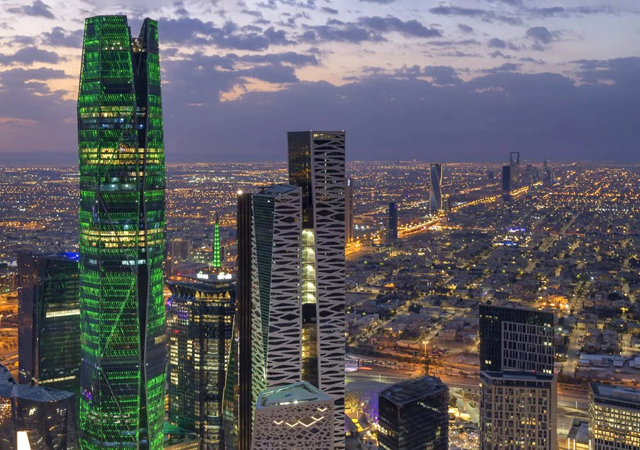
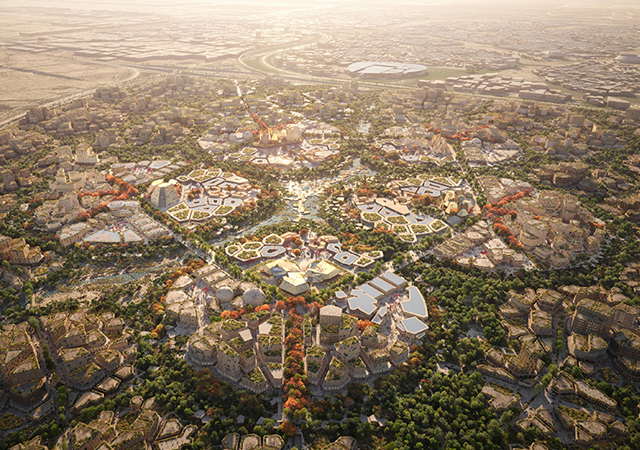
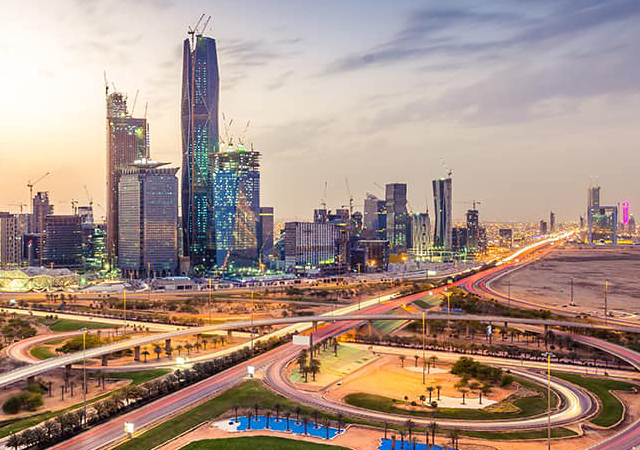
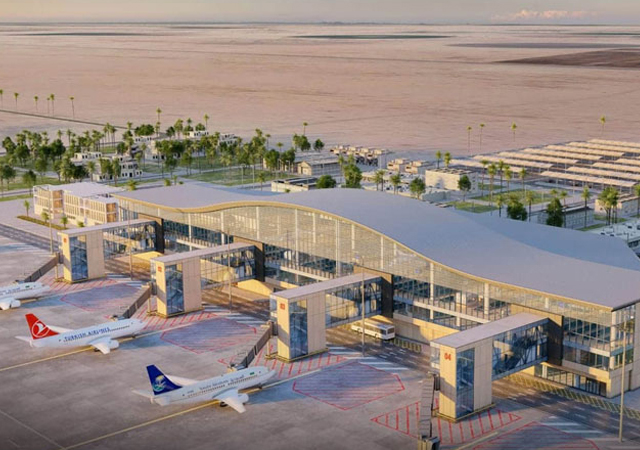
Riyadh: Qiddiya, New Murabba, Sports Boulevard, the Arts District, Diriyah Gate, King Salman Park, Sidra, King Abdullah Financial District (KAFD), and King Salman International Airport.
Jeddah: Historic city centre, alongside 55 development zones distributed across the governorate.
Giga projects: NEOM, Red Sea, Al Ula and Amaala
Special economic zones: King Abdullah Economic City, the Special Economic Zone in King Abdullah Economic City, Ras Al-Khair Special Economic Zone and Jazan Special Economic Zone.
Who is a non-Saudi?
The 2025 Real Estate Law defines a “Non-Saudi” as:
• Any natural person who does not hold Saudi nationality;
• A non-Saudi company;
• A non-Saudi non-profit entity; and
• Any other non-Saudi legal person determined by a decision of the Council of Ministers.
Types of property rights
The 2025 Real Estate Law is not limited to outright freehold ownership. A non-Saudi may own real estate or acquire other rights in rem over real estate in the kingdom. The types of rights in rem that a non-Saudi may acquire, as well as the maximum period for which a usufruct right may be acquired, are to be determined by a decision of the Council of Ministers.
The rights in rem that may be acquired include freehold ownership, usufruct, long-term leasehold, easements and mortgage security rights.
Freehold ownership provides full registered title to the property. Usufruct provides the right to use and enjoy a property and take its income for a defined period and the maximum duration for non-Saudis is to be set by the Council of Ministers.
A long-term leasehold is a registered lease of sufficient duration to constitute a real right over property. An easement provides the right to use part of another person’s land for a specific purpose, such as a right of way. A mortgage security right is a registered security interest held over property as collateral for a debt.
How can foreign investors acquire properties
The rules governing ownership differ according to the buyer’s category and the location of the property. Table 1 provides an overview of the ownership routes in the Kingdom.
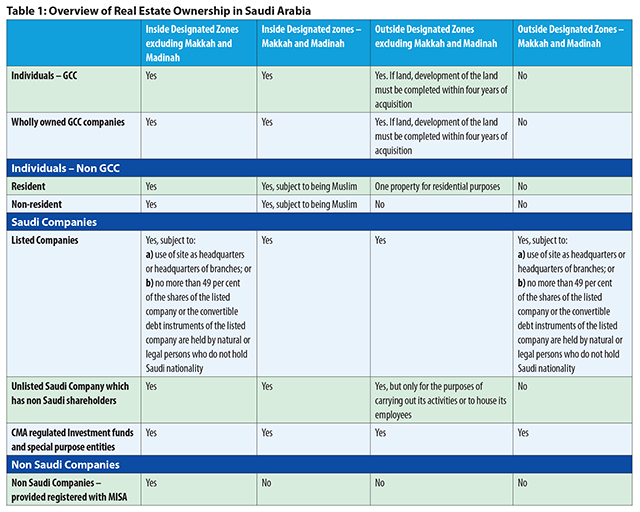
What will be interesting to overseas investors is that the Controls on the Ownership of Real Estate in the Kingdom by Listed Companies, Investment Funds and Special Purpose Entities issued by the Capital Market Authority (CMA) on 21 January 2026 provides that investment funds and special purpose entities licensed by the CMA may own and acquire real estate anywhere in the kingdom (including in the cities of Makkah and Madinah), whether inside or outside the designated geographical zones.
Pre-transaction diligence
Before committing to any transaction, the following checks should be carried out:
• Conduct a deed enquiry using the Ministry of Justice’s real estate market platform (srem.moj.gov.sa/deed inquiry);
• Request the title deed and the owner’s ID number. In the case of a legal person, request the commercial registration and articles of association;
• Confirm the property falls within a designated Non-Saudi Ownership Zone using the Saudi Properties Portal (for non-Saudi buyers);
• Confirm the property is free from mortgages, legal disputes or other encumbrances that would prevent transfer;
• Confirm all relevant building permits and completion certificates are in order; and
• A digital identity is a prerequisite for any property transaction in Saudi Arabia. The route depends on the buyer’s category (see Table 2).
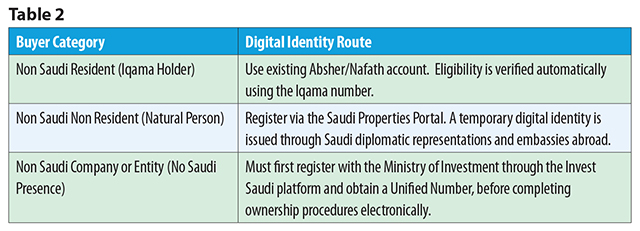
Buyers should verify before committing that the property is in a designated Non-Saudi Ownership Zone and that they are eligible to own it. This can be checked through the Saudi Properties portal using the Property ID or Title Deed number.
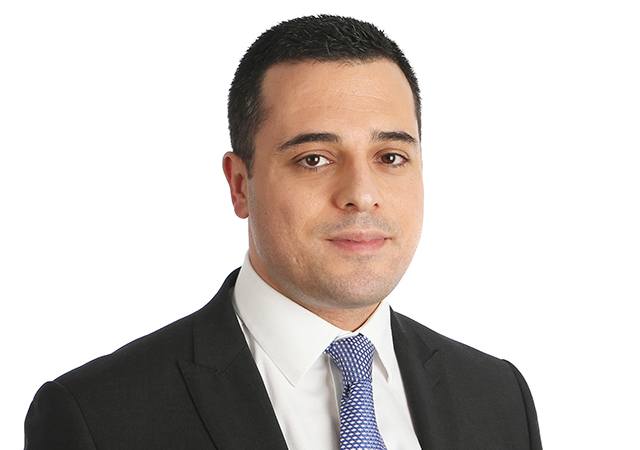
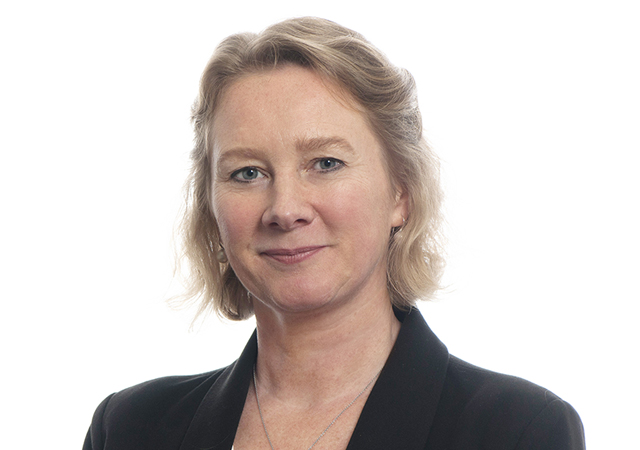
* Moad Giebaly is Partner in the International Corporate and Commercial team, and Eileen Duncan is Head of International Real Estate at international law firm Trowers & Hamlins.