

















































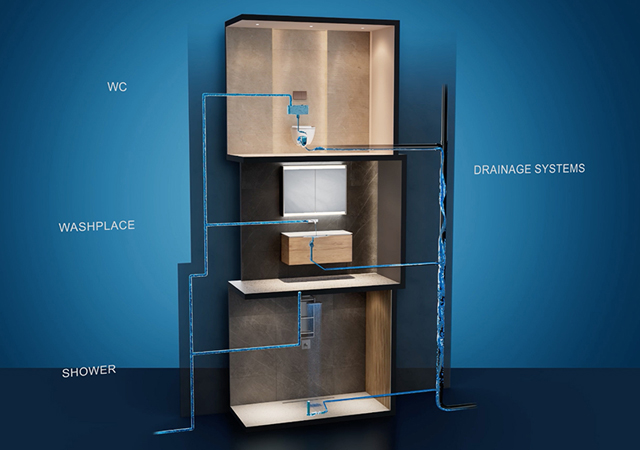
Water management within buildings is far more complex than simply delivering and draining water. From potable water supply to sanitary usage and wastewater drainage, the movement of water through a building requires precise hydraulic control, system coordination, and carefully engineered components.
Water serves three fundamental functions in any building: it supports nutrition through potable supply, enables hygiene and cleaning, and transports waste materials through drainage systems. These functions define the complete water cycle within the built environment.
Geberit addresses this full cycle through its engineering concept of “Mastering Water”, a holistic approach that optimises water flow across all water-bearing systems within a building.
Unlike many sanitary manufacturers that specialise in only one part of the system, Geberit provides solutions for water supply, installation and flushing systems, and drainage. By designing products both behind and in front of the wall, the company ensures that all components operate as an integrated system rather than as isolated products.
The result is improved hydraulic performance, greater water efficiency, and enhanced reliability across the entire sanitary installation.
Hydraulic optimisation in supply systems
A key challenge in potable water supply is maintaining adequate flow while minimising pressure losses across the network. This requires piping systems that combine hydraulic efficiency with installation reliability.
The Geberit Mepla multilayer pipe system addresses these requirements by combining the advantages of metal and plastic in a single pipe solution. The multilayer construction provides structural stability while maintaining flexibility, allowing pipes to be bent easily during installation without compromising performance.
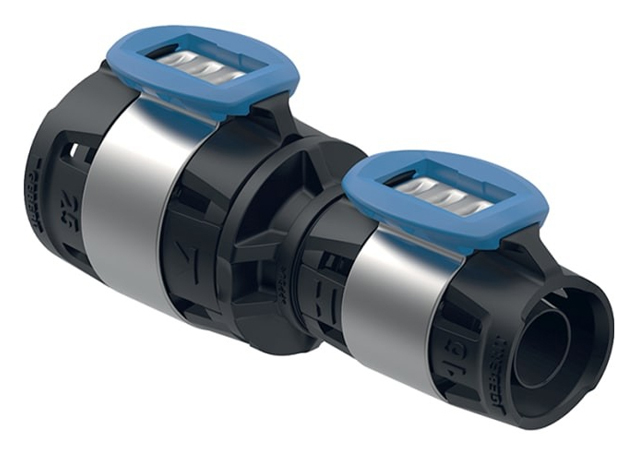
Geberit FlowFit
The smooth inner surface of the pipe supports efficient water flow while reducing the risk of incrustation and deposits. This ensures consistent flow rates and contributes to long-term system reliability.
From an installation perspective, the system is designed to simplify work on site. The lightweight pipes can be bent with minimal effort, allowing installers to adapt pipe routing quickly and efficiently. At the same time, the clearly defined pressing jaw guide ensures that the pressing tool is positioned accurately on the fitting.
The pressing connection provides a secure and durable joint, while the visible insertion depth indicator allows installers to verify correct pipe positioning before pressing. Once pressed, the connection forms a permanent and reliable seal.
Geberit Mepla also allows quick and secure transitions to other piping systems such as Geberit Mapress, providing flexibility in complex installations or refurbishment projects.
By combining hydraulic performance with simplified installation, the system enables faster construction progress while maintaining compliance with technical standards and regulations.
Precision hydraulics in flushing systems
Behind the wall, flushing systems must balance performance, water efficiency, and acoustic comfort.
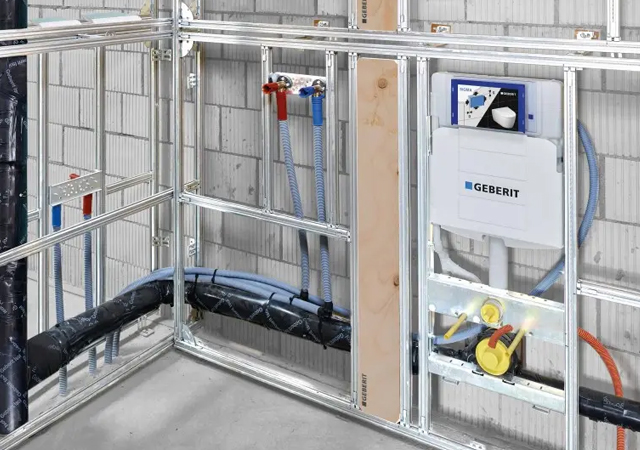
Geberit Sigma cistern with fill and flush valves
Geberit concealed cisterns incorporate advanced hydraulic engineering through components such as the Type 383 fill valve and Type 212 flush valve. The fill valve enables rapid cistern filling while maintaining low operating noise, an important consideration in residential and hospitality developments.
The flush valve incorporates a carefully designed throttle mechanism that regulates the speed and volume of the flush water. This precise control allows the flushing energy to be optimally distributed within the WC ceramic appliance.
When combined with Geberit WC ceramics, the system ensures thorough flushing with minimal water consumption while preventing oversplashing, particularly in rimless toilet designs.
Advanced flushing dynamics in WC ceramics
The hydraulic behaviour within the WC bowl itself is another critical factor in sanitation performance. Geberit’s TurboFlush technology uses a lateral water inlet that directs the flushing water in a controlled spiral motion through the ceramic bowl. This guided flow maximises cleaning performance while maintaining quiet operation.
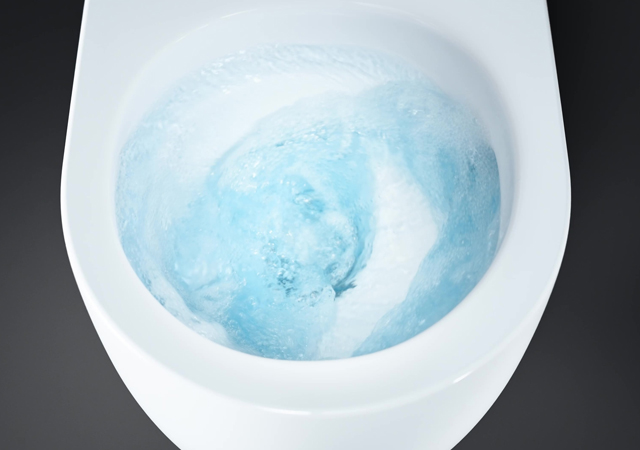
WCs with TurboFlush technology
The optimised water guidance ensures complete flushing of the bowl interior while reducing turbulence and noise levels. This hydraulic design is integrated across many Geberit toilets and AquaClean shower toilets.
Flow optimisation at the washbasin
Even small design changes at the washplace can significantly influence water flow behaviour. The Geberit ONE washbasin with CleanDrain technology relocates the drain opening to the rear wall of the basin rather than positioning it centrally. This configuration prevents the water jet from directly hitting the drain cover, reducing splashing.
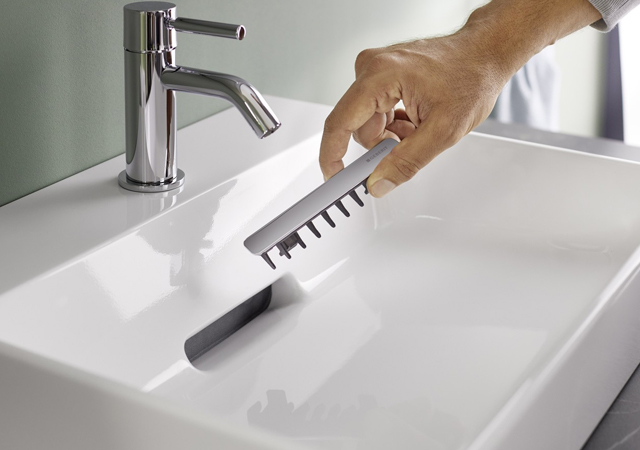
Geberit ONE washplace with CleanDrain
The ceramic geometry directs water smoothly toward the horizontal drain opening, enabling quick and even drainage. This eliminates standing water in the basin and reduces the accumulation of limescale and dirt deposits, lowering maintenance requirements.
Efficient drainage in shower systems
Shower areas require drainage systems capable of handling continuous water discharge while preventing deposits and blockages. The Geberit CleanLine shower channel incorporates an integrated slope that promotes efficient drainage. Its wave-shaped trap geometry enhances hydraulic performance and increases discharge capacity.
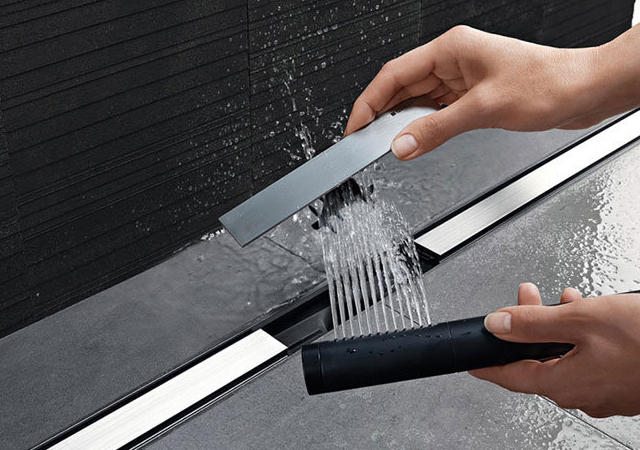
CleanLine shower channel
A removable comb insert captures hair and debris before they enter the drainage pipe, allowing easy cleaning and preventing clogging within the system.
High-capacity drainage with SuperTube
Wastewater drainage systems must manage large discharge volumes while maintaining airflow within the pipes. The Geberit SuperTube drainage technology optimises vertical stack hydraulics by inducing a rotational flow when wastewater enters the pipe. This rotation creates an annular flow pattern in which the water clings to the pipe wall.
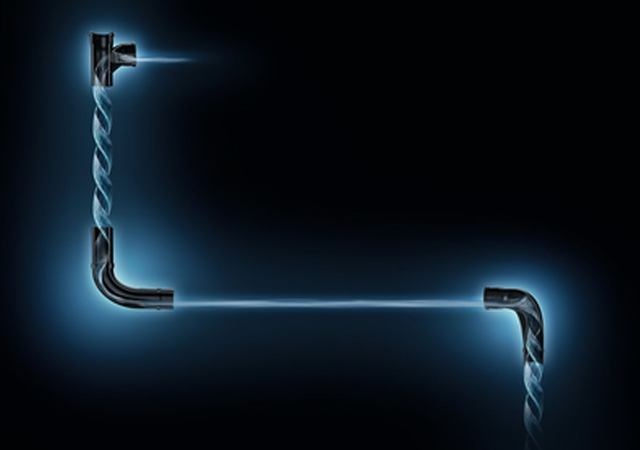
Drainage systems with SuperTube technology
A stable air column is maintained in the centre of the pipe, eliminating the need for a separate ventilation pipe. This approach increases discharge capacity while reducing the number of pipes required within the building structure.
For designers and developers, the system offers an additional advantage: smaller shafts and reduced ceiling voids, allowing more usable floor space within the building.
A holistic approach to water management
The concept of ‘Mastering Water’ reflects Geberit’s focus on hydraulic engineering, system integration, and functional design. By analysing how water behaves within supply pipes, sanitary appliances, and drainage stacks, the company develops solutions that guide water efficiently through every stage of the building cycle.
From potable water delivery to wastewater removal, the optimisation of water flow is critical for ensuring reliable sanitation, reducing resource consumption, and supporting sustainable building design.
In modern construction, where efficiency and performance are paramount, mastering the flow of water is essential to creating high-performing sanitary systems.